Metepeira datona
Chamberlin & Ivie, 1942
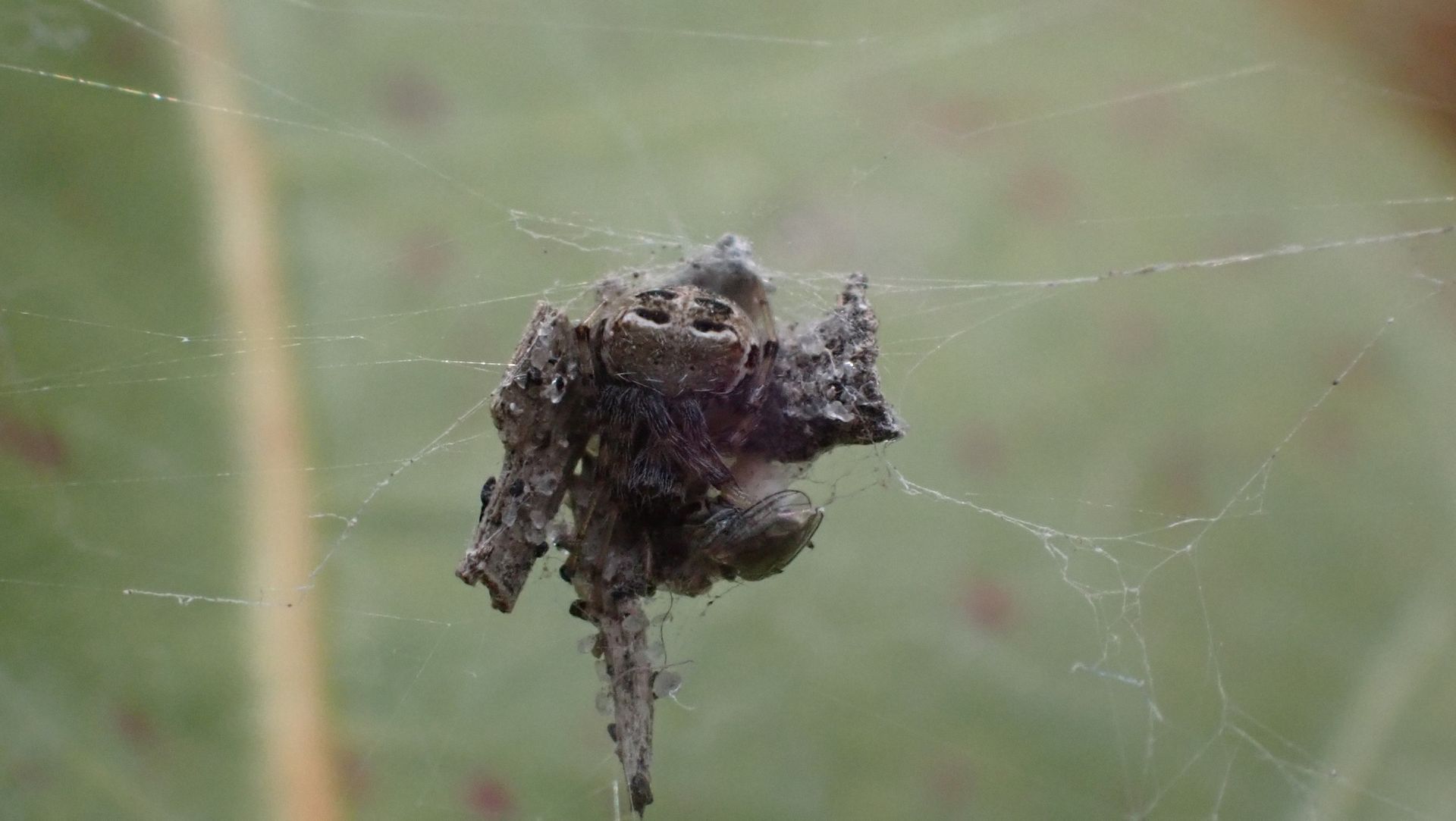
Metepeira datona is an orb-weaving spider in the Araneidae, described by Chamberlin and Ivie in 1942. It is one of approximately thirteen Metepeira recognized in North America north of Mexico. Like other members of its , it constructs a distinctive web architecture combining a small orb web with a tangled, cobweb-like snare surrounding a tubular retreat. The species has been documented in the United States and the Greater Antilles.
Pronunciation
How to pronounce Metepeira datona: /ˌmɛtɛˈpaɪrɑ dəˈtoʊnə/
These audio files are automatically generated. While they are not always 100% accurate, they are a good starting point.
Identification
-level identification of Metepeira datona is challenging without examination of specimens. The Metepeira is characterized by a combination web structure: a small, often inconspicuous orb web connected to a thimble-like retreat via a signal thread, surrounded by a tangled network of lines. Mature females measure 5.5–7.2 mm in body length, males 3–4.5 mm. Coloration is highly variable within the genus, making visual separation from other Metepeira species and small orb weavers difficult. The retreat—often decorated with debris and positioned above the sacs—is the most reliable field indicator of genus membership. Definitive identification to species requires examination of genitalia.
Images
Distribution
United States and Greater Antilles. GBIF records indicate presence in the Caribbean region and North America.
Behavior
As a member of the Metepeira, M. datona likely shares the characteristic web-building : the spider occupies a tubular retreat connected by a signal thread to the hub of its small orb web, dashing out to capture prey that impacts the orb. However, this specific behavior has not been directly documented for M. datona.
Similar Taxa
- Metepeira labyrintheaThe only Metepeira with a widely used ("Labyrinth Spider"); shares the same distinctive web architecture and is similarly challenging to distinguish visually from other . M. labyrinthea occurs in the eastern United States and southern Ontario, with overlapping range potential.
- Metepeira spinipesA western known for occasional social in dense colonies; differs in geographic distribution (southern Oregon to Mexico) and documented cooperative web-building tendencies not reported for M. datona.
- Argyrodes spp.Dewdrop spiders (Theridiidae) are kleptoparasites frequently found in Metepeira webs; they are smaller (2–4 mm), lack the orb-weaving , and have a rounded, silvery . They may be mistaken for Metepeira when found in webs but belong to a different .
More Details
Taxonomic note
Metepeira datona was described by Chamberlin and Ivie in 1942. The Metepeira is most diverse in western and southwestern North America, with thirteen currently recognized north of Mexico. The specific epithet "datona" appears to reference Daytona, likely indicating the type locality in Florida.
Web architecture
Metepeira webs are architecturally distinctive within Araneidae: the combination of a reduced orb web with an extensive, irregular "labyrinth" of threads and a tubular retreat has led to their . The retreat serves as both shelter and nursery, with sacs stacked above the spider inside.