Mastophora phrynosoma
Gertsch, 1955
Toadlike Bolas Spider
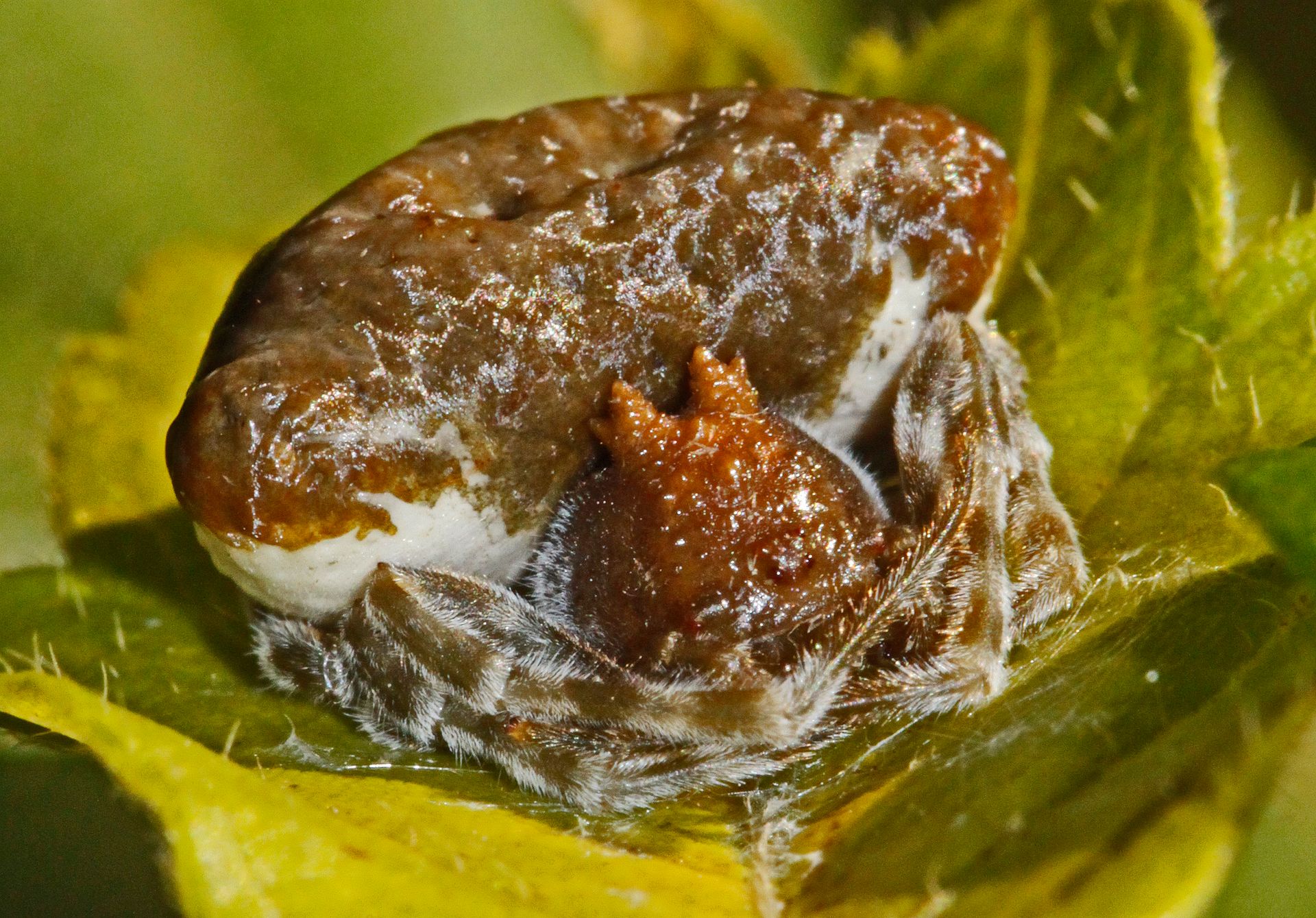
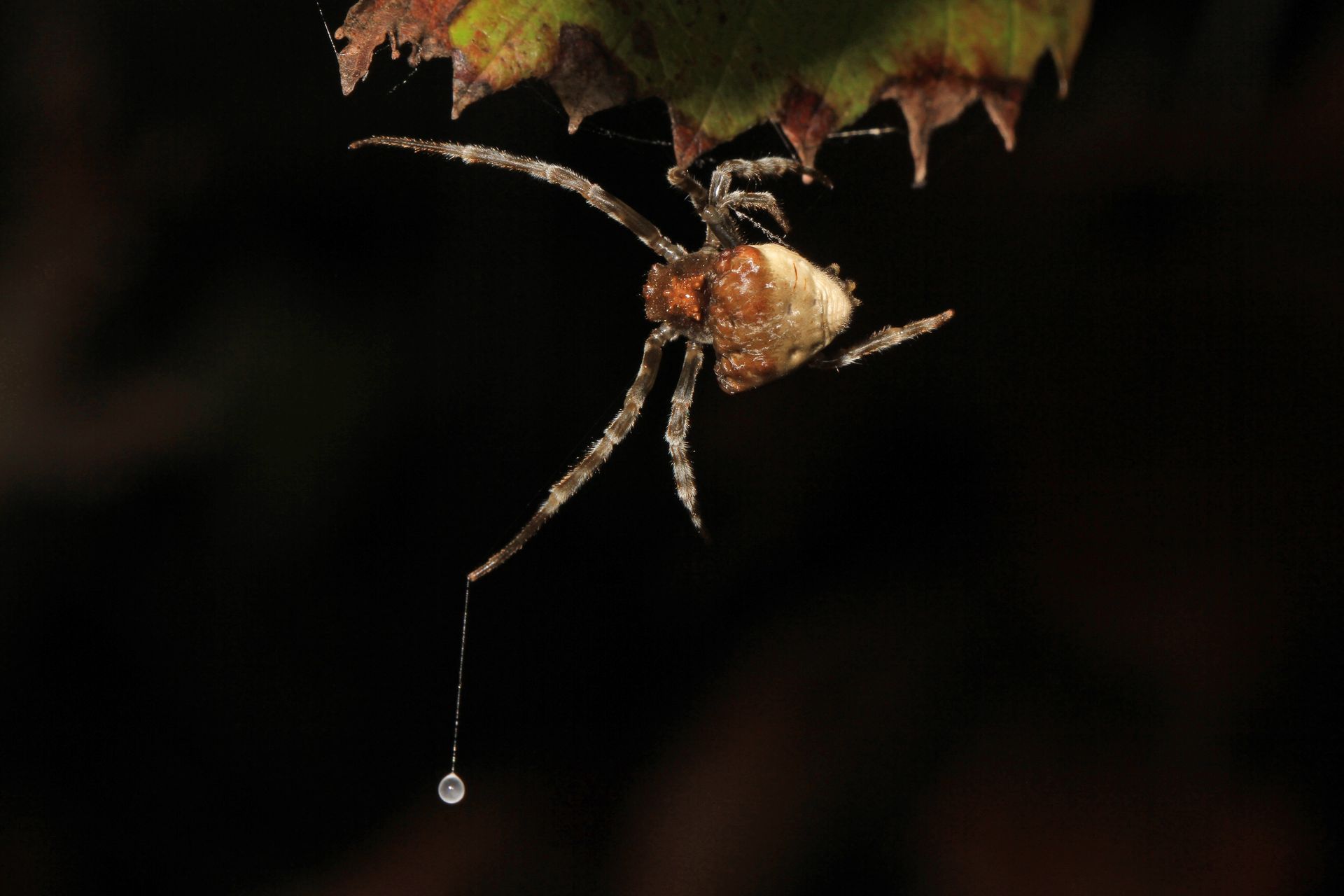
Mastophora phrynosoma is a bolas spider in the orb-weaver Araneidae. females hunt without building a web, instead using a single silk line with one or more sticky droplets to capture prey. Males and females lack this specialized hunting method and capture prey directly with their legs. The is found in the United States.

Pronunciation
How to pronounce Mastophora phrynosoma: //mæsˈtɒfərə frɪˈnoʊsoʊmə//
These audio files are automatically generated. While they are not always 100% accurate, they are a good starting point.
Identification
Distinguished from other orb-weavers by the absence of an orb web in females and the presence of the bolas hunting apparatus. Separated from other Mastophora by geographic range and subtle morphological differences; M. cornigera is the only other Mastophora species in California. The specific epithet 'phrynosoma' refers to the toad-like body form, alluding to the name of horned lizards (Phrynosoma).
Images
Appearance
females have a cryptic appearance resembling bird droppings, with light streaks mimicking deposits. The body is compact with a somewhat flattened profile. Males are considerably smaller than females and emerge from sacs as penultimates, requiring only one to reach maturity. Egg sacs are black and white mottled.
Habitat
Found in wooded areas where females can suspend their bolas lines. Hides during the day in concealed locations. Specific microhabitat preferences are not well documented.
Distribution
United States. Precise range boundaries within the U.S. are not detailed in available sources.
Diet
females prey on male noctuid , which they attract by emitting the female moths' . females and males capture smaller prey directly with their legs; specific prey of stages has not been documented for this .
Life Cycle
Males emerge from sacs as penultimates and undergo one to maturity. Females construct black and white mottled egg sacs. Detailed stages and are not documented.
Behavior
females are sit-and-wait that remain stationary while emitting to lure male noctuid moths. When air vibrations from an approaching moth's wings are detected, the spider swings the sticky bolas to strike the moth and reels it in. Both sexes produce a stridulatory sound when handled. Females are nocturnally active.
Ecological Role
of noctuid ; may exert on male moth . Specific functions are not well studied.
Human Relevance
Not known to be of direct economic or medical importance. sacs may be encountered by naturalists and mistaken for plant structures or other objects.
Similar Taxa
- Mastophora cornigeraThe only other Mastophora in California; distinguished by morphological differences and geographic distribution
- Other Araneidae orb-weaversBuild traditional orb webs rather than using bolas hunting method; females are web-bound rather than free-hunting
More Details
Etymology
The specific epithet 'phrynosoma' derives from the name of horned lizards, referencing the toad-like body form of the spider. This parallels the genus name Mastophora itself, which comes from Greek 'mastos' (breast) and 'phora' (bearing), though the relevance to this is unclear.
Research history
The bolas hunting method and mimicry were first elucidated in studies of other Mastophora ; the extent to which M. phrynosoma shares these traits has been inferred from -level studies but not specifically confirmed.