Mastophora bisaccata
(Emerton, 1884)
Mastaphora obesa
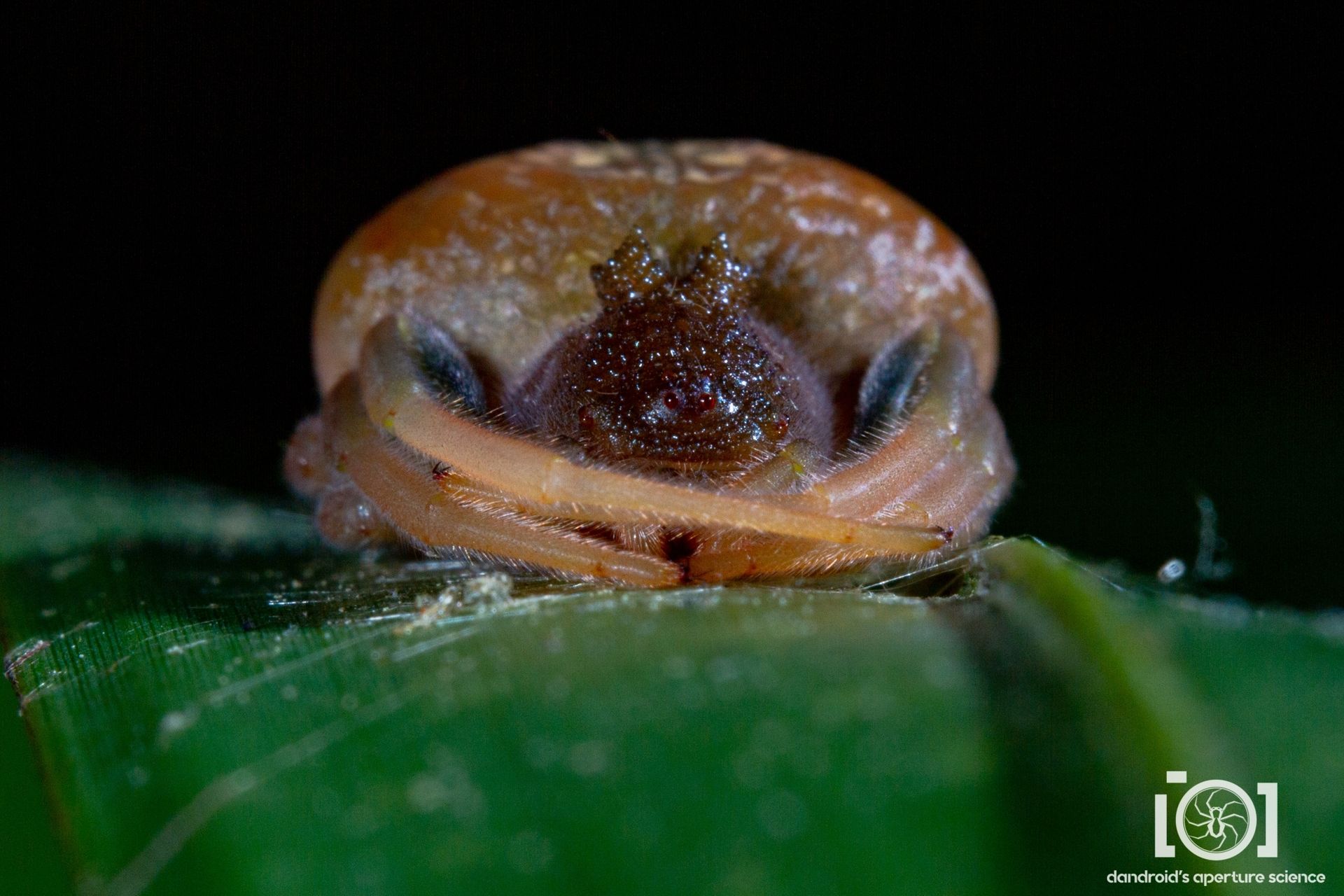
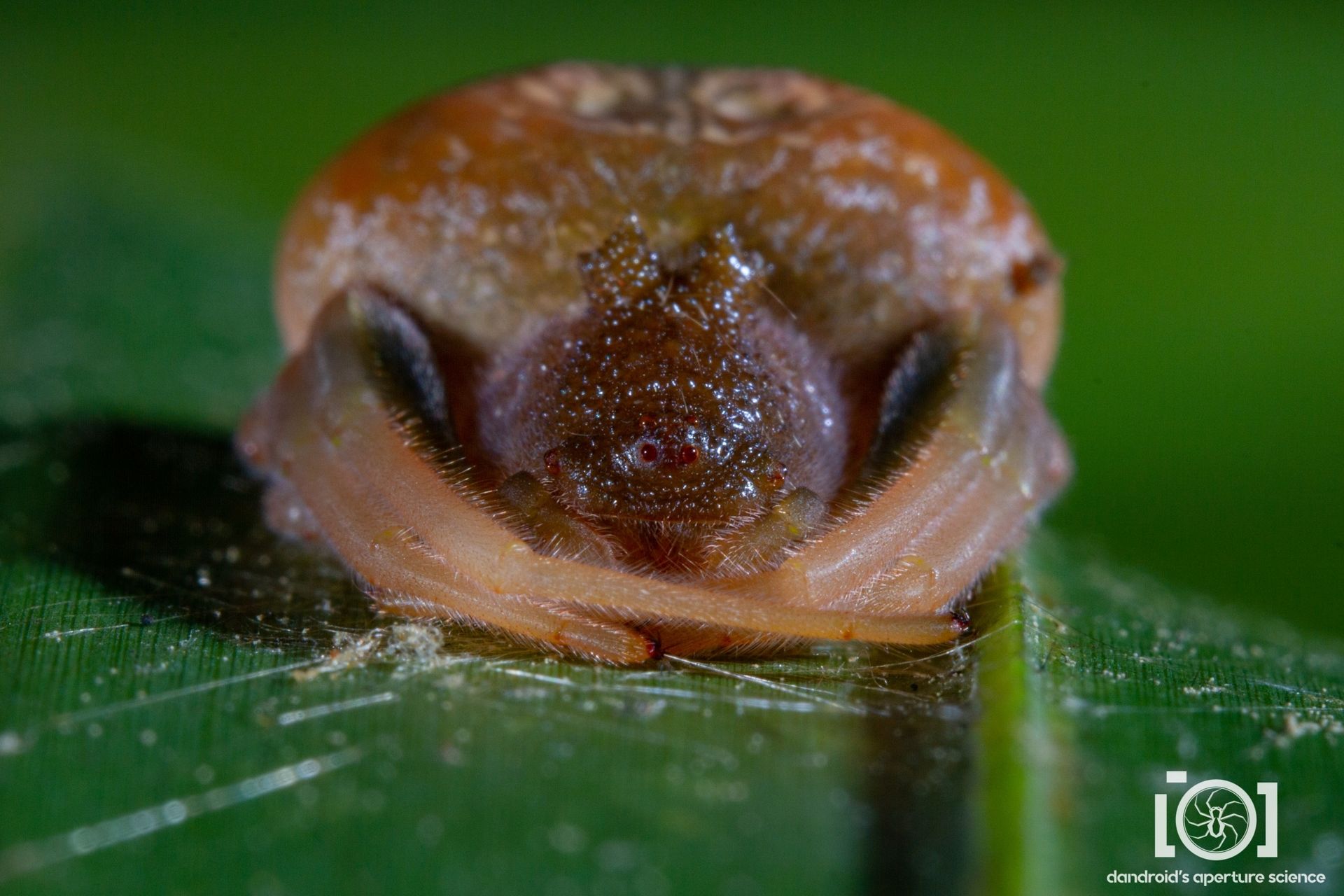
Mastophora bisaccata is a bolas spider in the Araneidae. females hunt by swinging one or more sticky silk droplets at the end of a single line to capture prey, rather than building an orb web. Males and females lack this specialized hunting and capture prey directly with their legs. The is found in the United States and Mexico.
Pronunciation
How to pronounce Mastophora bisaccata: /mæˈstɒfərə baɪˈsækətə/
These audio files are automatically generated. While they are not always 100% accurate, they are a good starting point.
Identification
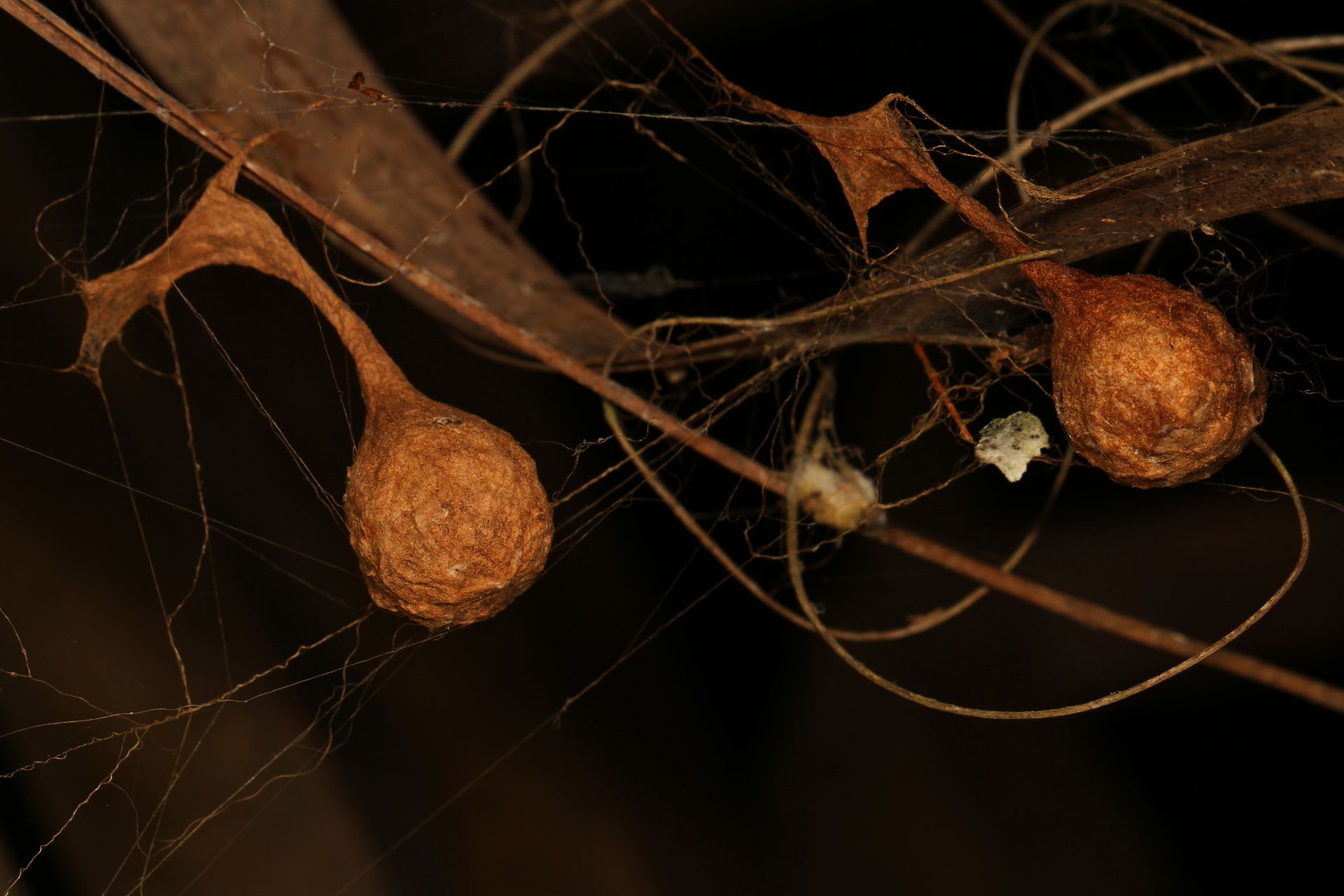
females can be distinguished from other Araneidae by the absence of an orb web and the presence of a bolas—a sticky silk droplet or droplets suspended from a single dragline. Like other Mastophora , females are cryptically colored and resemble bird droppings, with light streaks that mimic . sacs are black and white mottled. Males are much smaller than females and emerge from egg sacs as penultimates, requiring only one to reach maturity. females also lack the bolas hunting apparatus.
Images
Distribution
United States and Mexico.
Diet
females prey on male noctuid , using mimicry to lure them. Juveniles feed on male phorid flies (humpbacked flies), also employing -based attraction. Males and females capture prey directly with their legs; specific prey items for males have not been documented.
Life Cycle
Males emerge from sacs as penultimates, undergoing only one before maturity. This results in males that are substantially smaller than females. The complete details for this are not documented.
Behavior
females are hunters that emit mimicking female noctuid to attract male moth prey. When a moth approaches, the spider detects air vibrations from its wings and swings the sticky bolas to capture it. Females hide during the day. Males and females do not use bolas hunting and instead capture prey directly with their legs.
Ecological Role
of male noctuid and phorid flies, potentially influencing local of these insects through sexual deception.
Similar Taxa
- Mastophora cornigeraThe only other Mastophora found in California; M. bisaccata is distinguished by geographic range (primarily eastern/southern US and Mexico versus California for M. cornigera).
- Other Araneidae orb-weaversM. bisaccata lacks the characteristic orb web; instead, females produce only a single dragline with sticky droplets for prey capture.
More Details
Taxonomic note
Also known by the synonym Mastaphora obesa.
Genus characteristics
The Mastophora includes 15 in the United States. Bolas spiders are not commonly encountered due to their cryptic daytime hiding and activity.