Callobius severus
(Simon, 1884)
West Coast Laceweaver
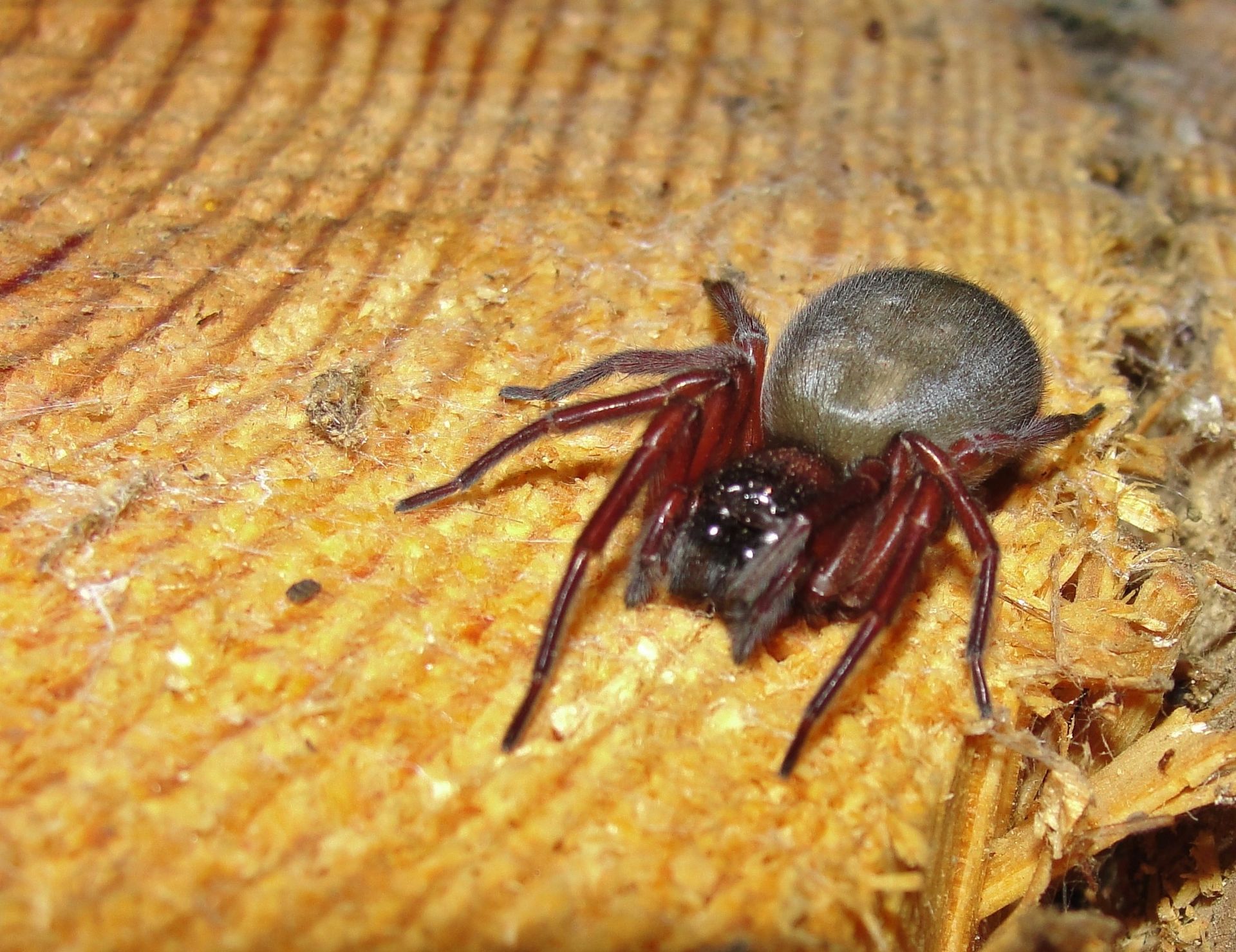
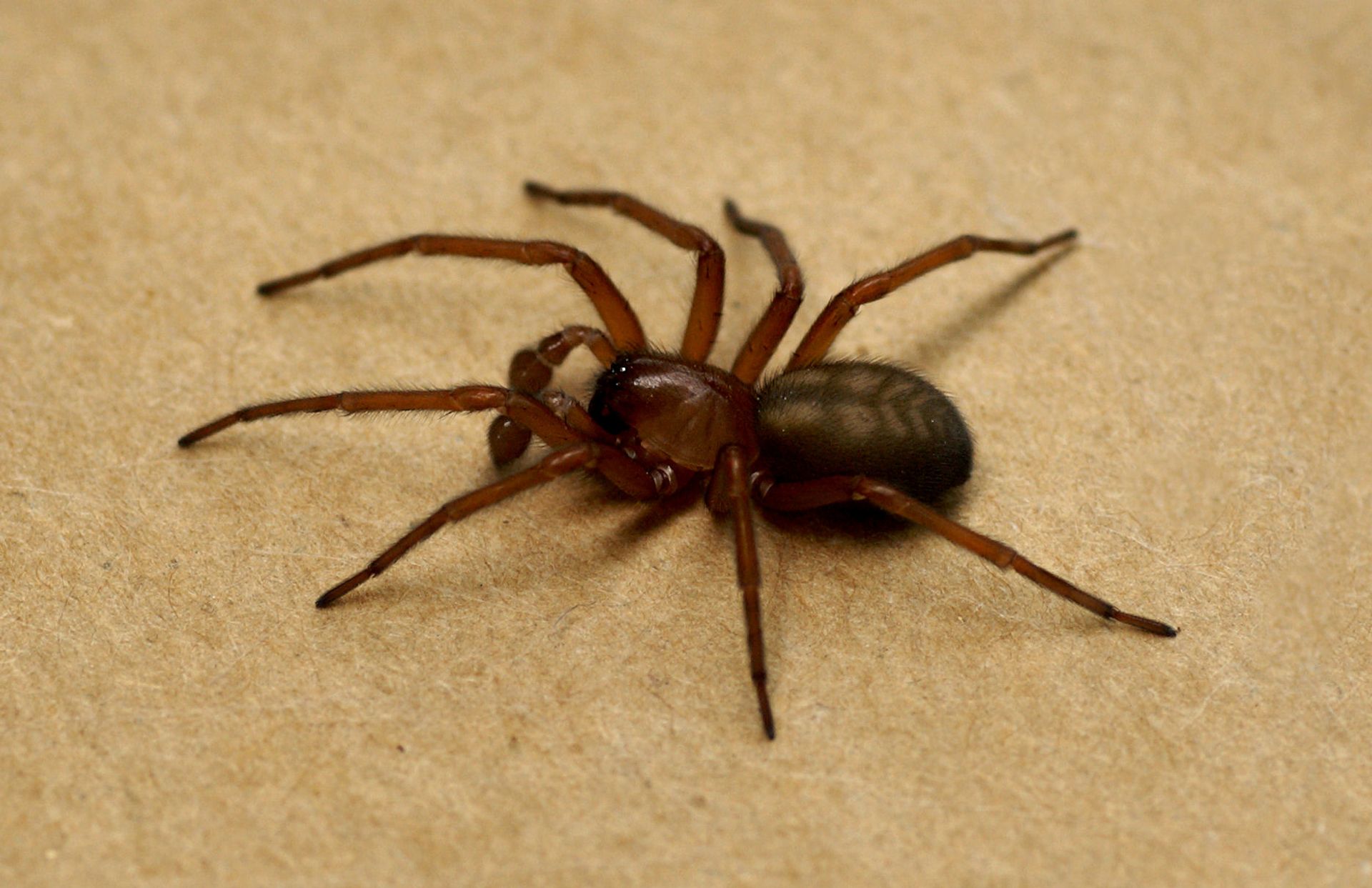
Callobius severus, commonly known as the West Coast Laceweaver, is a spider in the Amaurobiidae found in parts of the United States and Canada. reach approximately 19 mm in body length, with females typically larger than males. The species was first described by Eugène Simon in 1884 under the name Amaurobius severus.
Pronunciation
How to pronounce Callobius severus: /kæˈloʊbiəs səˈvɪərəs/
These audio files are automatically generated. While they are not always 100% accurate, they are a good starting point.
Identification
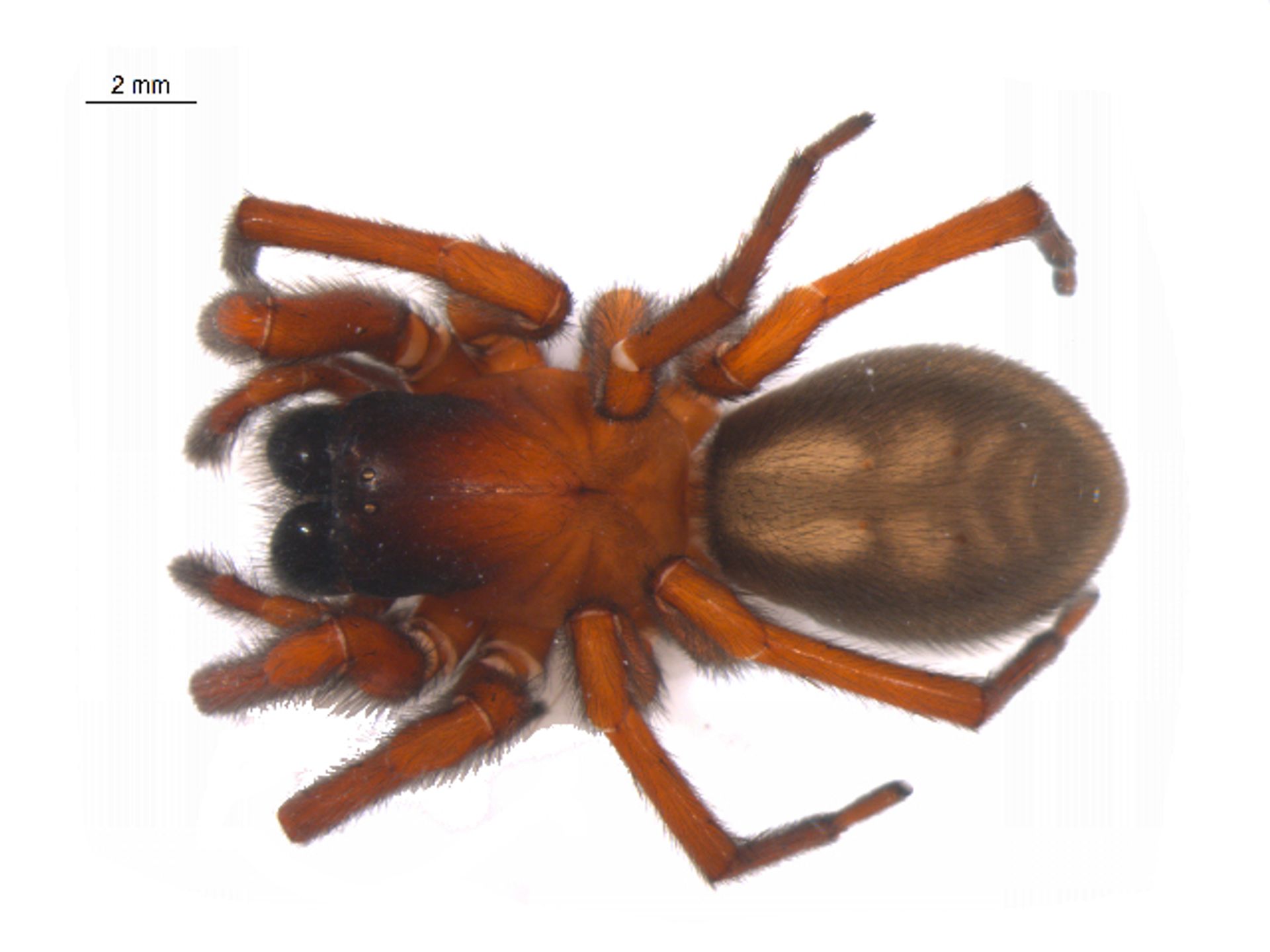
Distinguished from similar Callobius by the combination of reddish to dark brown and legs with grey bearing large, bilaterally mirrored paler spots. Males can be identified by their large, extended palps with prominent projections. The overall coloration and pattern separate it from darker or more uniformly colored amaurobiids.
Images
Appearance
reach roughly 19 mm (3/4 inch) in body length. The and legs are reddish to dark brown. The is dark to light grey with fine hairs, often displaying large, bilaterally mirrored paler spots. Males possess large, extended palps with prominent projections and are typically smaller than females.
Distribution
Recorded from Canada (including Alberta) and the United States. The "West Coast Laceweaver" suggests primary occurrence along the western coast of North America, though precise range boundaries require verification.
Similar Taxa
- Other Callobius speciesSimilar body plan and size; distinguished by specific coloration pattern of C. severus (reddish-dark brown and legs with grey, spotted )
- Amaurobius speciesFormerly classified in same ; C. severus moved to Callobius based on distinct morphological features including palp structure and abdominal pattern
More Details
Taxonomic history
Originally described as Amaurobius severus by Simon in 1884, later transferred to the Callobius. The basionym Amaurobius severus remains in synonymy.
Etymology note
The specific epithet 'severus' is Latin for 'stern' or 'severe'. This name was later reused for Harryplax severus, a crab from Guam named after Professor Severus Snape from the Harry Potter series, but the two species are unrelated and the name similarity is coincidental.