
Tydeidae
Tydeidae is a of soft-bodied mites in the order Trombidiformes, containing over 300 across three . These small arachnids exhibit diverse feeding strategies including scavenging, , , and plant feeding. They are among the most commonly encountered mites in arboreal worldwide, with some species playing significant roles in agriculture as both pests and beneficial organisms.
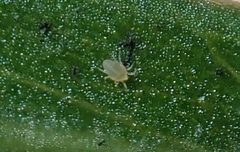
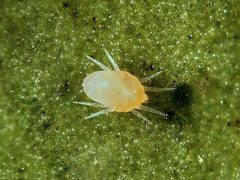
Pronunciation
How to pronounce Tydeidae: /ˈtaɪdiˌaɪdiː/
These audio files are automatically generated. While they are not always 100% accurate, they are a good starting point.
Identification
determination requires examination of leg chaetotaxy and palptarsus structure: Pretydeinae lacks setae on genu of legs II-IV and has triple eupathidium on palptarsus; Tydeinae has 1-2 setae on genu of leg II with double or triple eupathidium; Australotydeinae has 3 setae on genu of leg II with double or triple eupathidium. Distinguished from related Iolinidae and Triophtydeidae by cheliceral structure and historical subfamily placement.
Images
Appearance
Small, soft-bodied mites with muted coloration. The idiosoma (main body) displays striated, reticulated, or combined surface patterns. Possesses two bothridial setae (sensory hairs). have bases with a short, needle-like movable digit and reduced fixed digit. number varies: two or three eyes present in some , others completely eyeless.
Habitat
Primarily arboreal: leaves, stems, tree trunks, soils, fungal sporocarps, and nests. Also occurs in caves, soil, humus, litter, grasslands, straw, hay, and stored products. Some inhabit beehives.
Distribution
Worldwide distribution with records from Europe (Denmark, Norway, Sweden documented), though specific range limits not comprehensively mapped. Most commonly encountered in arboreal across multiple continents.
Diet
Mixed feeding strategies documented: scavenging, (feeding on fungi), on small animals, and (plant feeding including pollen). Some feed on powdery mildew and downy mildew, suppressing these plant .
Host Associations
- Powdery mildew fungi - feeds onSome suppress powdery mildew through feeding
- Downy mildew fungi - feeds onSome suppress downy mildew through feeding
- Phytoseiid mites - preyed upon byVarious tydeid are prey for predatory phytoseiid mites
- Bees (Apis spp.) - commensal or parasitic (uncertain)Several found in beehives; nature of relationship unresolved
- Citrus plants - feeds onTydeus californicus and Lorryia formosa damage citrus
- Humans and domestic animals - parasiticTydeus molestus causes itching and skin irritation
Life Cycle
Developmental stages typical of Acariformes mites: , larva, , deutonymph, and . Specific details and duration not documented in available sources.
Behavior
Among the most commonly encountered mites in arboreal microhabitats. Some demonstrate feeding that suppresses fungal plant .
Ecological Role
Decomposers (scavengers), fungivores, and in arboreal and soil . Some function as agents by feeding on powdery mildew and downy mildew. Serve as prey for phytoseiid mites, forming part of connections between microarthropods.
Human Relevance
Medical: Tydeus interruptus may serve as for scrapie-like agents; Tydeus molestus causes dermatological irritation in humans and domestic animals. Agricultural: Tydeus californicus and Lorryia formosa are citrus pests; conversely, some benefit agriculture by suppressing powdery mildew and downy mildew. : presence in beehives noted, economic significance unclear.
Similar Taxa
- IolinidaeFormerly included Pronematinae and Tydaeolinae now placed in Iolinidae; separation based on revised subfamily-level
- TriophtydeidaeFormerly included Edbakerellinae and Triophtydeinae now placed in Triophtydeidae; distinguished by taxonomic revision
More Details
Taxonomic History
once included five additional (Edbakerellinae, Pronematinae, Triophtydeinae, Tydaeolinae) now transferred to other families based on phylogenetic revision
Subfamily Classification
Three extant : Pretydeinae, Tydeinae, and Australotydeinae, distinguished by leg chaetotaxy and palptarsus eupathidium number