
Eupodidae
C. L. Koch, 1842
Genus Guides
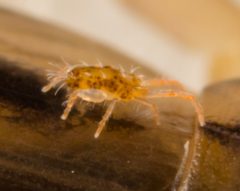
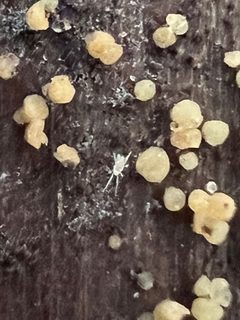
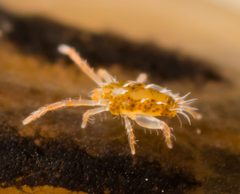
1Eupodidae is a of mites in the order Trombidiformes, comprising at least 11 and 110 described . The family includes economically significant agricultural pests, notably Halotydeus destructor (redlegged earth mite) and Penthaleus major (blue oat mite), as well as species adapted to extreme environments including Antarctica. Members occupy diverse ranging from agricultural lands to polar regions.
Pronunciation
How to pronounce Eupodidae: /juːˈpɒdɪdiː/
These audio files are automatically generated. While they are not always 100% accurate, they are a good starting point.
Identification
Eupodidae mites are prostigmatid mites characterized by features typical of the infraorder Eupodina. The can be distinguished from related families in Eupodoidea by specific morphological traits, though precise diagnostic characters require examination. within the family show considerable morphological diversity reflecting their broad ecological range.
Images
Habitat
Highly diverse: includes agricultural lands (pastures, cereal crops), temperate and Mediterranean climate regions, and extreme polar environments including Antarctica. Some are restricted to specific substrates such as soil, moss, or rocky surfaces.
Distribution
with strong representation in temperate zones. Documented from Europe (Germany, Italy, Norway, UK), Africa (South Africa, Angola, Egypt), Asia (Japan, Malaysia, Philippines, Russia), Australasia (Australia, New Zealand, sub-Antarctic islands), Antarctica, and the Americas (USA, Brazil). Notable Antarctic and sub-Antarctic include Eupodes angardi, E. riedli, and E. winsnesi.
Diet
Varied: some are herbivorous, feeding on pasture grasses and cereal crops (e.g., Halotydeus destructor, Penthaleus major); diet of non-pest species is largely undocumented.
Host Associations
- pasture grasses - food sourcefor pest Halotydeus destructor and Penthaleus major
- cereal crops - food sourcefor pest Halotydeus destructor and Penthaleus major
Life Cycle
data available primarily for Antarctic . Developmental stages include , larva, , deutonymph, tritonymph, and , typical of Prostigmata. Specific timing and duration vary by species and environmental conditions.
Ecological Role
Agricultural pests: Halotydeus destructor and Penthaleus major cause significant damage to pasture and crop production in southern Australia. Ecological roles of non-pest in natural are poorly documented.
Human Relevance
Negative economic impact through damage to agricultural production in Australia and potential for spread to other Mediterranean climate regions (Americas, Mediterranean basin). Vigilance recommended to prevent establishment of Halotydeus destructor in new regions.
Similar Taxa
- PenthaleidaeFormerly included some Eupodidae ; taxonomic boundaries revised based on morphological and molecular data
- CocceupodidaeRelated within Eupodoidea; some transferred between families during taxonomic revisions
More Details
Taxonomic revision history
The has undergone significant taxonomic revision, particularly regarding the Neoprotereunetes, which was redefined in 2023 to incorporate from the invalid genus Protereunetes. The type species was transferred to Filieupodes (Cocceupodidae), and a new genus Antarcteupodes was erected for Antarctic species.
Climate-limited distribution of pest species
In Australia, Halotydeus destructor distribution closely follows the 205-mm isohyet for the growing season (May-October) and is limited by high summer temperatures (mean monthly maximum >33°C). Penthaleus major tolerates drier conditions (190-mm isohyet) and higher summer rainfall, enabling broader distribution.
Sources and further reading
- BugGuide
- Wikipedia
- GBIF taxonomy match
- iNaturalist taxon
- NCBI Taxonomy
- Catalogue of Life
- Life cycle studies of some Antarctic mites and description of a new species, Protereunetes paulinae (Acari: Eupodidae)
- The distribution of Halotydeus destructor and Penthaleus major (Acari : Eupodidae) in Australia in relation to climate and land use
- Life cycle studies of some Antarctic mites and description of a new species, Protereunetes paulinae sp. n. (Acari: Eupodidae)
- New Definition of Neoprotereunetes Fain et Camerik, Its Distribution and Description of the New Genus in Eupodidae (Acariformes: Prostigmata: Eupodoidea)
- Correction: Laniecki, R.; Magowski, W.L. New Definition of Neoprotereunetes Fain et Camerik, Its Distribution and Description of the New Genus in Eupodidae (Acariformes: Prostigmata: Eupodoidea). Animals 2023, 13, 2213