
Cocceupodidae
Jesionowska, 2010
Genus Guides
1Cocceupodidae is a of prostigmatan mites in the order Trombidiformes, established by Jesionowska in 2010. The family comprises at least three —Cocceupodes, Filieupodes, and Linopodes—with approximately 23 described . These mites have been documented across diverse geographic regions including Europe, North America, Asia, Africa, and polar localities such as Greenland and the South Shetland Islands. The genus Linopodes includes the widespread species Linopodes motatorius, first described by Linnaeus in 1758.
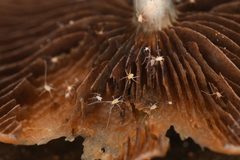
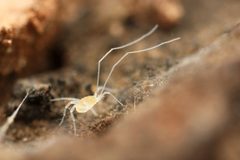
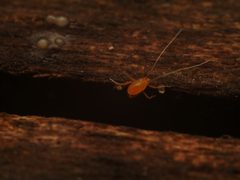
Pronunciation
How to pronounce Cocceupodidae: /kɔk.ke.ʊˈpɔ.dɪ.deɪ/
These audio files are automatically generated. While they are not always 100% accurate, they are a good starting point.
Identification
Members of Cocceupodidae can be distinguished from related eupodoid by characteristics established in the 2010 revision by Jesionowska. The family-level requires examination of morphological traits separating it from Eupodidae and other Eupodoidea. -level identification relies on specific character states: Linopodes (the oldest genus, established 1836) differs from Cocceupodes (1934) and the more recently described Filieupodes (2010). identification depends on detailed morphological examination including leg chaetotaxy and body setation patterns.
Images
Distribution
Documented from six continents with notable concentration in temperate regions of Europe. Specific localities include: Austria, Belgium, Bulgaria, Canada, Croatia, Czech Republic, Denmark, Egypt, Germany, Great Britain, Greenland, Hungary, Iceland, Iran, Italy, Japan, Malaysia, Norway, Poland, South Africa, South Shetland Islands (Deception Island), Spain, Switzerland, and the United States (Alaska, Hawaii). The shows capacity for colonizing isolated oceanic islands and polar environments.
Similar Taxa
- EupodidaeBoth belong to superfamily Eupodoidea; separated by morphological characters established in Jesionowska's 2010 revision of the group.
- PenthalodidaeAnother within Eupodoidea; Cocceupodidae distinguished by specific leg and body setation patterns.
More Details
Taxonomic History
The was established in 2010 by Jesionowska based on revisionary work of the Eupodoidea superfamily. The Linopodes, originally described by C.L. Koch in 1836, was transferred to this family from Eupodidae. The genus Filieupodes was newly described in the same 2010 revision.
Species Richness
Approximately 23 described are currently recognized, distributed across three . The genus Linopodes contains the majority of described species and shows the widest geographic distribution.