
Leptinae
Billberg, 1820
Genus Guides
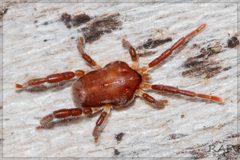
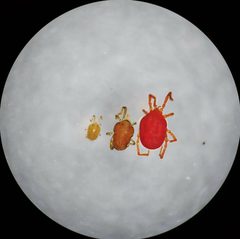
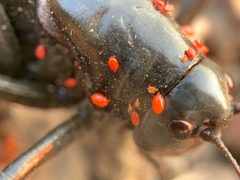
1Leptinae is a of mites in the Erythraeidae, order Trombidiformes. These are prostigmatid mites, a group that includes many predatory and parasitic . The subfamily was established by Billberg in 1820 and contains characterized by elongated body forms. Members of this subfamily are found across multiple continents, with over 3,000 observations recorded on iNaturalist.
Pronunciation
How to pronounce Leptinae: //ˈlɛptɪniː//
These audio files are automatically generated. While they are not always 100% accurate, they are a good starting point.
Identification
Leptinae mites can be distinguished from other erythraeid by their characteristically slender, elongate body shape and relatively long legs. The gnathosoma (mouthpart-bearing region) is typically well-developed and prominent. These features contrast with the more compact, rounded body forms seen in related erythraeid subfamilies such as Erythraeinae.
Images
Distribution
Documented from multiple continents including North America, Europe, Asia, and Australia based on iNaturalist observations. Specific range boundaries within these regions remain poorly defined.
Similar Taxa
- ErythraeinaeAnother within Erythraeidae; distinguished by more compact, less elongate body form and relatively shorter legs compared to Leptinae.
- CallidosomatinaeErythraeid with more robust body proportions and often more elaborate setal patterns on the idiosoma.
More Details
Taxonomic Note
The authorship is sometimes cited as Billberg, 1820, though the original publication context requires verification. The has undergone significant taxonomic revision, with many transferred between erythraeid subfamilies based on morphological reinterpretations.
Research Status
Despite substantial observational data (over 3,000 iNaturalist records), formal taxonomic and ecological studies on Leptinae remain limited. Most -level identification requires microscopic examination of detailed morphological characters.