
Erythraeinae
Robineau-Desvoidy, 1828
Genus Guides
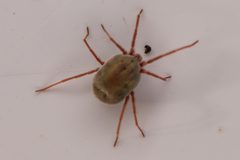
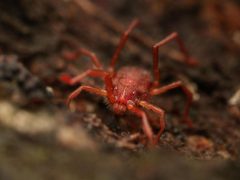
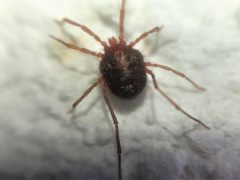
6Erythraeinae is a of mites within Erythraeidae comprising 26 . Larvae are parasitic on other arthropods, while nymphs and are free-living of small insects. The subfamily exhibits substantial morphological differences between parasitic larvae and free-living active stages. Members have been documented across multiple continents with notable diversity in China.
Pronunciation
How to pronounce Erythraeinae: //ɛˌrɪθreɪˈɪniː//
These audio files are automatically generated. While they are not always 100% accurate, they are a good starting point.
Images
Habitat
Collection records include montane forest at 1013 m elevation (Nanling National Natural Reserve, Guangdong Province, China) and herbaceous vegetation (Shandong Province, China). The spans Oriental and Palaearctic zoogeographic regions.
Distribution
China (Guangdong Province, Shandong Province); Eatoniana recorded from Iran, Spain, Turkey, Algeria, Egypt, France, Great Britain, Greece, Mauritania, Tunisia, Niger; genus Erythraeus distributed worldwide.
Diet
Larvae parasitize other arthropods. Nymphs and are free-living of small insects.
Host Associations
- Psocoptera - Larvae of Eatoniana nanlingensis collected from unidentified psocopteran insects
Life Cycle
Development includes parasitic larval stage and free-living predatory nymphal and stages. Larvae and active stages (nymphs, adults) differ markedly in .
Ecological Role
Parasitic larvae exploit other arthropods as ; predatory nymphs and contribute to regulation of small insect .
More Details
Taxonomic diversity
The contains 26 . Genus Erythraeus is particularly diverse with 123 described and worldwide distribution.
Morphological dimorphism
Free-living and nymphs differ substantially from parasitic larvae in , reflecting their distinct ecological strategies.