
Calyptostomatidae
Oudemans, 1923
Genus Guides
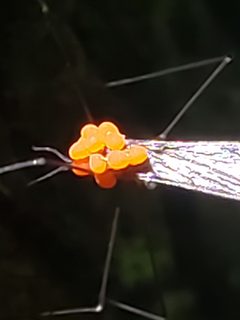
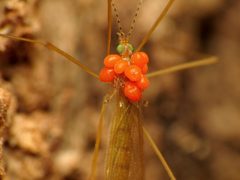
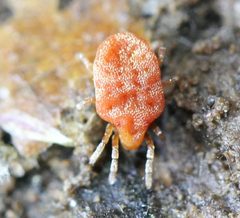
1Calyptostomatidae is a small of predatory mites in the order Trombidiformes. The family contains at least two , Calyptostoma and Smaris, with approximately six described . These mites are placed in the superfamily Calyptostomatoidea within the suborder Prostigmata. They are relatively poorly studied compared to many other mite families.
Pronunciation
How to pronounce Calyptostomatidae: /kəˌlɪptoʊstəˈmætɪdiː/
These audio files are automatically generated. While they are not always 100% accurate, they are a good starting point.
Identification
Members of Calyptostomatidae can be distinguished from related by characteristics of the superfamily Calyptostomatoidea, including specialized mouthpart adaptations associated with their predatory lifestyle. The two Calyptostoma and Smaris differ in morphological details of the idiosoma and leg chaetotaxy. Definitive identification requires microscopic examination.
Images
Distribution
Recorded from Denmark (DK), Norway (NO), and Sweden (SE) based on GBIF distribution data. The likely has a broader distribution in the Holarctic region given the wide-ranging nature of related prostigmatid mites.
Similar Taxa
- AnystidaeAlso in infraorder Anystina; Calyptostomatidae differs by superfamily-level classification (Calyptostomatoidea vs. Anystoidea) and associated morphological specializations
- ErythraeidaeRelated prostigmatid with some predatory members; Calyptostomatidae is distinguished by superfamily placement and lacks the elongated leg proportions typical of many Erythraeidae
More Details
Taxonomic history
The was established by Oudemans in 1923. The Smaris, originally described by Latreille in 1796, was later placed in this family, while Calyptostoma was described by Cambridge in 1875.
Research status
With only about six described and limited biological data, Calyptostomatidae represents a understudied lineage within the diverse prostigmatid mites. Most records appear to be from European collections.