
Arrenuridae
Genus Guides
1- Arrenurus(water mites)
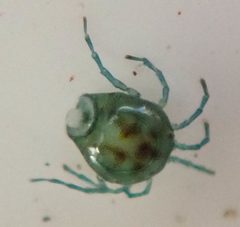
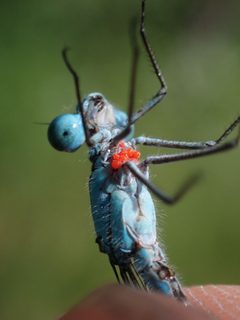
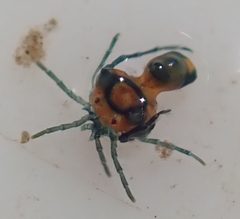
Arrenuridae is a of water mites (Hydrachnidia) in the order Trombidiformes, containing at least three and approximately 110 described . Members are primarily freshwater as and deutonymphs, with larvae that parasitize aquatic insects. The family exhibits complex mating mediated by chemical communication, including female-emitted that trigger male responses.
Pronunciation
How to pronounce Arrenuridae: //əˌrɛnjʊˈraɪdiː//
These audio files are automatically generated. While they are not always 100% accurate, they are a good starting point.
Images
Habitat
Freshwater environments including standing and flowing waters; shallow ponds with dense submerged vegetation.
Distribution
Palearctic region; recorded from Denmark, Norway, and Sweden.
Diet
and deutonymphs are that primarily feed on Ostracoda.
Host Associations
- Diptera - larval larvae parasitize aquatic insects
- Coleoptera - larval larvae parasitize aquatic insects
Life Cycle
Larvae parasitize aquatic insects; and deutonymphs are predatory.
Behavior
Males exhibit complex mating including arrestant behavior (stopping swimming), leg fanning (rotary motion of hind legs), and readiness posture (crooking hind legs at fourth segment and placing flat over cauda). Females walk with rotary fourth leg motion and climb onto male cauda when in proximity. Sperm transfer occurs after female is glued to male cauda. Rocking and vigorous jerking of cauda occur in later mating stages.
Ecological Role
of Ostracoda as and deutonymphs; of aquatic insects (Diptera, Coleoptera) as larvae.