
Damaeus
Koch, 1835
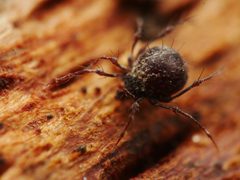
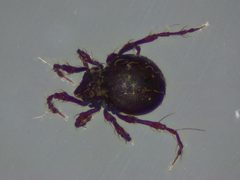
Damaeus is a of oribatid mites (Acari: Oribatida: Damaeidae) established by Koch in 1835. The genus has undergone significant taxonomic revision, with several former subgenera now elevated to full generic status (Epidamaeus, Kunstidamaeus, Spatiodamaeus) while Adamaeus, Paradamaeus, and Damaeus sensu stricto remain as subgenera. occur in both epigeic (surface) and hypogean (cave) across Europe and Crimea. Some species are specialized cave-dwellers (eutroglophiles) that complete their entire in subterranean environments without developing obvious troglomorphic features.

Pronunciation
How to pronounce Damaeus: /dæˈmaɪəs/
These audio files are automatically generated. While they are not always 100% accurate, they are a good starting point.
Identification
Distinguishing Damaeus from related requires examination of morphological characters of both and stages. The genus differs from Epidamaeus, Kunstidamaeus, and Spatiodamaeus in specific structural features of the body surface and setation patterns, though precise diagnostic characters vary by subgenus. stages are often critical for -level identification within the genus.
Images
Habitat
varies by : some inhabit epigeic terrestrial environments including soil and litter layers, while others are specialized cave-dwellers (eutroglophiles). Cave-dwelling species such as D. kovali and D. kizilkobensis from Crimea complete their entire development cycles in subterranean environments and have not been found in other terrestrial habitats. These cave do not exhibit obvious troglomorphic morphological modifications.
Distribution
Europe, including Scandinavian countries (Denmark, Norway, Sweden recorded in GBIF) and the Crimean Peninsula. The has been recorded from caves in Crimea and from various European localities for constituent .
Diet
Has been observed to include fungal material (mycophagy), based on dietary classification for the .
Host Associations
- Wolbachia - bacterial endosymbiontDetected in D. onustus; ~7% rate suggests non-primary status. The 16S rDNA sequence showed 92–93% similarity to from springtails (Megalothorax minimus, Neelus murinus) and Bryobia sp. mite, potentially representing a new supergroup.
Life Cycle
Development includes distinct stages (nymphs). In D. kovali, the entire ontogenetic development occurs within caves with all juvenile stages described. Historical records indicate nymphs of other cave-dwelling occur in the same caves as , suggesting complete subterranean development.
Behavior
Some exhibit specialized cave-dwelling as eutroglophiles, maintaining exclusively in subterranean despite lacking obvious morphological adaptations to cave life. is sexual in at least D. onustus.
Ecological Role
Participates in soil decomposition processes as part of the oribatid mite . As mycophagous mites, contribute to nutrient cycling through consumption of fungal material.
Human Relevance
Serves as a for bacterial endosymbionts, with potential significance for understanding -microbe evolutionary relationships. The discovery of a potentially novel Wolbachia supergroup in D. onustus contributes to knowledge of endosymbiont diversity and .
Similar Taxa
- KunstidamaeusFormerly a subgenus of Damaeus, now elevated to generic status; includes eight European with some troglophilous members
- EpidamaeusFormerly a subgenus of Damaeus, now elevated to generic status
- SpatiodamaeusFormerly a subgenus of Damaeus, now elevated to generic status
- AdamaeusRetained as a subgenus within Damaeus
- ParadamaeusRetained as a subgenus within Damaeus
More Details
Taxonomic History
The concept of Damaeus has been substantially revised. Formerly broad (Damaeus sensu lato), the now excludes Epidamaeus, Kunstidamaeus, and Spatiodamaeus as separate genera, while retaining Adamaeus, Paradamaeus, and Damaeus sensu stricto as subgenera.
Sources and further reading
- BugGuide
- GBIF taxonomy match
- iNaturalist taxon
- NCBI Taxonomy
- Catalogue of Life
- First report of Wolbachia in Damaeus onustus (Acari: Oribatida)
- Taxonomy of European Damaeidae (Acari: Oribatida) I. Kunstidamaeus Miko, 2006, with comments on Damaeus sensu lato
- Review of Damaeus (Acari: Oribatida: Damaeidae) from Crimea with description of two new cave-dwelling species
- <strong>Morphological ontogeny, distribution and ecology of <em>Damaeus torquisetosus</em> and <em>Epidamaeus puritanicus</em> (Acari: Oribatidae: Damaeidae)</strong>