
Megalothorax minimus
Willem, 1900
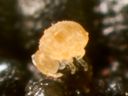
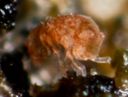
Megalothorax minimus is a minute in the Neelidae, first described by V. Willem in 1900. It belongs to the order Neelipleona, a small group of highly reduced, globular springtails. The species has been recorded across a broad geographic range including Europe, North America, and several remote regions including the Antarctic and Subantarctic. Its wide distribution suggests either cryptic diversity or remarkable capabilities for such a small organism.
Pronunciation
How to pronounce Megalothorax minimus: /ˌmɛɡəloʊˈθɔːræks ˈmɪnɪməs/
These audio files are automatically generated. While they are not always 100% accurate, they are a good starting point.
Identification
Distinguished from other springtails by its extremely small size (<0.5 mm) and highly globular, reduced body form. Within Neelidae, separation from requires microscopic examination of chaetotaxy (bristle arrangement) and antennal structure. M. minimus is the type of the Megalothorax. Separation from other neelid genera (e.g., Neelus, Megalanurida) relies on antennal segment number and the structure of the postantennal organ.
Images
Habitat
Found in soil and litter layers, particularly in moist microhabitats. Records suggest occurrence in diverse substrates including forest soils, grassland soils, and possibly deeper soil horizons. The broad geographic distribution implies adaptability to varied soil conditions, though specific microhabitat preferences remain poorly documented.
Distribution
Documented from Europe (primary range), North America, São Miguel (Azores), Amazon region, Antillean region and southern Florida, Arctic and Subarctic, and Antarctic and Subantarctic regions. This disjunct global pattern may reflect actual wide distribution, human-mediated , or cryptic .
Ecological Role
Functions as a decomposer in soil , contributing to nutrient cycling through consumption of fungal , bacteria, and decaying organic matter. Its minute size allows occupation of smaller soil pore spaces than larger springtails, potentially accessing distinct resource patches.
Human Relevance
No direct economic or medical significance. Mentioned in ecological and soil biodiversity studies as part of the microarthropod . Potential use as indicator of soil microhabitat conditions, though not specifically studied for this purpose.
Similar Taxa
- Neelus murinusAlso in Neelidae with globular body; distinguished by antennal structure and postantennal organ
- Megalothorax sanctistephani with overlapping European distribution; requires microscopic examination for separation
- Other Neelipleona genera (Megalonychiurus, Spinonychiurus)Similar reduced body plan but differ in antennal segmentation and presence/absence of
More Details
Taxonomic History
Described by V. Willem in 1900; Willem was a prominent early 20th century collembologist who contributed significantly to the of minute springtails. The Megalothorax was established for this and related .
Phylogenetic Position
Neelipleona is one of the four traditionally recognized orders of Collembola, though molecular has challenged traditional classifications. The highly reduced of Neelipleona has made their phylogenetic placement contentious.
Distribution Anomalies
The Antarctic and Subantarctic records are notable given the extreme isolation of these regions. This may indicate: (a) genuine ancient Gondwanan distribution, (b) recent human-mediated introduction, or (c) misidentification of cryptic . The latter two explanations are considered more likely by modern collembologists.