
Neelipleona
Massoud, 1971
Family Guides
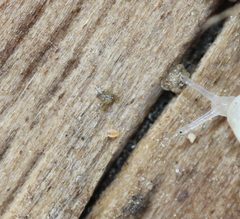
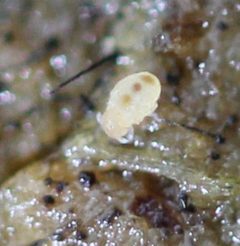
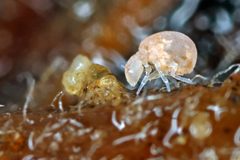
1is an order of minute hexapods within the class Collembola (springtails). Members are characterized by the complete absence of , a trait distinguishing them from most other groups. The group is primarily represented by the Neelidae and includes such as Megalothorax and Spinaethorax. Many exhibit troglomorphic adaptations, including elongated appendages and reduced pigmentation, associated with cave-dwelling habits. The taxonomic rank of Neelipleona remains debated, with some authorities treating it as a suborder of Symphypleona or placing it within Entomobryomorpha.
Pronunciation
How to pronounce Neelipleona: /ˌniːlɪˈpliːoʊnə/
These audio files are automatically generated. While they are not always 100% accurate, they are a good starting point.
Identification
can be distinguished from other Collembola by the complete absence of . Members are minute in size and possess a globular body form. identification requires examination of chaetotaxy (arrangement of bristles), particularly on , legs, and . Diagnostic features include patterns of S- on antennomeres, the presence and of special τ-chaetae, and the structure of the mucro. Troglobiotic species often display elongated antennae, foot complex, and mucro relative to body size.
Images
Habitat
occupy subterranean environments including caves and the mesovoid shallow substratum (MSS). They have been documented in ice caves with inversed temperature gradients, superficial subterranean , and high-altitude bioclimatic zones. Some species show troglophilic tendencies, being more abundant in MSS than surface habitats.
Distribution
Documented from the Carpathian Mountains (Slovakia, Romania), Dobšinská Ice Cave in Slovakia, Drǎcoaia Cave in western Romania, Sierra de Guadarrama National Park in Spain, Southern High Appalachia in the USA, and Vietnam. GBIF records indicate presence in Vermont, USA.
Similar Taxa
- SymphypleonaBoth possess globular body shape; distinguished by complete absence, whereas Symphypleona typically retains eyes
- EntomobryomorphaAlternative classification places within this order; Neelipleona differs by globular body form and absence compared to the generally elongate body and presence of eyes in Entomobryomorpha
- PoduromorphaThird major order; separated by globular versus cylindrical body shape and absence
Sources and further reading
- BugGuide
- Wikipedia
- GBIF taxonomy match
- iNaturalist taxon
- NCBI Taxonomy
- Catalogue of Life
- Specific and Intraspecific Diversity of Symphypleona and Neelipleona (Hexapoda: Collembola) in Southern High Appalachia (USA)
- Four new troglobiotic species of the genus Megalothorax Willem, 1900 (Collembola: Neelipleona) from the Carpathian Mountains (Slovakia, Romania)
- New species of the genus Megalothorax Willem, 1900 (Collembola: Neelipleona) from a superficial subterranean habitat at Dobšinská Ice Cave, Slovakia
- First record of the genus Spinaethorax Papáč & Palacios-Vargas, 2016 (Collembola, Neelipleona, Neelidae) in Asia, with a new species from a Vietnamese cave.
- Neelipleona and Symphypleona (Collembola) from a Sampling in the Mesovoid Shallow Substratum of the Sierra de Guadarrama National Park (Madrid and Segovia, Spain): Taxonomy and Biogeography