
Piesmatidae
Amyot & Serville, 1843
ash-grey leaf bugs, ash-gray leaf bugs
Genus Guides
2- Parapiesma
- Piesma(ash-grey leaf bugs)
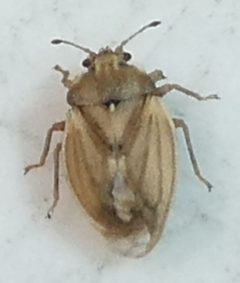
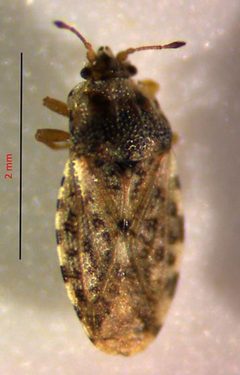
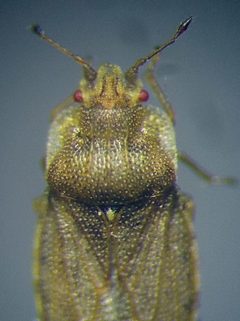
is a small of true bugs (Hemiptera: Heteroptera) in the superfamily Lygaeoidea, commonly known as ash-grey leaf bugs. The family contains three extant and eleven , with over 40 described . Members are small phytophagous insects, typically 2–4 mm in length, characterized by a distinctive reticulate or dimpled pattern on the , , and of the . This dimpled texture represents with the lace bugs (Tingidae) of the infraorder Cimicomorpha. The family has a predominantly temperate Northern Hemisphere distribution, with additional occurrences in Africa, Australia, and South America.
Pronunciation
How to pronounce Piesmatidae: /piːzˈmætɪdiː/
These audio files are automatically generated. While they are not always 100% accurate, they are a good starting point.
Identification
Distinguished from other Lygaeoidea by the characteristic reticulate or dimpled sculpturing of the surface. This punctate pattern superficially resembles Tingidae (lace bugs), but belong to Pentatomomorpha rather than Cimicomorpha and lack the expanded, lace-like paranota and highly reticulate wings typical of tingids. Within Lygaeoidea, Piesmatidae are recognized by the combination of small size, flattened body, and the distinctive surface texture. The Australian Mcateella is identified by guard setae and presence of a stridulatory apparatus. -level identification requires examination of male genitalia and detailed morphological features.
Images
Habitat
Terrestrial associated with plants, primarily in temperate regions. Found on vegetation of Chenopodiaceae, Caryophyllaceae, Amaranthaceae, Fabaceae (Acacia), and Proteaceae. The Australian Mcateella occurs on a wide range of angiosperms, not exclusively Acacia as previously thought.
Distribution
Predominantly distributed in the temperate Northern Hemisphere. Additional occurrences in Africa, Australia, and South America. First recorded from Colombia in 2020 (Caribbean coast, Sincelejo–Sucre). Distribution records from GBIF include Denmark, Norway, and Sweden. The Mcateella is to Australia. The genus Miespa has a transantarctic relationship with Mcateella, suggesting Gondwanan biogeographic connections.
Diet
Phytophagous; feed on plant sap. Documented plant include Chenopodiaceae, Caryophyllaceae, Amaranthaceae, Fabaceae (Acacia), and Proteaceae. The Piesma linnavouri has been recorded on Acacia. Mcateella feed on a wide range of angiosperms, not exclusively Acacia. The host plants of Miespa remain unknown.
Host Associations
- Chenopodiaceae - primary well-documented plants for multiple piesmatid
- Caryophyllaceae - primary well-documented plants for multiple piesmatid
- Amaranthaceae - documented for Parapiesma cinereum in Colombia and Mcateella
- Fabaceae - specifically Acacia; Piesma linnavouri recorded on Acacia
- Proteaceae - primarily for Australian Mcateella
Behavior
(fully winged) and brachypterous (short-winged) morphs occur; the macropterous morph of Piesma costatum was discovered and documented, indicating capability in at least some . The presence of a stridulatory apparatus in Mcateella suggests sound production, likely for intraspecific communication.
Ecological Role
Herbivores that feed on plant sap; specific ecological roles in processes are not well documented. As phytophagous insects, they function as primary consumers on their plants.
Human Relevance
: specimens of Piesma were used as evidence in the 2007 Bakersfield murder trial (People v. Vincent Brothers), where UC Davis entomologist Lynn Kimsey identified Piesma from car parts as evidence of western U.S. travel. The presence of Piesma helped corroborate that a rental car had been driven to California, contradicting the defendant's alibi.
Similar Taxa
- TingidaeSimilar reticulate or dimpled sculpturing, but ; Tingidae belong to Cimicomorpha and have expanded paranota and more extensively reticulate wings
- BerytidaePreviously considered close relatives within Lygaeoidea; Berytidae have elongated bodies and long, stilt-like legs, lacking the characteristic dimpled sculpturing of
- ColobathristidaePreviously considered close relatives within Lygaeoidea; differ in body form and lack the distinctive reticulate surface texture
- MalcidaePreviously considered close relatives within Lygaeoidea; differ in and lack the characteristic dimpled pattern
Misconceptions
The dimpled sculpturing of was initially interpreted as evidence of a close relationship with Tingidae (lace bugs), but this is now recognized as . The Psamminae was formerly included in Piesmatidae but is now placed in Lygaeidae. The Thaicoris was formerly placed in Piesmatidae but is now assigned to Thaumastocoridae. The fossil genus Cretopiesma was described as a primitive piesmatid but has been reassigned to Aradidae.
More Details
Taxonomic History
The has undergone significant taxonomic revision. The Psamminae was transferred from to Lygaeidae. The fossil Cretopiesma, described from mid-Cretaceous Myanmar amber (~100 mya), was removed from Piesmatidae and placed in Aradidae based on cladistic analysis. The fossil genus Eopiesma from early Eocene Oise amber (~55 mya) represents a basal member of the family. The Australian genus Mcateella is defined as monophyletic based on guard setae and stridulatory apparatus; phylogenetic analysis places Miespa as its sister , supporting a transantarctic biogeographic hypothesis.
Phylogenetic Relationships
are placed in the superfamily Lygaeoidea within Pentatomomorpha. Phylogenetic analysis identifies Eopiesma as sister to all remaining extant Piesmatidae. The closest relatives within Lygaeoidea remain uncertain, with various hypotheses proposing relationships to Berytidae, , , or the former Psamminae (now Lygaeidae).
Sources and further reading
- BugGuide
- Wikipedia
- GBIF taxonomy match
- iNaturalist taxon
- NCBI Taxonomy
- Catalogue of Life
- Bugs in My Alibi | Bug Squad
- Host Plants and Morphology of the Piesmatidae and Podopinae1 (Hemiptera: Heteroptera): Further Notes
- First record of the family Piesmatidae Amyot and Serville, 1843 (Hemiptera: Heteroptera: Lygaeoidea) from Colombia
- Systematic revision, phylogeny and host plant associations of the Australian endemic genus Mcateella Drake (Hemiptera : Heteroptera : Piesmatidae)
- Piesma Costatum (Uhler) (Hemiptera: Piesmatidae): First Host-Plant Records, Seasonality, and Discovery of the Macropterous Morph
- Corrigendum to : Systematic revision, phylogeny and host plant associations of the Australian endemic genus Mcateella Drake (Hemiptera : Heteroptera : Piesmatidae)