
Parapiesma cinereum
(Say, 1832)
Parapiesma cinereum is a small true in the Piesmatidae, first described by Thomas Say in 1832. The is distributed across the Americas from the United States through the West Indies and Mexico to Argentina, occupying a broad Nearctic-Neotropical range. As a member of Piesmatidae, it is associated with dry, often weedy or rocky where it feeds on plant material.
Pronunciation
How to pronounce Parapiesma cinereum: /pæɹəˈpiɛzmə sɪˈnɪəriəm/
These audio files are automatically generated. While they are not always 100% accurate, they are a good starting point.
Identification
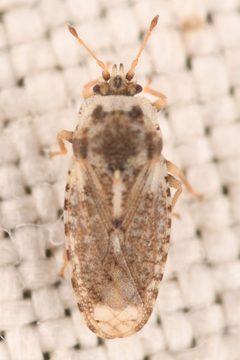
Distinguished from other Piesmatidae by the combination of grayish coloration, reticulate pronotal and hemelytral surface, and specific antennal segment proportions. Differs from the related Piesma by features of the pronotum and male genitalia; precise identification requires examination of these structures. The broadly rectangular body shape separates it from most other small Hemiptera. Within its range, it may be confused with other Piesmatidae, but the grayish (rather than brown or yellowish) coloration is a useful field character.
Images
Appearance
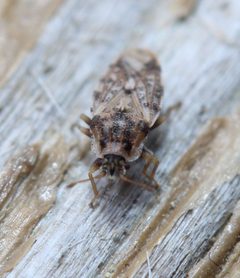
Small, flattened with a distinctly angular, rectangular body outline characteristic of Piesmatidae. The surface shows a reticulate or cellular pattern on the pronotum and forewings (). Coloration is grayish (consistent with the epithet 'cinereum,' meaning ashen or gray), often with darker mottling. are and relatively long. The body is dorsoventrally compressed, an for living in tight spaces under bark or in leaf litter.
Habitat
Dry, open including rocky areas, weedy fields, and edges of agricultural land. Often found under loose bark, in leaf litter, or on low vegetation in xeric to mesic conditions. Associated with disturbed or early successional environments.
Distribution
Widely distributed in the Americas: United States (southern and western regions), West Indies, Mexico, Central America, and South America to Argentina. Records include Colombia. The range spans the Nearctic and .
Diet
Phytophagous; feeds on plant sap from herbaceous vegetation. Specific plants have not been documented for this .
Ecological Role
Human Relevance
No significant economic importance. Occasionally present in disturbed agricultural edges but not known as a crop pest. Of occasional interest to hemipterists due to its broad distribution and the taxonomic interest of the Piesmatidae.
Similar Taxa
- Piesma spp.Other in Piesmatidae share the flattened, rectangular body form but differ in coloration (often brown or yellowish rather than gray) and in details of pronotal and genitalic structure.
- Other small LygaeoideaSuperficially similar small in such as Lygaeidae or Rhyparochromidae lack the distinctly angular body outline and reticulate surface texture of Piesmatidae.
More Details
Taxonomic note
The Piesmatidae has undergone significant taxonomic revision; Parapiesma was established to accommodate previously placed in Piesma that differ in genitalic and other structural features. The broad geographic range suggests possible cryptic diversity, but no are currently recognized.