
Momphidae
Herrich-Schäffer, 1857
mompha moths
Subfamily Guides
1- Momphinae(mompha moths)
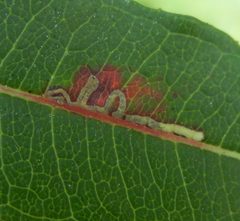
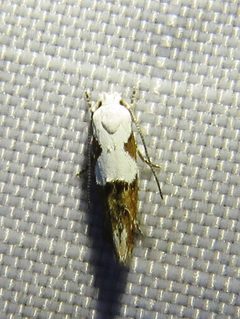
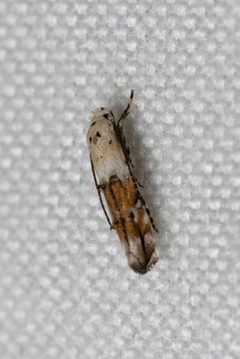
is a of microlepidopteran comprising approximately 115-120 described . are small, with wingspans up to 21 mm, and narrow forewings often bearing raised tufts. The family exhibits remarkable ecological diversity, with larvae occupying six distinct hostplant tissue types: leaves, flowers, fruits, stems, roots, and shoot tips. Phylogenetic studies have identified six major clades corresponding to distinct feeding modes including leaf mining, gall induction, and stem or seed boring. Many species are -plant , particularly on Onagraceae.
Pronunciation
How to pronounce Momphidae: //mɒmˈfaɪdiː//
These audio files are automatically generated. While they are not always 100% accurate, they are a good starting point.
Identification
Distinguished from similar small by the combination of narrow forewings with raised tufts and characteristic resting posture with wings folded over the body. Larval feeding mode and hostplant association often provide additional diagnostic characters at the level. Distinguished from Cosmopterigidae and Elachistidae by morphological characters and historically revised generic placements.
Images
Appearance
Small with wingspans up to 21 mm. Forewings narrow, often with raised tufts. Wings held folded roof-like over the body at rest. Coloration and pattern vary by ; overall appearance typical of microlepidoptera.
Habitat
Associated with hostplants in diverse terrestrial environments including forests, grasslands, and disturbed . Specific habitat requirements determined by larval hostplant distribution. Collections documented from western and southwestern USA, Rica, New Zealand, and Brazilian Atlantic Rain Forest.
Distribution
distribution with records from North America, Central America, South America, Europe, and Oceania. Documented from at least 15 countries based on molecular database accessions. In North America, well-sampled in southwestern USA with numerous undescribed species-level .
Seasonality
activity and larval collection timed to hostplant reproductive maturity; specific seasonal patterns vary by and geographic location.
Diet
Herbivorous. Larvae exploit hostplant resources through six feeding modes: leaf mining, flower boring, fruit boring, stem boring, root feeding, and gall induction. Documented hostplant include Onagraceae (primary, especially Oenothera), Melastomataceae, Cistaceae, Haloragaceae, Lythraceae, Rubiaceae, and Polygonaceae.
Host Associations
- Onagraceae - primary especially Oenothera; ancestral state for
- Melastomataceae - gall induction Tibouchina in Brazilian Atlantic Rain Forest
- Cistaceae - plant
- Haloragaceae - plant
- Lythraceae - plant
- Rubiaceae - plant
- Polygonaceae - plant
Life Cycle
Complete with , larva, pupa, and stages. Larvae are concealed feeders, occupying flowers, fruits, leaves, shoot tips, stems, or roots depending on . Some Mompha species exhibit lability in hostplant-tissue utilization between different or instars. occurs within the feeding site or in concealed locations.
Behavior
Larvae are concealed feeders, never exposed on plant surfaces. Many are monophagous or oligophagous, typically occupying a unique hostplant defined by hostplant species, tissue type, and feeding mode. Mompha shows lability in tissue utilization between or instars.
Ecological Role
Phytophagous herbivores contributing to plant-insect diversity through specialized associations. Gall-inducing modify hostplant tissue development. Leaf miners and borers influence plant tissue dynamics. Form part of as prey for and other natural enemies.
Human Relevance
No documented economic importance. Of scientific interest for studies of hostplant specialization, gall induction, and insect-plant . Some potentially useful as biological indicators of quality due to specialized hostplant associations.
Similar Taxa
- CosmopterigidaeHistorically confused; several momphid transferred to Cosmopterigidae based on morphological revisions
- ElachistidaeUrodeta transferred from to Elachistidae; similar small size and concealed larval habits
More Details
Phylogenetic structure
Six major clades identified: Onagraceae flower- and fruit-boring clade, Melastomataceae-galling clade, two leafmining clades, Zapyrastra clade, and monobasic Mompha eloisella lineage
Undescribed diversity
delimitation analyses suggest approximately 56 undescribed species-level , many -plant on Onagraceae in southwestern USA
Sources and further reading
- BugGuide
- Wikipedia
- GBIF taxonomy match
- iNaturalist taxon
- NCBI Taxonomy
- Catalogue of Life
- Three New Species of Gall-inducing Moths Found in the Brazilian Atlantic Rain Forest
- Palaeomystella rosaemariae Archives - Entomology Today
- Phylogeny, host use, and diversification in the moth family Momphidae (Lepidoptera: Gelechioidea)