
Hydroptilidae
Stephens, 1836
Microcaddisflies, Purse-case Caddisflies
Subfamily Guides
6- Hydroptilinae
- Leucotrichiinae
- Neotrichiinae
- Ochrotrichiinae(microcaddisflies)
- Orthotrichiinae
- Stactobiinae(microcaddisflies)
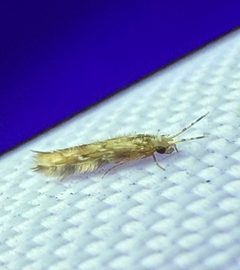
is the largest of caddisflies (Trichoptera), comprising over 2,600 in 76 and six . are minute, rarely exceeding 5 mm in length, making them the smallest caddisflies. They are characterized by simple in larvae: early instars (I–IV) are caseless and free-living, while the final instar (V) constructs a distinctive purse-shaped portable case and develops a greatly enlarged (physogastric) as the primary feeding and growing stage. The family has a worldwide distribution, with subfamilies showing distinct regional patterns. Adults are strongly attracted to ultraviolet lights and may congregate in large numbers.
Pronunciation
How to pronounce Hydroptilidae: /haɪdroʊˈptɪlɪdiː/
These audio files are automatically generated. While they are not always 100% accurate, they are a good starting point.
Identification
are distinguished from other caddisfly by their minute size (typically under 5 mm) and reduced wing venation. The combination of small size and purse-case larval is diagnostic for the family. Among , and are distinguished primarily by male genitalic features; wing venation is not taxonomically reliable. Some tropical genera exhibit metallic coloration. The genus Orthotrichia is identifiable by the unique triangular tooth on the larval .
Images
Habitat
Larvae occur in a wide range of aquatic environments including swiftly moving waters and vegetation-rich areas. They develop in shallow waters of lakes, streams, and rivers. Early instars are distributed evenly on all sides of substrates; final instar larvae and pupae aggregate on the bottom side of substrates. are terrestrial but frequently encountered at UV light collecting sites near aquatic .
Distribution
Worldwide in all faunal regions. Three (Leucotrichiinae, Neotrichiinae, Ochrotrichiinae) are largely Neotropical with some extension into North America. Hydroptilinae occurs in the Old World with two (Hydroptila, Oxyethira). Orthotrichiinae includes the cosmopolitan genus Orthotrichia. Stactobiinae shows varied regional or multi-regional distributions. The related Ptilocolepidae (formerly a subfamily) is restricted to the Holarctic region.
Life Cycle
Holometabolous with terrestrial and aquatic larval/pupal stages. Simple : early instars I–IV are caseless, free-living, and of short duration; final instar V constructs the purse-case and serves as the primary feeding and growing stage with greatly enlarged . Some , such as Mayatrichia ponta, exhibit asynchronous multivoltine with cohort and overlap; development rate is reduced in winter, with winter generations having wider capsule widths than summer generations. Sex ratio in adults of studied species is male-biased (e.g., 1.43 ♂ : 1 ♀ in M. ponta). ranges from 46 to 150 per female.
Behavior
are strongly attracted to ultraviolet lights and may congregate in huge numbers at collecting sites. Early instar larvae swim and disperse using long, fine setae that provide resistance to sinking. Final instar larvae expand their cases by splitting margins, adding silk, and resealing to accommodate their enlarging . Ontogenetic microhabitat shifts occur: early instars distributed evenly on all sides of substrates, while final instar larvae and pupae aggregate on the bottom side of substrates.
Ecological Role
Larvae contribute to aquatic as primary consumers and prey items. Their case-making activity and substrate patterns influence local microhabitat structure. Some serve as indicators of water quality and health in aquatic environments.
Human Relevance
are frequently collected by entomologists at UV light traps, sometimes in overwhelming numbers. The is of interest in aquatic biomonitoring due to its diversity and specific requirements. No significant economic impacts (positive or negative) are documented.
Similar Taxa
- PtilocolepidaeFormerly treated as Ptilocolepinae within ; now recognized as separate based on distinct morphological features. Restricted to Holarctic region compared to worldwide Hydroptilidae distribution.
- Other Trichoptera familiesDistinguished by the combination of minute size (under 5 mm), reduced wing venation, and the unique purse-case larval —no other caddisfly exhibits this simple with caseless early instars.
Sources and further reading
- BugGuide
- Wikipedia
- GBIF taxonomy match
- iNaturalist taxon
- NCBI Taxonomy
- Catalogue of Life
- Bug Eric: Don't Ignore the Small Bugs!
- Bug Eric: November 2016
- Bug Eric: 2016
- Loch Ness - big loch, small wonders! - Buglife Blog - Buglife
- Bug Eric: National Moth Week 2021 Review
- Bug Eric: 2021
- HYDROPTILIDAE (TRICHOPTERA) FROM SOUTHERN UNITED STATES
- Catalog of the Hydroptilidae (Insecta, Trichoptera)
- Table 1: Ascotrichia species and distributions (Trichoptera, Hydroptilidae).
- The hydroptilid tribe Stactobiini (Trichoptera : Hydroptilidae) in New Guinea
- First record of Hydroptila kalonichtis Malicky, 1972 (Trichoptera, Hydroptilidae) from the Western Balkans Prvi nalaz vrste Hydroptila kalonichtis Malicky, 1972 (Trichoptera, Hydroptilidae) sa zapadnog Balkana.
- The genus Pseudoxyethira Schmid (Trichoptera, Hydroptilidae) in Japan
- Life History of Mayatrichia ponta Ross (Trichoptera: Hydroptilidae) in Honey Creek, Turner Falls Park, Oklahoma
- Assessing molecular phylogenetics of Hydroptilidae (Trichoptera) subfamily lineages, with notes on biogeography
- Five new species and new records of Hydroptilidae (Trichoptera) from the Wet Tropics of northeastern Queensland
- Additions to the genus Rhyacopsyche Müller, 1879 (Trichoptera, Hydroptilidae) in Ecuador.
- Microcaddisflies (Trichoptera, Hydroptilidae) of the Baja California peninsula, Mexico: checklist and description of two new species.