
Oxyethira
Eaton, 1873
Species Guides
4- Oxyethira forcipata(microcaddisfly)
- Oxyethira pallida
- Oxyethira serrata
- Oxyethira zeronia(microcaddisfly)
Oxyethira is a of microcaddisflies (Trichoptera: Hydroptilidae) comprising over 200 described worldwide. The genus exhibits high with new species continuing to be described, particularly from under-sampled regions. Larvae are aquatic and construct distinctive silk cases in their final instar.
Pronunciation
How to pronounce Oxyethira: /ˌɔk.siˈɛ.θɪ.rə/
These audio files are automatically generated. While they are not always 100% accurate, they are a good starting point.
Identification
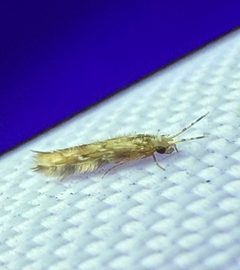
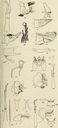
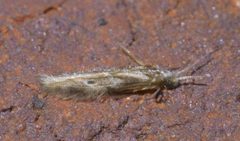
Microcaddisflies in this are distinguished by their minute size (typically 3–5 mm as ) and reduced wing venation characteristic of Hydroptilidae. Final instar larvae bear bottle-shaped or purse-shaped silk cases, often with a narrow opening; young larvae lack cases entirely. Specific identification requires examination of genitalia .
Images
Habitat
Aquatic environments including lakes, ponds, and slow-moving waters. Larvae inhabit stems and leaves of submerged aquatic vegetation.
Distribution
distribution with over 200 described. Documented from North and South America, Europe, Asia, and Australia. In Brazil, 35 species are now recorded following recent taxonomic work. Specific records include Northeast Brazil (Ceará, Piauí, Pernambuco), Lake Utonai in Hokkaidô (Japan), and multiple localities in Colombia (Boyacá, Cundinamarca, Huila, Tolima, Antioquia).
Diet
Larvae of at least some feed on filamentous green by breaking walls with their and sucking out cell contents.
Life Cycle
One-year has been documented in O. acuta: young larvae appear in late summer, final instar larvae persist from early autumn through the following summer, with occurring in summer. Young larvae lack cases; final instar larvae construct silk cases.
Behavior
Young larvae do not construct cases and are free-living among aquatic vegetation. Final instar larvae build distinctive bottle-shaped silk cases attached to plant substrates.
Ecological Role
Larval grazing on contributes to primary consumer dynamics in freshwater . Silk case construction may provide substrate for micro-epiphytes.
Similar Taxa
- HydroptilaAlso in Hydroptilidae with reduced size and wing venation; distinguished by larval case and genitalia structure
- AgrayleaOverlaps in and size; Oxyethira larvae typically have more elaborate silk case construction in final instar
Sources and further reading
- BugGuide
- Wikipedia
- GBIF taxonomy match
- iNaturalist taxon
- NCBI Taxonomy
- Catalogue of Life
- Morphology and ecology of immature stages of Oxyethira acuta Kobayashi (Trichoptera, Hydroptilidae).
- Taxonomic study of the genus Oxyethira Eaton 1873 (Trichoptera: Hydroptilidae) from Northeast Brazil: Eleven new species and distributional records