
Agraylea
Curtis, 1834
Species Guides
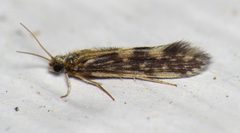
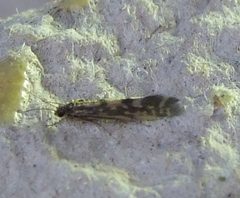
1- Agraylea multipunctata(salt and pepper microcaddis)
Agraylea is a of microcaddisflies ( Hydroptilidae) established by Curtis in 1834. The genus comprises more than 20 described , making it one of the more species-rich genera within the microcaddisfly group. Members are small-bodied characterized by reduced wing venation and abbreviated larval cases. The genus has been documented across northern Europe and North America.
Pronunciation
How to pronounce Agraylea: //æˈɡreɪliə//
These audio files are automatically generated. While they are not always 100% accurate, they are a good starting point.
Identification
are distinguished from other Hydroptilidae by genitalic characters, particularly the structure of the male claspers and . The forewings typically lack crossveins beyond the discoidal , a trait shared with related but with -specific variations in wing shape and setation. Larvae construct distinctive portable cases from sand grains or detritus, often curved or spiral in form; case varies among species and provides a useful diagnostic character when combined with capsule patterns.
Images
Habitat
Larvae inhabit clean, flowing freshwater systems including streams, springs, and small rivers. They are typically found in areas with moderate current and stable substrates such as gravel, cobble, or aquatic vegetation. are found in riparian vegetation near larval .
Distribution
Recorded from northern Europe (Denmark, Norway, Sweden) and North America (including Vermont, United States). The likely has a broader Holarctic distribution given the documented records from both continents.
Ecological Role
Larvae function as or gatherers in stream , processing fine organic matter and contributing to nutrient cycling. As microcaddisflies, their small size allows them to exploit spaces in substrates unavailable to larger .
Similar Taxa
- HydroptilaBoth are microcaddisfly in Hydroptilidae with reduced wing venation; distinguished by male genitalia structure and larval case , with Hydroptila cases typically straighter and more tubular.
- IthytrichiaOverlaps in size and ; Agraylea generally have more pronounced wing markings and differ in genitalic configuration.