Coniopterygidae
Dustywings, Dusty-winged Lacewings
Subfamily Guides
2- Aleuropteryginae(dustywing lacewings)
- Coniopteryginae(dusty lacewings)
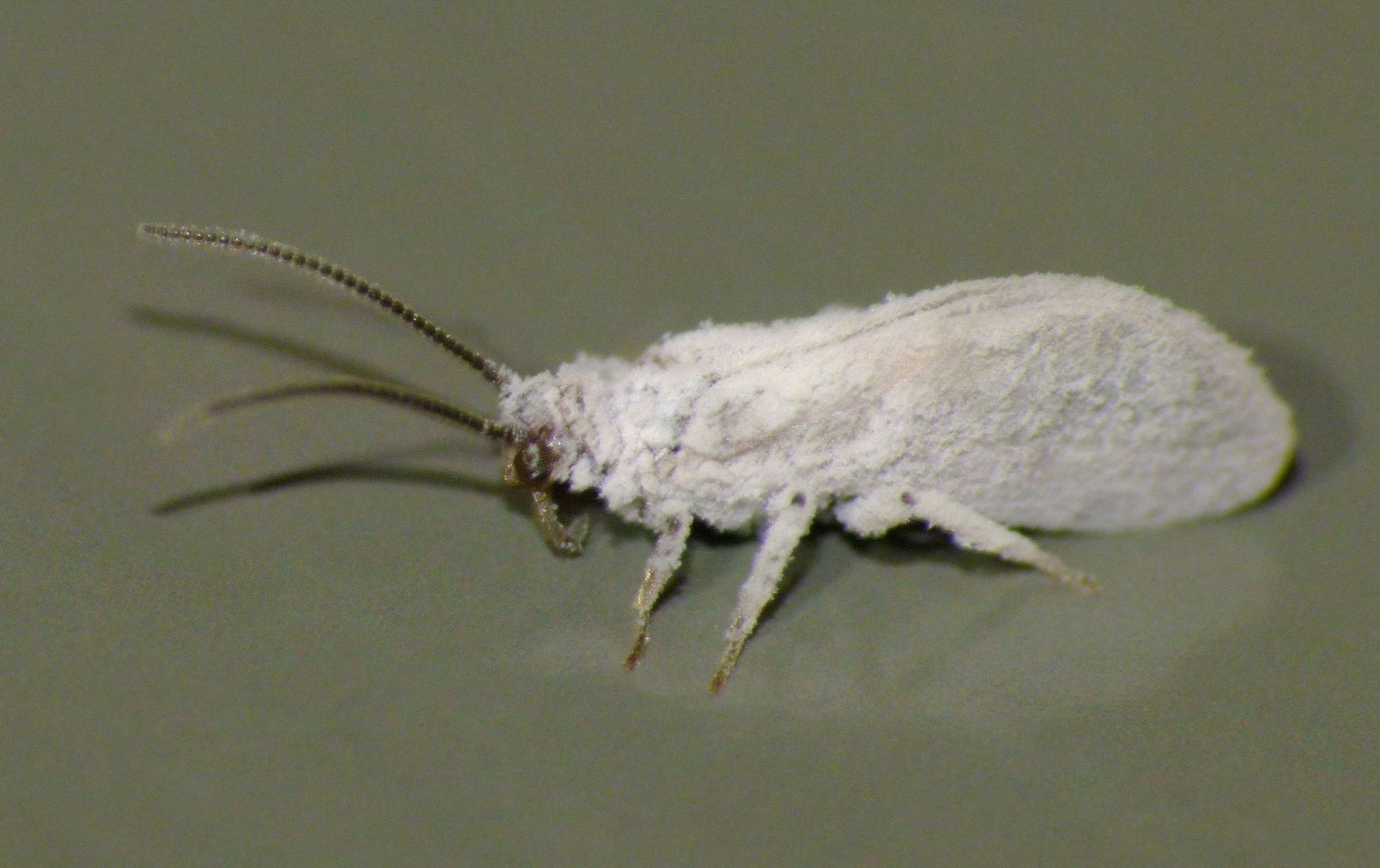
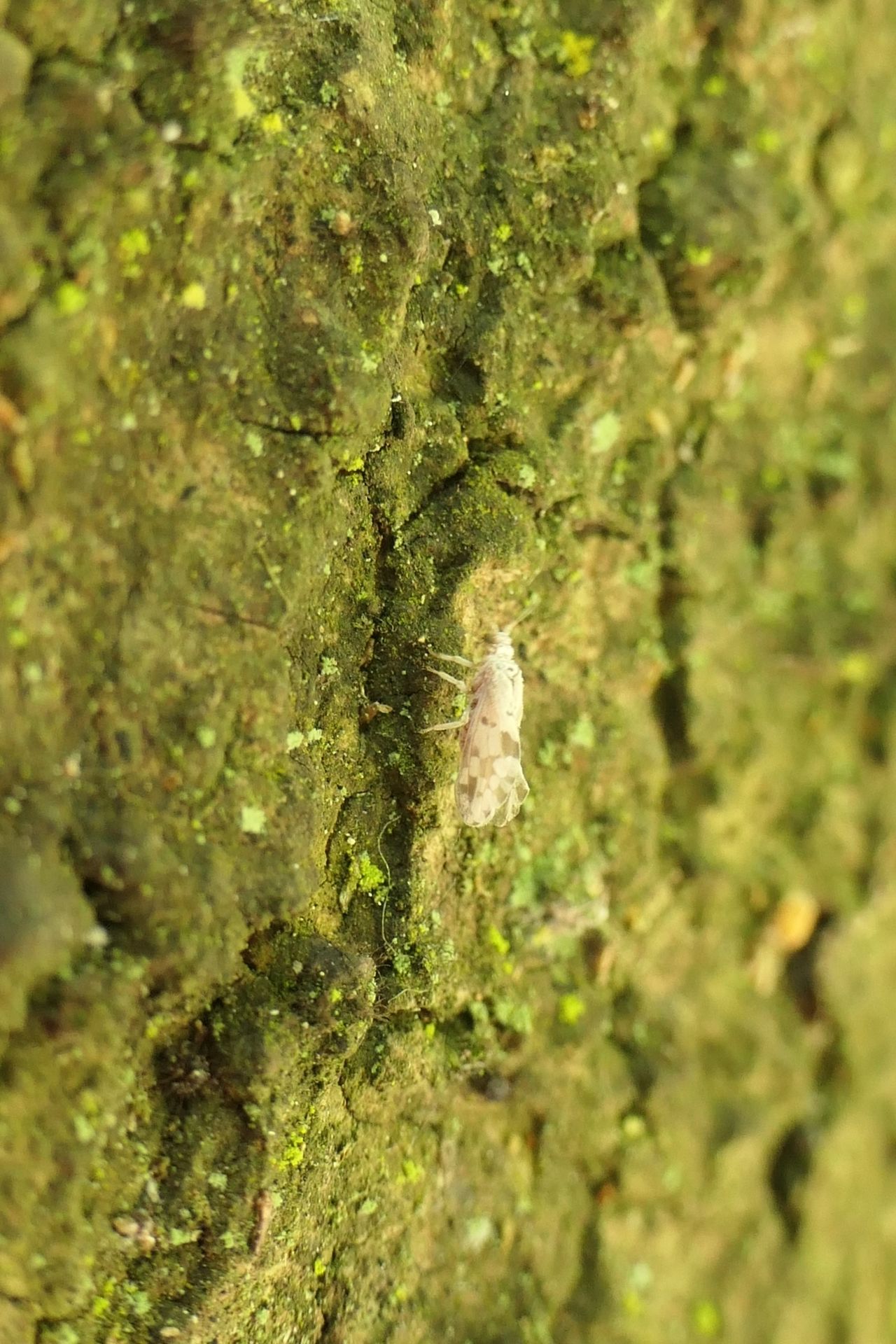
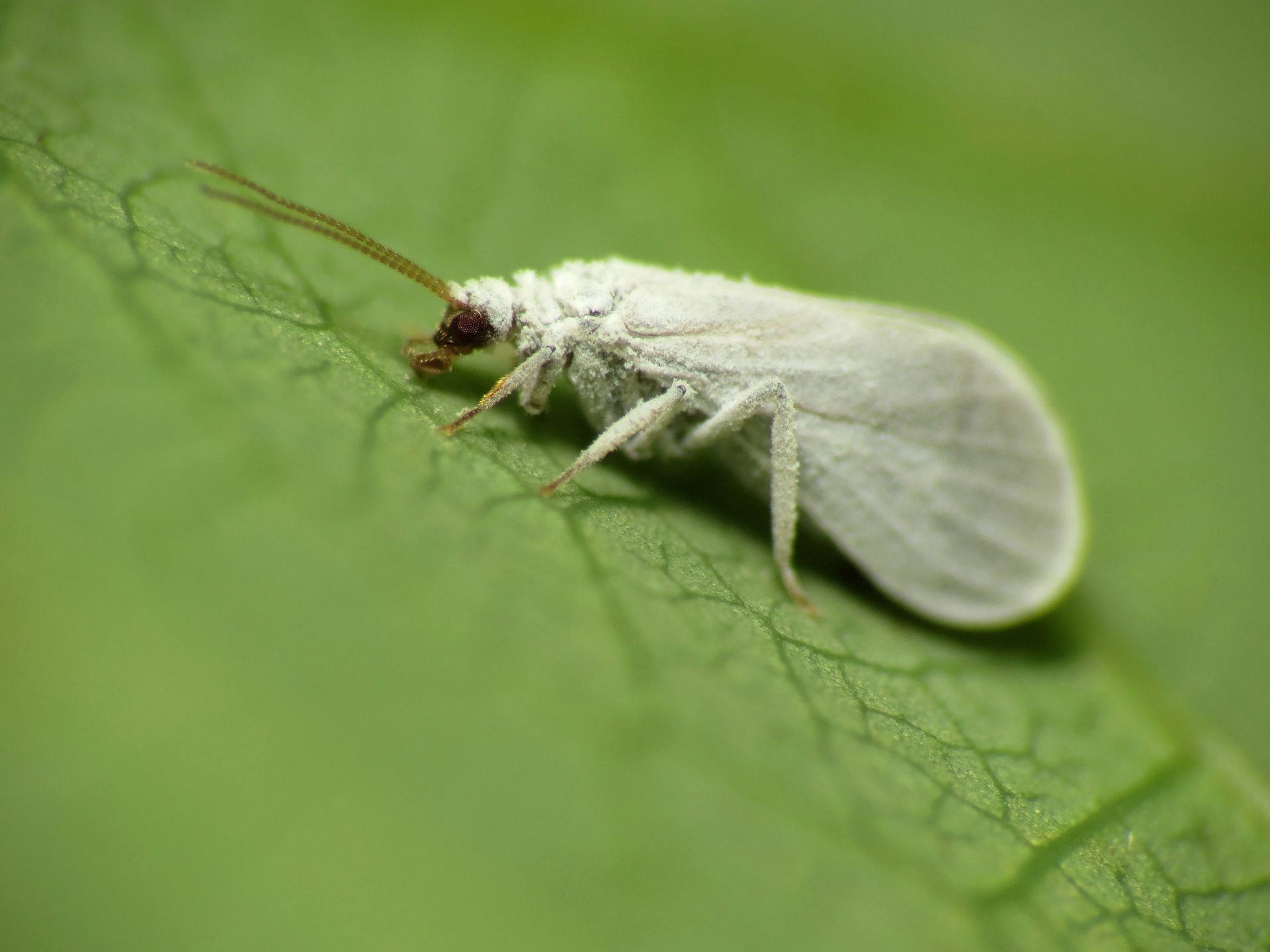
, commonly known as or dusty-winged lacewings, are the smallest of Neuroptera, with forewing lengths rarely exceeding 5 mm and wingspans between 1.8 and 5 mm. are distinguished by a covering of white waxy that gives them a powdery appearance, and by reduced wing venation unique among living net-winged insects. The family comprises approximately 460–570 extant distributed globally, with a fossil record extending to the Early Jurassic. Dustywings are predatory insects strongly associated with woody plants, where both larvae and adults hunt small prey.
Pronunciation
How to pronounce Coniopterygidae: /ˌkoʊniˌɒptəˈrɪdʒɪdeɪ/
These audio files are automatically generated. While they are not always 100% accurate, they are a good starting point.
Identification
may be mistaken for whiteflies (Aleyrodidae) due to small size and white waxy appearance, but distinguished by wing posture at rest: carry wings nearly side-by-side, whereas whiteflies hold wings flat across the back. Reduced wing venation with no more than two costal and minimal cross-veins separates from all other living Neuroptera, which possess reticulate net-winged venation. -level identification possible with hand lens using wing venation patterns; -level identification requires microscopic examination of genitalia.
Images
Habitat
Strongly associated with woody plants including shrubs and trees; individuals typically spend entire lives on and around these plants. Found in diverse globally except extremely cold regions. In agricultural contexts, present in crop environments where woody plants occur. Larvae roam undersides of leaves, bark, and fruit.
Distribution
Global distribution across diverse , absent only from extremely cold regions. Documented from Denmark, Norway, Sweden (GBIF records). In China: southern provinces including Yunnan, Guangzhou, and Guizhou. Fossil record extends to Early Jurassic (Toarcian, ~182 million years ago) in Germany, with numerous in Cretaceous and Cenozoic ambers worldwide including Burmese, Lebanese, New Jersey, Baltic, and Spanish ambers.
Seasonality
Active year-round in suitable conditions; larvae observed foraging during winter months in temperate regions when temperatures permit. Two per year typical.
Diet
Predatory. Larvae feed on small soft-bodied including scale insects, aphids, mites, and ; fluids extracted via sucking mouthparts. also predatory, hunting spider mites, scale insects, whiteflies, and other small soft-bodied arthropods.
Life Cycle
Females deposit singly on bark or leaves. Larvae develop on woody plants, feeding predaciously. Larvae spin silken cocoons on leaf undersurfaces or plant parts for ; silk produced by specialized abdominal glands and extruded from , with larva moving in circular pattern to weave cocoon over several hours. Pupation lasts approximately one week. Two per year typical.
Behavior
activity pattern in larvae. and larvae actively forage on vegetation surfaces. Larvae demonstrate continuous foraging even in winter during warm periods. Silk spinning behavior for cocoon construction involves rhythmic abdominal movements. Adults spread waxy secretions from abdominal glands across body surface using specialized behaviors.
Ecological Role
Predatory agents contributing to natural suppression of small pests on woody plants. Significant of spider mites, scale insects, and related pests in agricultural systems including citrus in Florida and California, and boxwoods in mid-Atlantic region.
Human Relevance
Utilized in and programs for suppression of agricultural and ornamental plant pests. Valued by arborists and landscape professionals as winter-active when most other beneficial insects are . Subject of professional training workshops for sustainable pest management.
Similar Taxa
- Aleyrodidae (whiteflies)Similar small size and white waxy appearance, but whiteflies are true bugs (Hemiptera: Sternorrhyncha) with wings held flat across back at rest, versus side-by-side posture in ; whiteflies also possess and different wing structure.
- Hemerobiidae (brown lacewings)Related neuropteran used in , but larger with typical net-winged venation and lacking waxy powder coating.
- Chrysopidae (green lacewings)Related neuropteran , but larger, typically green, with prominent net-veined wings and golden , lacking dusty appearance.
- Sisyridae (spongillaflies)Closest relatives among Neuroptera based on phylogenetic evidence; distinguished by aquatic or semiaquatic larvae feeding on sponges versus terrestrial predatory larvae of , and by more plesiomorphic with better-developed wing venation.
More Details
Wax production
possess specialized glands lining the that produce ribbons of wax spread across body, legs, and wings; likely functions in water retention for these tiny insects.
Phylogenetic significance
exhibit an unusual evolutionary pattern with highly apomorphic (reduced wings, simplified venation) and relatively primitive larvae, opposite to the pattern in sister group Sisyridae (primitive adults, highly derived larvae).
Fossil diversity
Extensive fossil record includes Toarciconiopteryx from Early Jurassic Germany (~182 mya), numerous Cretaceous amber from Myanmar, Lebanon, New Jersey, and others, documenting long evolutionary history of reduced venation and small size.
Sources and further reading
- BugGuide
- Wikipedia
- GBIF taxonomy match
- iNaturalist taxon
- NCBI Taxonomy
- Catalogue of Life
- Tiny hibernal hunters: Dusty-wings, Coniopterigidae — Bug of the Week
- A new species of dustywings (Neuroptera: Coniopterygidae) from mid-Cretaceous Kachin amber
- Introduction to the systematics and distribution of Coniopterygidae, Hemerobiidae, and Chrysopidae used in pest management
- The partial mitochondrial genome of Semidalis anchoroides Liu & Yang, 1993 (Neuroptera: Coniopterygidae).