
Pauropus
Lubbock, 1867
Species Guides
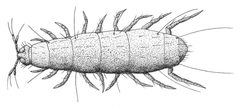
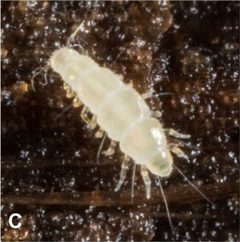
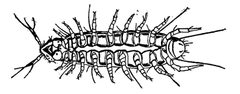
1Pauropus is a of minute myriapods in the class Pauropoda. These animals are among the smallest soil-dwelling arthropods, measuring less than 2 mm in length. Pauropus are characterized by branched and a reduced number of legs compared to other myriapod classes. The genus has been documented across multiple continents including Europe, Asia, and the Middle East.
Pronunciation
How to pronounce Pauropus: //pɔˈʊroʊpəs//
These audio files are automatically generated. While they are not always 100% accurate, they are a good starting point.
Identification
Distinguished from other pauropod primarily by antennal structure and setation patterns. Pauropus can be separated from the similar genus Eurypauropus by differences in the branching pattern of the and the structure of the pygidial sternum. Identification to level requires examination of microscopic characters including the number and arrangement of setae on the tergites and the of the male reproductive organs. Specimens are best collected using or soil flotation methods and examined under compound microscopy.
Images
Appearance
Minute, soft-bodied myriapods with cylindrical bodies. possess 9 pairs of legs, fewer than symphylans (12 pairs) or millipedes. are distinctly branched (biramous), with two . Body coloration is typically pale, whitish, or translucent. The bears a pair of sensory organs (organs of Tomosvary) and simple are absent. Tergites are divided, giving a segmented appearance. Pauropods lack a tracheal system and respiration occurs through the .
Habitat
Strictly terrestrial, occurring in moist soil and leaf litter. Found in the upper soil horizons, particularly in organic-rich layers. Inhabits deciduous and coniferous forests, grasslands, and agricultural soils. Requires high humidity and is sensitive to desiccation. Occurs from sea level to montane elevations. Associated with decaying wood, humus, and root zones of plants.
Distribution
Documented from Israel, Italy, Austria, Switzerland, and Sri Lanka based on occurrence records. The has a broad distribution across the Palearctic region and extends into the Oriental region. Historical scientific literature (1930) specifically addressed distribution patterns of the genus, suggesting ongoing biogeographic interest.
Ecological Role
Contributes to soil mesofauna diversity. Functions as a decomposer in soil . Prey for small predatory arthropods including mites and small beetles.
Human Relevance
No direct economic or medical importance. Occasionally encountered in soil ecological surveys. Serves as an indicator of soil biodiversity and health in forest and agricultural systems.
Similar Taxa
- EurypauropusBoth are in the Pauropodidae with similar minute size and soil-dwelling habits. Distinguished by antennal branching pattern and pygidial sternum structure.
- Symphylans (class Symphyla)Superficially similar small myriapods in soil . Symphylans have 12 pairs of legs and unbranched , versus 9 pairs and branched antennae in Pauropus.
- Diplopoda (millipedes)Both are myriapods in soil . Millipedes are larger, have two pairs of legs per body segment, and unbranched .
More Details
Taxonomic History
The was established by Lubbock in 1867, among the earliest described pauropod . The 1930 Science article by H. T. Silvestri represents early biogeographic study of the genus.
Collection and Study
Pauropus are rarely encountered by casual observation due to their minute size and soil-dwelling habits. Specialized extraction methods are required for study, contributing to limited biological knowledge for many species.
Sources and further reading
- BugGuide
- GBIF taxonomy match
- iNaturalist taxon
- NCBI Taxonomy
- Catalogue of Life
- THE DISTRIBUTION OF PAUROPUS
- The Distribution of Pauropus
- The Distribution of Pauropus
- Two new species of the genus Samarangopus and the first record of Eurypauropusjaponicus (Arthropoda, Myriapoda, Pauropoda, Eurypauropodidae) from China.