
Bdellozonium cerviculatum
Cook & Loomis, 1928
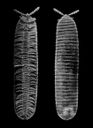
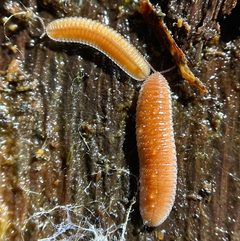
Bdellozonium cerviculatum is a small in the Polyzoniidae, one of two recognized species in its . It is native to the forests of California, where it inhabits crevices in decaying wood. The species reaches up to 16 mm in length and displays distinctive salmon pink coloration in living specimens. It was described by Cook & Loomis in 1928.
Pronunciation
How to pronounce Bdellozonium cerviculatum: /bˌdɛloʊˈzoʊniəm sˌɛrvɪkjʊˈlætəm/
These audio files are automatically generated. While they are not always 100% accurate, they are a good starting point.
Identification
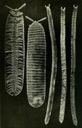
Distinguished from other Polyzoniidae by the combination of: length relative to first segment width; specific ocellar arrangement with and hair; small, truncated first segment with raised rim; and female first leg pair markedly reduced. The salmon pink live coloration is distinctive but fades in preservation. The 39–46 segments and body proportions (width ~2× height) aid separation from similar-sized millipedes.
Images
Habitat
Forest environments in California, specifically within crevices of coarse woody debris including decaying logs and tree bark.
Distribution
to North America; recorded from the United States, specifically California.
Ecological Role
Inhabits decaying wood, suggesting role in decomposition processes within forest .
Similar Taxa
- Other PolyzoniidaeB. cerviculatum can be distinguished by its specific antennal proportions, ocellar arrangement with associated and hair, and the distinctive of the first body segment.
- Bdellozonium rothiThe only other recognized in Bdellozonium; separation requires detailed morphological comparison of segment and leg characteristics.
More Details
Sexual dimorphism
Females possess a highly reduced first pair of legs—considerably smaller and more slender than in males. Male first leg pair is also smaller than subsequent pairs but less reduced than in females.
Segment pores
Ozonial pores located on fifth segment slightly above corner on subsegment near transverse ; additional pores on posterior subsegments closer to transverse sulcus than to lateral margin.
Taxonomic status
One of two recognized in Bdellozonium, with authorship Cook & Loomis, 1928.