
Polyzoniidae
Gervais, 1844
Genus Guides
2Polyzoniidae is a of millipedes in the order Polyzoniida, comprising approximately 9 and at least 60 described . Members of this family belong to the suborder Colobognatha, a group characterized by reduced mouthparts and specialized feeding adaptations. The family has a disjunct distribution across the Northern Hemisphere, with records from North America and Eurasia.
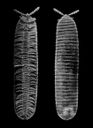
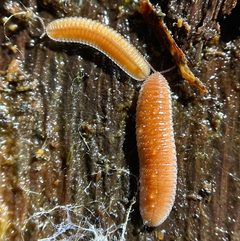
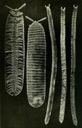
Pronunciation
How to pronounce Polyzoniidae: //ˌpɒlɪˈzoʊni.aɪdiː//
These audio files are automatically generated. While they are not always 100% accurate, they are a good starting point.
Identification
Members of Polyzoniidae can be distinguished from other by their placement in the suborder Colobognatha, which is characterized by a narrow, often pointed with reduced and the presence of a gnathochilarium adapted for fluid feeding. The family Polyzoniidae is distinguished from the related family Siphonotidae by differences in structure and body proportions.
Images
Distribution
Documented from France, United Kingdom, Russia, Alabama (USA), and Arkansas (USA). The exhibits a disjunct distribution across the Northern Hemisphere, with in western Europe, eastern Europe/Asia, and eastern North America.
Similar Taxa
- SiphonotidaeSiphonotidae is the other major in the order Polyzoniida; Polyzoniidae differs in and body proportions, though both share the colobognathan characteristics of reduced and fluid-feeding adaptations.