
Harpaphe
Cook, 1904
Species Guides
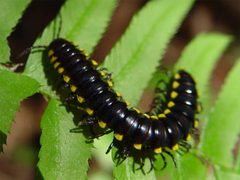
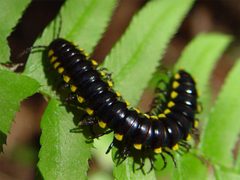
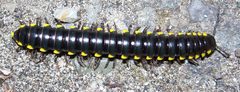
1- Harpaphe haydeniana(yellow-spotted millipede)
Harpaphe is a of flat-backed millipedes in the Xystodesmidae, restricted to the Pacific Northwest of North America. The genus comprises three described : Harpaphe haydeniana, which ranges from Southeast Alaska to Central California and includes six ; and two narrowly species in northern California, H. pottera and H. telodonta. Members of this genus are recognized by their flattened body form characteristic of the order Polydesmida.
Pronunciation
How to pronounce Harpaphe: //ˈhɑːrpəfi//
These audio files are automatically generated. While they are not always 100% accurate, they are a good starting point.
Identification
Flat-backed body with lateral extensions (paranota) on each segment, typical of Polydesmida. Specific identification to level requires examination of and geographic location. Harpaphe haydeniana are distinguished by subtle differences in coloration and minor morphological features correlated with geography.
Images
Habitat
Moist forest environments of the Pacific Northwest, including coastal and montane coniferous forests. Associated with decaying wood and leaf litter.
Distribution
Pacific Northwest of North America. Harpaphe haydeniana: Southeast Alaska to Monterey County, California. Harpaphe pottera: Mendocino and Humboldt counties, California. Harpaphe telodonta: Humboldt and Del Norte counties, California.
Similar Taxa
- Other Xystodesmidae generaShared characteristics including flat-backed ; requires examination of structure and geographic range for differentiation.
- Harpaphe haydeniana subspeciesIntergrade geographically and differ subtly in color and minor morphological features; identification relies on precise locality data.
More Details
Taxonomic history
established by Cook in 1904. The wide-ranging H. haydeniana has been subdivided into six based on geographic and minor morphological variation.
Endemism pattern
Two of three exhibit narrow in northern California, while H. haydeniana shows exceptional range expansion across 15+ degrees of latitude.