
Cherokia georgiana latassa
Hoffman, 1960
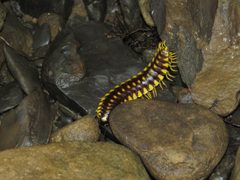
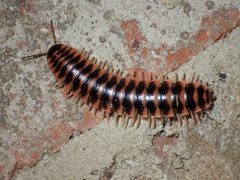
Cherokia georgiana latassa is a of flat-backed millipede originally described by Hoffman in 1960, distinguished by marginal scapulora position and body proportions. Molecular phylogenetic analysis using seven gene loci and delimitation testing has synonymized this subspecies with Cherokia georgiana, demonstrating that morphological characters previously used to define subspecies show clinal variation correlated with geography and elevation rather than phylogenetic structure. The is part of a monospecific to the Appalachian Mountains region of the southeastern United States.

Pronunciation
How to pronounce Cherokia georgiana latassa: //tʃɛˈroʊkiə dʒiːˈɔːrdʒiənə lətæˈsɑː//
These audio files are automatically generated. While they are not always 100% accurate, they are a good starting point.
Identification
Originally distinguished from other Cherokia georgiana forms by marginal (versus submarginal) position of the scapulora and specific body proportions. However, these characters have been shown to vary clinally with geography and elevation, and phylogenetic analysis does not support their diagnostic value for -level separation. Coloration is highly variable and does not accord with geography or .
Images
Habitat
Appalachian Mountains region; recorded from Georgia, Alabama, Tennessee, North Carolina, and Virginia. Specimens collected through citizen science projects have expanded the documented range to include approximately 160 new localities.
Distribution
Southeastern United States: Georgia, Alabama, Tennessee, North Carolina, and Virginia (newly reported state record).
Similar Taxa
- Cherokia georgiana ducillaAlso synonymized with Cherokia georgiana based on same molecular and morphological evidence; originally distinguished by paranota shape and body size characters that show clinal geographic variation
- Cherokia georgiana (nominate form)All have been synonymized with the nominate form based on phylogenetic and delimitation analysis showing a single monophyletic species without distinct genetic groups corresponding to subspecies