
Akamptogonus novarae
(Humbert & De Saussure, 1869)
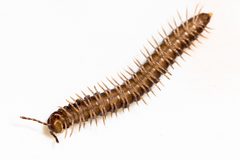
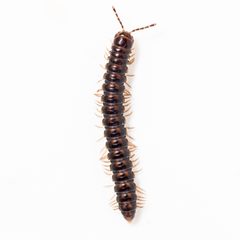
Akamptogonus novarae is a flat-backed millipede in the Paradoxosomatidae, first described from the Austro-Hungarian Novara expedition in 1869. The exhibits a notably broad geographic distribution spanning Australia, North America, and Oceania, which is unusual for a and suggests possible human-mediated . It belongs to the order Polydesmida, the largest order of millipedes, characterized by their flattened body form.
Pronunciation
How to pronounce Akamptogonus novarae: //ˌækæmpˈtɒɡənəs noʊˈvɑreɪ//
These audio files are automatically generated. While they are not always 100% accurate, they are a good starting point.
Images
Distribution
Australia; North America; Oceania (including Pacific islands). The broad, disjunct distribution pattern is atypical for millipedes and may indicate anthropogenic introduction to some regions.
Human Relevance
The ' presence in North America appears to represent an introduced , as this region falls outside the native range of the Akamptogonus. This makes A. novarae a subject of interest for studies on and establishment in new environments.