
Ischnocybe
Cook & Loomis, 1928
Species Guides
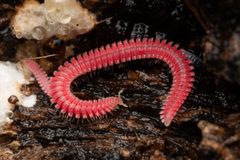
1Ischnocybe is a of millipedes in the order Platydesmida, Andrognathidae. It was established by Cook and Loomis in 1928. Members of this genus are found in the Pacific Northwest region of the United States. Platydesmids are characterized by their flattened bodies and are among the less commonly encountered groups.
Pronunciation
How to pronounce Ischnocybe: /ˌɪsknoʊˈsaɪbi/
These audio files are automatically generated. While they are not always 100% accurate, they are a good starting point.
Identification
Ischnocybe can be distinguished from other platydesmid by features of the , the specialized male reproductive appendages used in sperm transfer. As with other Andrognathidae, the body is strongly flattened dorsoventrally. Specific diagnostic characters require examination of male specimens.
Images
Habitat
Records indicate presence in forested regions of the Pacific Northwest. Like other platydesmids, in this likely inhabit moist microhabitats in woodland environments, such as under decaying wood or within leaf litter.
Distribution
Documented from Idaho, Oregon, and California in the western United States. The appears to be to this region of the Pacific Northwest.
Similar Taxa
- PlatydesmusAnother in Platydesmida; Ischnocybe differs in structure and geographic distribution (Platydesmus is more widespread in eastern North America)
- Brachycybe in the related Andrognathidae; differs in body proportions and
More Details
Taxonomic history
The was described by O.F. Cook and H.F. Loomis in 1928. It is classified in the tribe Dolistenini within Dolisteninae of Andrognathidae.
Research status
Relatively few observations exist (63 records on iNaturalist as of source date), suggesting the is either genuinely rare, undercollected, or restricted to cryptic . No comprehensive modern revision of the genus is widely cited.