
Scolopocryptops peregrinator
Crabill, 1952
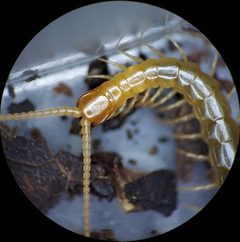
Scolopocryptops peregrinator is a of in the Scolopocryptopidae, described by Crabill in 1952. It belongs to the order Scolopendromorpha, which includes the largest and most morphologically diverse centipedes. The species name "peregrinator" suggests wandering or traveling habits, though specific behavioral studies are limited. It is part of a characterized by relatively small to medium body size within the order.
Pronunciation
How to pronounce Scolopocryptops peregrinator: /ˌskoʊloʊpoʊkɹɪpˈtɒps ˌpɛɹɪˈɡneɪtɔɹ/
These audio files are automatically generated. While they are not always 100% accurate, they are a good starting point.
Identification
Members of Scolopocryptops can be distinguished from other scolopendromorph by the presence of 23 leg-bearing segments (as opposed to 21 in most other in the order). Specific diagnostic features for S. peregrinator would require examination of the original description, including details of tergite sculpturing, sternite pore fields, and leg structure. The genus generally exhibits reduced compared to larger scolopendromorphs.
Images
Distribution
United States; North America. GBIF records indicate presence in the USA, though specific state or regional records are not detailed in available sources.
Similar Taxa
- Scolopocryptops sexspinosusThe most widespread and commonly encountered in the in eastern North America; S. peregrinator would require careful comparison of morphological details from original description to distinguish.
- Scolopendra speciesMuch larger scolopendromorph with 21 leg-bearing segments and well-developed ; Scolopocryptops are generally smaller with 23 leg-bearing segments and reduced eyes.
More Details
Taxonomic note
The Scolopocryptops has undergone significant taxonomic revision, with many historically described from limited material. The original description by Crabill (1952) would be essential for accurate identification, as subsequent literature on this specific species appears sparse.