
Scolopendra alternans
Leach, 1813
Haitian giant centipede, Caribbean giant centipede, Florida Keys centipede
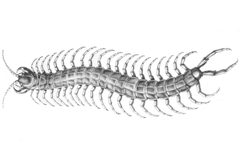
Scolopendra alternans is a large in the Scolopendridae, historically known from the Caribbean and northern South America. Recent taxonomic revision has restricted its confirmed range after resurrection of S. longipes and S. cubensis from synonymy. The reaches 17–19 cm in length and exhibits highly variable coloration across its range. It gained public attention after a documented fatal interaction with the rare rim rock crown snake (Tantilla oolitica) in Florida.
Pronunciation
How to pronounce Scolopendra alternans: /ˌskɒləˈpɛndrə ˈɔːltərnænz/
These audio files are automatically generated. While they are not always 100% accurate, they are a good starting point.
Identification
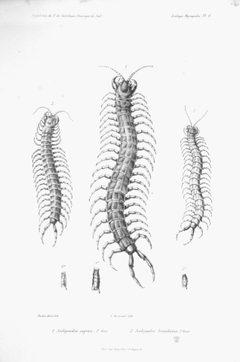
Distinguished from by combination of large size, 21 leg pairs, and specific morphometric characters detailed in Mercurio (2016). Previously confused with S. longipes (Florida Keys and Bahamas) and S. cubensis (Cuba), now recognized as separate based on morphological and geographic data. Identification to species level requires examination of subtle structural characters including tergite and sternite proportions, , and leg segment ratios.
Images
Distribution
Caribbean islands and northern South America. Historical records from Florida and Bahamas now attributed to resurrected S. longipes; Cuban assigned to S. cubensis. GBIF records indicate presence in Bahamas, Brazil, and Central America.
Human Relevance
Documented in a widely publicized ecological interaction where a rim rock crown snake (Tantilla oolitica) died attempting to consume S. alternans, with the also perishing—apparently from asphyxiation. This remains one of few documented -prey interactions involving this .
Similar Taxa
- Scolopendra longipesFormerly synonymized with S. alternans; now recognized as distinct restricted to Florida Keys, Dry Tortugas, mainland Florida (Collier and Dade counties), and Bahamas. Distinguished by morphometric characters and geographic isolation.
- Scolopendra cubensisFormerly synonymized with S. alternans; to Cuba and now recognized as distinct based on morphological differences.
- Scolopendra herosNorth American giant of similar large size and variable coloration, but restricted to south-central United States and northern Mexico; distinguished by geographic range and subtle morphological features.
More Details
Taxonomic History
S. alternans has undergone significant taxonomic revision. Mercurio (2016) resurrected S. longipes and S. cubensis from synonymy, restricting S. alternans to Caribbean and northern South American . The likely represents an evolving -group that diversified during the Paleocene-Eocene (~65.5–50 Ma) due to geographic isolation from plate tectonics and glacial cycles.
Research Needs
The S. alternans -group requires phylogeographic analysis to clarify evolutionary relationships and species boundaries. Current understanding based on and limited geographic sampling; molecular data would help resolve historical .
Sources and further reading
- BugGuide
- Wikipedia
- GBIF taxonomy match
- iNaturalist taxon
- NCBI Taxonomy
- Catalogue of Life
- North America’s largest centipede | Beetles In The Bush
- Resurrection of Scolopendra longipes Wood and Scolopendra cubensis Saussure from synonymy with Scolopendra alternans Leach (Chilopoda, Scolopendromorpha, Scolopendridae): an enigmatic species-group needing phylogeographic analysis, with an overview on the origin and distribution of centipedes in the Caribbean region
- RANDY J. MERCURIO (2016) Resurrection of Scolopendra longipes Wood and Scolopendra cubensis Saussure from synonymy with Scolopendra alternans Leach (Chilopoda, Scolopendromorpha, Scolopendridae): an enigmatic species-group needing phylogeographic analysis, with an overview on the origin and distribution of centipedes in the Caribbean region. Zootaxa, 4111(1): 001–020.