
Bothropolys multidentatus
Newport, 1845
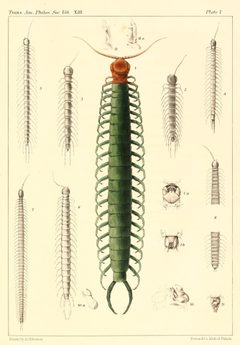
Bothropolys multidentatus is a in the Lithobiidae, found in central-eastern North America. It is a lithobiomorph centipede, meaning it has 15 pairs of legs as an . The species was described by Newport in 1845 and is documented from Ontario, Canada and the central-eastern United States.
Pronunciation
How to pronounce Bothropolys multidentatus: /bɒˈθrɒpəlɪs ˌmʌltiˈdɛntətəs/
These audio files are automatically generated. While they are not always 100% accurate, they are a good starting point.
Identification
Bothropolys multidentatus can be distinguished from other Bothropolys by the number and arrangement of teeth on the forcipules (venom-injecting appendages). The specific epithet "multidentatus" refers to the multiple teeth present. possess 15 pairs of legs, characteristic of the order Lithobiomorpha. Accurate identification requires examination of forcipule and other microscopic features.
Images
Distribution
Canada (Ontario); central-eastern United States. North America.
Similar Taxa
- Other Bothropolys speciesShare similar body plan and geographic range; distinguished primarily by forcipule patterns
- Other Lithobiidae generaSimilar size and preferences; require detailed examination of tergite structure and leg spine patterns for separation
More Details
Family placement note
NCBI places this in Ethopolyidae, while GBIF and Catalogue of Life place it in Lithobiidae. This reflects ongoing taxonomic discussion about family-level classification within Lithobiomorpha.
Observation record
iNaturalist documents 67 observations of this , indicating it is encountered with moderate frequency by naturalists in its range.