
Ptilostomis
Kolenati, 1859
Giant Rusty Sedges, Giant Casemakers
Species Guides
4- Ptilostomis angustipennis(Giant Casemaker)
- Ptilostomis ocellifera(giant casemaker)
- Ptilostomis postica(giant casemaker)
- Ptilostomis semifasciata
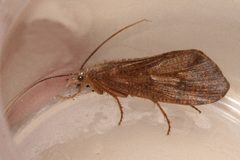
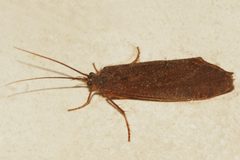
Ptilostomis is a of large caddisflies commonly known as giant casemakers or giant rusty sedges. The genus comprises at least four described distributed in North America. are recognized by their substantial size relative to other caddisflies and rusty or brownish coloration. Larvae construct portable cases using plant material, characteristic of the Phryganeidae.

Pronunciation
How to pronounce Ptilostomis: /ˌtaɪloʊˈstoʊmɪs/
These audio files are automatically generated. While they are not always 100% accurate, they are a good starting point.
Identification
distinguished from other phryganeid by combination of large size, rusty-brown ground color, and specific wing venation patterns including reduced discoidal in forewing. Ptilostomis ocellifera possesses characteristic eyespot markings on wings. Ptilostomis angustipennis has notably narrow forewings. Separation from closely related Phryganea requires examination of genitalic structures. Larval cases coarser and more robust than those of Limnephilidae, with plant fragments arranged in more regular spiral pattern than Oligotricha.
Images
Habitat
Associated with lentic freshwater including ponds, lakes, marshes, and slow-moving sections of rivers. frequently found in riparian vegetation near larval habitats. Larvae inhabit submerged vegetation and detritus in standing or slow-flowing waters with abundant macrophyte growth.
Distribution
Documented from North America with records from the United States including Vermont, and across much of temperate North America. Specific range boundaries for individual remain incompletely documented.
Seasonality
typically occurs during summer months, with peak activity varying by latitude and . Specific periods for individual species not comprehensively established.
Life Cycle
Holometabolous development with , larva, pupa, and stages. Larval stage aquatic, occupying constructed portable cases while feeding and growing through multiple instars. occurs within sealed case attached to submerged substrate. Adults terrestrial, non-feeding or minimally feeding, with reproductive phase limited to brief lifespan.
Behavior
Larvae active case-builders, periodically enlarging or repairing cases as growth proceeds. Cases provide protection and camouflage while larvae forage on submerged surfaces. are weak, fluttering fliers typically remaining close to sites. Mating and oviposition occur near or over water.
Ecological Role
Larvae function as or gatherers in freshwater , processing plant detritus and contributing to nutrient cycling. Serve as prey for fish and aquatic . provide food for riparian including birds and bats.
Human Relevance
Occasionally used as bioindicators of healthy lentic due to specific requirements. sometimes attracted to lights, bringing them to attention of observers. No documented economic importance.
Similar Taxa
- PhryganeaOverlapping distribution and ; distinguished by wing venation details and genitalic , with Phryganea typically showing more pronounced wing patterning.
- OligotrichaSimilar case construction but uses finer, more hair-like plant material; larvae generally smaller with different capsule proportions.
- LimnephilidaeDifferent with larvae constructing cases from sand grains, twigs, or irregular plant pieces rather than regular spiral arrangement of leaf fragments.
More Details
Taxonomic history
established by Kolenati in 1859. Four currently recognized: Ptilostomis angustipennis, P. ocellifera, P. postica, and P. semifasciata. Additional undescribed species may exist based on morphological variation in museum collections.
Case construction
Larval cases represent some of the most architecturally complex structures among Trichoptera, with precisely cut and fitted plant pieces creating a rigid, cylindrical shelter that grows with the occupant.