
Apatania
Kolenati, 1848
Species Guides
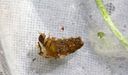
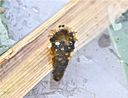
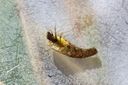
1- Apatania incerta(early smoky wing sedge)
Apatania is a of in the Apataniidae comprising at least 90 described . The genus has a Holarctic distribution, with species recorded across Europe, Asia, and North America. Several species have been studied in detail for their larval , , and . Some species, including A. muliebris, are known to reproduce parthenogenetically.
Pronunciation
How to pronounce Apatania: /ˌæpəˈteɪniə/
These audio files are automatically generated. While they are not always 100% accurate, they are a good starting point.
Identification
Larvae of Apatania can be distinguished from other Apataniidae by specific morphological features including gill arrangement, setation patterns on the metanotal lateral and abdominal segments, and frontoclypeal setation biometry. Species-level identification relies on: presence and arrangement of long tapering setae with flexible tips at the pronotal border; presence or absence of a central gap in the transverse setal band on the 1st abdominal dorsum; setation patterns on abdominal segment I; and distribution patterns. identification typically requires examination of genitalia, with some species showing morphological variation in female genitalia.
Images
Habitat
Larvae are aquatic and associated with freshwater including streams and rivers. Specific microhabitats include water moss in the middle reaches of large rivers, and stones in dark cavities in stream banks for oviposition. High-altitude zone occupy montane streams.
Distribution
Holarctic distribution. European occupy distinct ecoregions: A. helvetica is restricted to the Swiss Alps; A. theischingerorum is to the Iberian peninsula; A. cypria occurs in Cyprus and Lebanon; A. subtilis is restricted to the Caucasus; A. fimbriata ranges across the Alps, western and central highlands, western plains, Hungarian lowlands, and Carpathians; A. muliebris occurs in the Alps, central plains and highlands, Baltic countries, Great Britain, Ireland, and Scandinavia; A. zonella, A. dalecarlica, A. forsslundi, A. auricula, A. hispida, and A. wallengreni occur in Fennoscandia. A. crymophila has been recorded from the Yenisei River in Siberia. North American records include Vermont, USA.
Seasonality
periods vary by and altitude. Montane species A. muliebris, A. zonella, and A. hispida exhibit 2-year ; A. stigmatella has a 1-year cycle in montane zones. Lowland species A. wallengreni has a 1-year life cycle.
Life Cycle
vary from 1 to 2 years depending on and altitude. Embryonic development is temperature-dependent and described by a negative exponential function; the includes cold stenothermal species with no hatching success at 20°C in at least one studied species. volumes increase sigmoidally during development. Larval development occurs in aquatic .
Behavior
exhibit substrate-borne : males produce drumming signals by tapping the mesothoracic legs against the substrate to attract females, who respond with drumming and locate males by upstream. Successful mate location has been observed at distances up to 50 cm. Males may also actively search for females. Pre-mating includes tandem formation before copulation. Larvae exhibit defensive behavior: when disturbed, they rapidly withdraw into their cases and, upon continued disturbance, seal the case opening using the sclerotized edge of the capsule as a plug, protecting against and desiccation.
Ecological Role
Larvae are aquatic primary consumers. Prey for predatory insects including chironomids (on newly hatched larvae) and potentially other aquatic .
Similar Taxa
- Other Apataniidae generaLarvae distinguished by specific gill arrangement and setation patterns; Apatania larvae typically possess diagnostic features at the pronotum and first abdominal segment that separate them from related in keys.
More Details
Parthenogenesis
A. muliebris is confirmed to reproduce parthenogenetically and forms a ('sous groupe') with A. helvetica and A. theischingerorum, the latter two being autochthonous within this complex.
Species complexes
Finnish group into four clades: A. zonella group sensu lato (including A. zonella, A. dalecarlica, A. forsslundi, A. auricula, A. hispida), A. stigmatella, A. wallengreni, and A. muliebris. supports retention of all eight Finnish as separate species.
Population regulation
In A. fimbriata, female mortality between and oviposition is approximately 80%, indicating that the terrestrial stage is probably decisive in . Larval mortality to emergence was measured at 11.3%.
Sources and further reading
- BugGuide
- Wikipedia
- GBIF taxonomy match
- iNaturalist taxon
- NCBI Taxonomy
- Catalogue of Life
- Defensive behaviour of the larva of Apatania fimbriata (Pictet)
- Identification and morphology of an apataniid caddisfly larva from the Levant: Apatania cypria Tjeder 1952
- Mate location and pre‐mating behaviour inApatania fimbriataPictet (Trichoptera, Limnephilidae)
- Mortality of Apatania fimbriata (Insecta: Trichoptera) during embryonic, larval and adult life stages
- DNA-barcoding clarifies species definitions of Finnish <i>Apatania</i> (Trichoptera: Apataniidae)
- Norwegian Apatania Kolenati (Trichoptera: Limnephiiidae): identification of larvae and aspects of their biology in a high-altitude zone
- The Life Cycle and Food of Apatania Zonella (Zett.) in a Spring-Fed Stream in SW Iceland (Trichoptera: Limnephilidae)
- DNA-based association and description of the larval stage of Apatania helvetica Schmid 1954 (Trichoptera, Apataniidae) with notes on ecology and zoogeography
- DNA-based association and description of the larval stage of Apatania theischingerorum Malicky 1981 (Trichoptera, Apataniidae), with notes on its ecology
- Length-mass relationships and seasonal dynamics of Apatania crymophila McLachlan, 1880 (Trichoptera: Apataniidae) caddisfly larvae associated with water moss in the middle reaches of the Yenisei River (Siberia)