
Triaenodes tardus
Milne, 1934
long-horned caddisfly
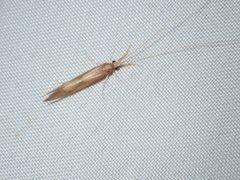
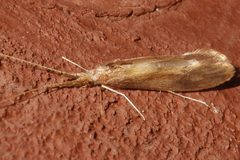
Triaenodes tardus is a North American long-horned caddisfly in the Leptoceridae. Larvae construct portable cases and are capable swimmers, using setae on their extended metathoracic legs to move between aquatic macrophytes. Swimming speed averages 1.47 cm/s even while carrying cases nearly double their body mass. The exhibits reduced swimming activity when vegetation is available, indicating swimming functions primarily for relocation rather than escape.
Pronunciation
How to pronounce Triaenodes tardus: /traɪˈiːnoʊdiːz ˈtɑːrdəs/
These audio files are automatically generated. While they are not always 100% accurate, they are a good starting point.
Identification
Long-horned caddisfly with elongated characteristic of Leptoceridae. Larvae construct cases and possess specialized setae on metathoracic legs for swimming. distinguished from other Triaenodes by specific morphological features described in original description (Milne, 1934); detailed diagnostic characters require examination of genitalia and wing venation patterns.
Images
Habitat
Aquatic environments with macrophytes; larvae associated with living vegetation as primary . Fine sediments serve as substrate where swimming occurs more frequently, though larvae do not elevate off the sediment surface in these contexts.
Distribution
North America; specifically recorded from Vermont, USA and distributed across the Nearctic region.
Behavior
Larvae employ a stereotypic swimming motion sequence that reduces resistance on the upstroke and increases forward momentum on the downstroke. Swimming frequency decreases when vegetation (living or artificial) is available, supporting the hypothesis that swimming functions to locate and move between aquatic macrophytes. Larvae swim while carrying cases that nearly double their body mass. Swimming occurs more frequently on fine sediments but without elevating off the substrate.
Similar Taxa
- Other Triaenodes speciesRequires examination of genitalia and wing venation for definitive separation; larvae share case-building and aquatic preferences
- Other LeptoceridaeLong distinguish , but -level identification requires detailed morphological analysis of