
Phylloicus
Mueller, 1880
Species Guides
2Phylloicus is a of caddisflies (Trichoptera: Calamoceratidae) comprising more than 40 described distributed across the Neotropics. Larvae are aquatic and construct portable cases from rectangular leaf fragments arranged in overlapping layers. The genus exhibits multivoltine with asynchronous development and extended larval periods. While traditionally classified as based on case-building , dietary studies indicate larvae primarily consume fine particulate organic matter. Species occur in diverse freshwater including rainforest streams, savannah streams, and spring-fed tributaries.
Pronunciation
How to pronounce Phylloicus: /fɪˈloɪ.kəs/
These audio files are automatically generated. While they are not always 100% accurate, they are a good starting point.
Identification
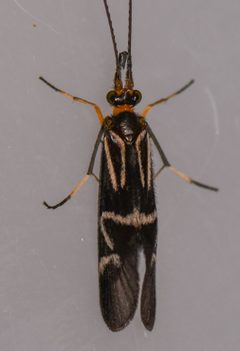
Larvae are distinguished from other calamoceratid by their case architecture: rectangular vegetal fragments of uniform shape arranged in overlapping layers, contrasting with the spiral or cylindrical cases of related . -level identification of larvae relies on muscle scar patterns, , and setal arrangements. identification requires examination of genitalia structure. Pupal identification is based on tergal abdominal hook plate .
Images
Habitat
Freshwater streams across diverse biomes including tropical rainforest, Atlantic Forest, Cerrado savannah, and temperate spring-fed systems. Occupies first through third order streams with varying physical and chemical parameters. Specific documented conditions include acidic water (pH 4.6), low electrical conductivity (10.7 µS cm⁻¹), and temperatures around 24.5°C in Amazonian systems; also occurs in systems with higher conductivity and seasonal leaf litter pulses.
Distribution
Neotropical distribution with records from Brazil (Amazonas, Pará, Tocantins, Federal District), Puerto Rico, Texas (USA), and Colombia (Meta, Boyacá, Antioquia, Chocó, Tolima, Huila, Cundinamarca, Quindío, Risaralda, Magdalena). Center of diversity in the Amazon basin.
Seasonality
Multivoltine with asynchronous larval development; multiple instars and pupae present simultaneously throughout most of the year. First instars observed April through July, October, and November in temperate . Peak abundance in some tropical systems occurs at the end of dry season (October) associated with increased leaf litter input and elevated electrical conductivity.
Diet
Primarily fine particulate organic matter (FPOM), which constitutes approximately 90% of stomach contents regardless of larval stage or season. Coarse particulate organic matter and plant tissue contribute minor proportions. Consumption of FPOM is higher in dry season. Dietary classification as appears based on leaf processing for case construction rather than direct consumption.
Life Cycle
masses deposited above water surface in vegetation near stream banks; eggs circular and immersed in gelatinous spumaline. First instar larvae hatch within 5 days of oviposition and remain within egg mass 3-4 additional days before dispersing. Five larval instars precede . Development time from first instar to ranges from approximately 229 days (P. amazonas) to 275 days (P. elektoros) under laboratory conditions at 22°C, with pupal stages lasting 13.5-16 days. High mortality rates observed in laboratory rearing (<2% survival to adulthood).
Behavior
Case-building involves construction and reconstruction using leaf material; first instar case-making and later instar case reconstruction have been documented via videophotography. Larvae exhibit aggressive interactions when confined under reduced water levels, with increased aggression and mortality under simulated drought conditions. functional feeding group behavior: processes coarse particulate organic matter into smaller fractions through physical fragmentation during case construction and feeding activities.
Ecological Role
in freshwater ; transforms coarse particulate organic matter (particularly leaf litter) into fine particulate organic matter, facilitating decomposition and nutrient cycling. Serves as food source for . Acts as for filamentous fungi in digestive tract, including Endomelanconiopsis endophytica, Myxospora musae, Neopestalotiopsis cubana, and Fusarium pseudocircinatum. fluctuations influence organic matter processing rates in headwater streams.
Human Relevance
Used as model organisms in studies of organic matter processing, drought response, and freshwater function. Laboratory rearing protocols have been established for experimental studies. Sensitivity to water level reduction and riparian vegetation changes makes the potentially useful as an indicator of hydrological disturbance and alteration.
Similar Taxa
- Other CalamoceratidaeDistinguished by unique case architecture: Phylloicus cases consist of rectangular, uniformly shaped vegetal fragments in overlapping layers, whereas related construct spiral or cylindrical cases from differently processed materials.
Misconceptions
Traditional classification as based on morphological and case-building using leaf material; however, gut content analysis reveals primary consumption of fine particulate organic matter rather than direct leaf tissue ingestion. The shredder designation may more accurately reflect function (physical processing of leaves for case construction) than direct dietary habits.
More Details
Laboratory rearing challenges
High mortality rates in laboratory conditions (<2% survival to adulthood in some studies) suggest that controlled environments may not fully replicate natural requirements for development. Extended development times observed in laboratory settings may exceed natural durations.
Fungal associations
Digestive tract harbors diverse filamentous fungi with demonstrated antioxidant activity, including with >90% reduction capacity for hydrogen peroxide radicals. These fungal associations may contribute to digestive capabilities or detoxification processes.
Drought sensitivity
Experimental pool level reduction increases leaf mass loss, aggressive interactions, and larval mortality, indicating early response capability to hydrological disturbance signals.
Sources and further reading
- BugGuide
- Wikipedia
- GBIF taxonomy match
- iNaturalist taxon
- NCBI Taxonomy
- Catalogue of Life
- Immature life cycle of laboratory-reared Phylloicus elektoros and Phylloicus amazonas (Trichoptera: Calamoceratidae) from a central Amazonian stream
- The immature stages of Phylloicus obliquus Navás, 1931 (Insecta: Trichoptera: Calamoceratidae)
- Taxonomia de Phylloicus Müller, 1880 (Trichoptera: Calamoceratidae) da Reserva de Desenvolvimento Sustentável do Uatumã, Amazonas, Brasil
- Effects of experimental pool level reduction on Phylloicus pulchrus (Trichoptera: Calamoceratidae) feeding and conspecific behavior from a tropical rainforest stream
- Life History and Case Building Behaviors of Phylloicus ornatus (Banks) (Trichoptera: Calamoceratidae) In Two Spring Fed Tributaries in the Central Edwards Plateau Bioregion of Texas
- Molecular and morphological diversity, qualitative chemical profile and antioxidant activity of filamentous fungi of the digestive tract of Phylloicus sp. (Trichoptera: Calamoceratidae)
- Life history and phenology of Phylloicus pulchrus (Trichoptera: Calamoceratidae) in a tropical rainforest stream of Puerto Rico
- Diet of Phylloicus (Trichoptera: Calamoceratidae) caddisfly larvae in forest streams of western Pará, central Brazilian Amazonia
- Leaf litter input and electrical conductivity may change density of Phylloicus sp. (Trichoptera: Calamoceratidae) in a Brazilian savannah stream
- Life History and Case-Building Behavior of <I>Phylloicus ornatus</I> (Trichoptera: Calamoceratidae) in Two Spring-Fed Streams in Texas
- Influence of leaf detritus quality and risk of predation on the behavioral patterns of Phylloicus sp. (Trichoptera: Calamoceratidae)