
Calamoceratidae
Ulmer, 1905
Genus Guides
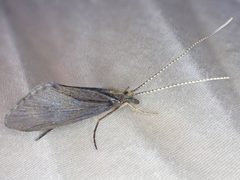
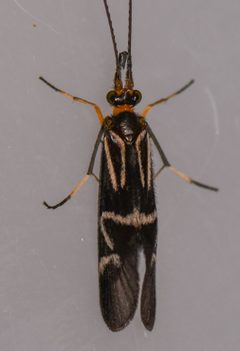
3is a of comprising approximately 9 and at least 120 described . The family is distributed across tropical and temperate regions worldwide, with notable diversity in the Neotropics. Larvae are aquatic and construct distinctive cases from plant material. The genus Phylloicus is particularly species-rich in the New World, with 66 described species.
Pronunciation
How to pronounce Calamoceratidae: /ˌkæləmoʊˈsɛrətəˌdi/
These audio files are automatically generated. While they are not always 100% accurate, they are a good starting point.
Identification
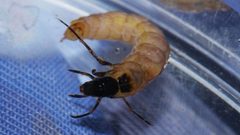
can be distinguished from related by combinations of and larval characters. Larvae construct cases from rectangular fragments of vegetal material arranged in overlapping layers, differing from the spiral or sand-grain cases of other families. The Phylloicus is distinguished from other calamoceratid genera by adult genitalic characters and larval including muscle scar patterns and mandibular .
Images
Habitat
Larvae inhabit freshwater streams, particularly small first- to second-order streams in tropical and temperate regions. Documented include spring-fed tributaries, Atlantic Forest streams, Amazonian streams, and tropical rainforest streams. Larvae are associated with benthic leaf litter and detrital substrates.
Distribution
Worldwide distribution with records from North America (southern United States), Central and South America (Brazil, Puerto Rico, Colombia, Amazon basin), Africa (Morocco), Europe, Asia (Georgia, Southeast Asia), and Australia. The is represented in the fossil record by Cretaceous Burmese amber specimens.
Seasonality
Multivoltine with asynchronous larval development result in presence of multiple instars throughout most months. First instars of Phylloicus ornatus have been documented from April through July and October through November in Texas. abundance varies seasonally and appears influenced by rainfall patterns in tropical regions.
Diet
Larvae are that process coarse particulate organic matter, primarily leaf litter. Phylloicus pulchrus larvae feed on leaves in tropical streams.
Life Cycle
Multivoltine with asynchronous larval development. Five larval instars have been documented in Phylloicus . masses are compound structures likely deposited by multiple females. Development time from first instar to ranges from approximately 229 to 275 days in tropical species, with pupal development lasting 13.5–16 days. occurs within larval cases.
Behavior
Larvae construct portable cases from plant material fragments; case-making of first instars and case reconstruction by later instars has been documented via videophotography. Larvae exhibit aggressive interactions under reduced water conditions. are attracted to light traps.
Ecological Role
Larvae function as in stream , processing leaf litter and contributing to organic matter decomposition and nutrient cycling. The gut microbiome includes diverse filamentous fungi that may assist in plant substrate decomposition.
Human Relevance
Used as indicator organisms for stream health and in studies of organic matter processing. Biological information supports experimental design for freshwater ecosystem studies. Some have been evaluated for understanding drought effects on stream .
Similar Taxa
- OdontoceridaeHistorically difficult to distinguish; lacks the variable character combinations associated with Odontoceridae and has more consistent diagnostic features including larval case construction from plant fragments rather than sand grains.
More Details
Gut Microbiome
The digestive tract of Phylloicus larvae harbors diverse filamentous fungi including Endomelanconiopsis endophytica, Myxospora musae, Neopestalotiopsis cubana, and Fusarium pseudocircinatum, which produce extracts with antioxidant activity.
Fossil Record
The is represented in Cretaceous Burmese amber by Bipectinata orientalis, characterized by bipectinate in males.
Sources and further reading
- BugGuide
- Wikipedia
- GBIF taxonomy match
- iNaturalist taxon
- NCBI Taxonomy
- Catalogue of Life
- The immature stages of Phylloicus obliquus Navás, 1931 (Insecta: Trichoptera: Calamoceratidae)
- Taxonomia de Phylloicus Müller, 1880 (Trichoptera: Calamoceratidae) da Reserva de Desenvolvimento Sustentável do Uatumã, Amazonas, Brasil
- Life History and Case Building Behaviors of Phylloicus ornatus (Banks) (Trichoptera: Calamoceratidae) In Two Spring Fed Tributaries in the Central Edwards Plateau Bioregion of Texas
- New species of caddisflies with bipectinate antennae from Cretaceous Burmese amber (Insecta, Trichoptera: Odontoceratidae, Calamoceratidae)
- Effects of experimental pool level reduction on Phylloicus pulchrus (Trichoptera: Calamoceratidae) feeding and conspecific behavior from a tropical rainforest stream
- Molecular and morphological diversity, qualitative chemical profile and antioxidant activity of filamentous fungi of the digestive tract of Phylloicus sp. (Trichoptera: Calamoceratidae)
- Life history and phenology of Phylloicus pulchrus (Trichoptera: Calamoceratidae) in a tropical rainforest stream of Puerto Rico
- Calamoceras sp. nov. (Trichoptera: Calamoceratidae) from the Western Rif area, Morocco
- The first record of Calamoceras illiesi Malicky & Kumanski, 1974 (Trichoptera, Calamoceratidae) and confirmation of the occurrence of Mystacides azureus Linnaeus, 1761 (Trichoptera, Leptoceridae) from Georgia
- Immature life cycle of laboratory-reared Phylloicus elektoros and Phylloicus amazonas (Trichoptera: Calamoceratidae) from a central Amazonian stream
- Life history studies ofanisocentropus kirramusneboiss (trichoptera: Calamoceratidae) in a tropical Australian rainforest stream
- REVISION DES TRICHOPTèRES CANADIENS : III. Les Hyalopsychidae, Psychomyiidae, Goeridae, Brachycentridae, Sericostomatidae, Helicopsychidae, Beraeidae, Odontoceridae, Calamoceratidae et Molannidae