
Hydropsyche morosa
Hagen, 1861
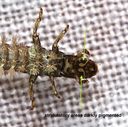
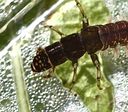
A net-spinning caddisfly found in summer-warm rivers of southern Ontario. Has been observed to be in lower river reaches where summer water temperatures exceed 24°C for extended periods. Larger-bodied than the sympatric Hydropsyche bronta, with which it shares in the Credit and Humber river systems.
Pronunciation
How to pronounce Hydropsyche morosa: //haɪˈdrɒpsɪki məˈroʊsə//
These audio files are automatically generated. While they are not always 100% accurate, they are a good starting point.
Identification
Larger in body size than Hydropsyche bronta; specific diagnostic features not available from sources. Larval occurs in younger instars compared to H. bronta.
Images
Habitat
Summer-warm rivers with water temperatures exceeding 24°C for approximately 3 months and reaching maxima of 27–30°C. Found primarily in lower river reaches (stream orders 4 and 5). Rare or absent in upper reaches and below impoundments on small tributaries.
Distribution
North America; specifically documented from southern Ontario (Credit and Humber rivers), Vermont (United States).
Seasonality
in optimal conditions, with and reproductive activity timed to summer-warm river conditions.
Life Cycle
(two per year) in lower river reaches of southern Ontario. Overwinters in larval instars that are younger than those of sympatric Hydropsyche bronta.
Ecological Role
Net-spinning caddisfly that constructs capture nets in flowing water; contributes to aquatic as both and prey in river .
Similar Taxa
- Hydropsyche brontaSympatric in Credit and Humber rivers; distinguished by smaller body size, trivoltine (vs. ), and in older larval instars. H. bronta is more tolerant of upper reaches and impounded conditions where H. morosa is rare or absent.