
Cheumatopsyche
Wallengren, 1891
Little Sister Sedges
Species Guides
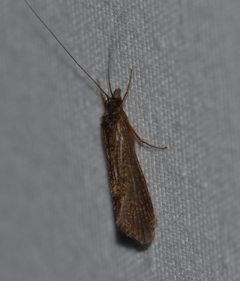
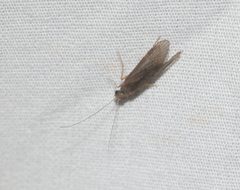
5Cheumatopsyche is a large of net-spinning caddisflies comprising at least 240 described . Larvae construct silk capture nets to filter food from flowing water and are important components of freshwater benthic . Species exhibit variable including and multivoltine cycles, with some capable of producing additional when thermal conditions permit. The genus is widely distributed across multiple continents and serves as a significant bioindicator for water quality assessment.
Pronunciation
How to pronounce Cheumatopsyche: //ˌkjuːməˈtɒpsɪki//
These audio files are automatically generated. While they are not always 100% accurate, they are a good starting point.
Identification
Larvae can be distinguished from other Hydropsychidae by the combination of: gills present on abdominal segments (though specific gill arrangements vary among ), with distinct tooth arrangements, and capsule patterns. are identified by genitalia characteristics, particularly male claspers and female abdominal sternites. Molecular markers (COI barcodes, 28S D2) have been used to associate larvae with adults when morphological identification is uncertain.
Images
Habitat
Freshwater lotic environments including streams and rivers. Larvae occupy benthic in river substrates, often associated with stable substrates suitable for net construction. Some show specific microhabitat preferences: Cheumatopsyche digitata associates closely with aquatic bryophytes (Fontinalis sp.), while others occupy general rocky or gravel substrates. Water temperature, current speed, and water quality (BOD, COD, dissolved oxygen) influence local distribution patterns.
Distribution
distribution with records from North America (including Vermont, Minnesota, Texas), Europe (Denmark, Norway, Sweden), Asia (Japan, Thailand, China), Africa (Nigeria), and Hawaii (introduced ). Specific distribution patterns vary by ; some show elevational zonation with upstream-downstream segregation.
Seasonality
timing varies by and latitude. Cheumatopsyche digitata in Nigeria emerges December through January. Multivoltine species show extended emergence periods with multiple cohorts per year. In temperate regions, larval development typically spans spring through fall with as larvae or pupae depending on species and thermal regime.
Life Cycle
range from to multivoltine depending on and environmental conditions. Cheumatopsyche digitata shows univoltine cycle with 5 larval instars. Cheumatopsyche lasia is multivoltine with 3-4 cohorts annually, capable of producing additional when water temperatures are elevated by thermal inputs. Cheumatopsyche brevilineata is multivoltine. Larval development includes 5 instars with capsule growth ratios of approximately 1.2-1.4 between instars. occurs in constructed cases; pupal mortality from and siltation has been documented.
Behavior
Larvae exhibit -dependent . At low densities, larvae aggregate near food sources or . At high densities, individuals actively disperse to reduce interference competition and aggressive encounters. Larvae show preferences for specific current speeds, water temperatures, and dissolved oxygen levels. Net-spinning behavior for food capture is characteristic of the .
Ecological Role
Important primary consumers in freshwater , transferring energy from sestonic organic matter to higher . Secondary production estimates range from 1.3 to 6.5 g m-2 yr-1 depending on conditions. Serves as bioindicator for water quality assessment; used in freshwater biomonitoring programs to detect pollution. May facilitate transfer of emergent contaminants to terrestrial through .
Human Relevance
Used extensively in freshwater biomonitoring and water quality assessment programs. Presence and abundance patterns indicate stream health and pollution levels. Gill in larvae have been used to assess specific pollution impacts. Secondary production studies inform understanding of energy dynamics in urban and natural stream systems.
Similar Taxa
- HydropsycheBoth are net-spinning caddisfly in Hydropsychidae; Cheumatopsyche pupae appear to suffer less -related mortality than co-occurring Hydropsyche at some sites, and species-level identification requires examination of genitalia or larval characters
- PotamyiaLarval similar; molecular markers (COI, 28S D2) often required for definitive identification when morphological characters overlap
More Details
Thermal plasticity in life history
Cheumatopsyche lasia demonstrates significant plasticity in voltinism, with capable of shifting from 3 to 4+ annually when exposed to elevated water temperatures from wastewater treatment effluent. This thermal response allows exploitation of urban thermal regimes but may also increase exposure to emergent contaminants.
Introduced populations
Cheumatopsyche pettiti has been introduced to Hawaii (Molokai) and Minnesota spring-fed streams, where established demonstrate successful and integration into local .
Sources and further reading
- BugGuide
- Wikipedia
- GBIF taxonomy match
- iNaturalist taxon
- NCBI Taxonomy
- Catalogue of Life
- Distribution of Cheumatopsyche species and environmental factors in Tamagawa River system.
- Density and Dispersion in Laboratory Populations of Caddisfly Larvae (Cheumatopsyche, Hydropsychidae)
- Breeding and elements of biology of the larvae of Cheumatopsyche digitata (Trichoptère: Hydropsychidae)
- The larvae of Chinese Hydropsychidae (Insecta: Trichoptera), Part II: Potamyia chinensis and Cheumatopsyche trifascia
- Assessing pollution of the river Kymijoki via hydropsychid caddis flies: population age structure, microdistribution and gill abnormalities in the Cheumatopsyche lepida and Hydropsyche pellucidula larvae
- Life Cycles of Hydropsyche riola, H. slossonae and Cheumatopsyche pettiti (Trichoptera: Hydropsychidae) in a Spring-Fed Stream in Minnesota
- Life History And Secondary Production Of Cheumatopsyche Lasia Ross (Trichoptera: Hydropsychidae) With Respect To A Wastewater Treatment Facility In A North Texas Urban Stream
- Five new species of the genus Cheumatopsyche (Trichoptera: Hydropsychidae) from the Phetchabun Mountains, Thailand
- The life cycle of an introduced caddisfly, Cheumatopsyche pettiti (Banks) (Trichoptera: Hydropsychidae) in Waikolu Stream, Molokai, Hawaii
- The multivoltine life history ofCheumatopsyche brevilineata(Iwata, 1927) (Trichoptera: Hydropsychidae), with a new method to estimate the population size of generations
- Life history and secondary production of Cheumatopsyche spp. in a small Appalachian stream with two different land uses on its watershed
- <p class="HeadingRunIn"><strong>Description of the larva of <em>Cheumatopsyche lucida</em> (Ulmer 1907) (Trichoptera: Hydropsychidae)</strong></p>
- Patterns of pupal mortality in field populations of Hydropsyche and Cheumatopsyche (Trichoptera: Hydropsychidae)
- <p class="HeadingRunIn"><strong>Life history and larval density of <em>Cheumatopsyche digitata</em> Mosely (Trichoptera: Hydropsychidae) in Opa Reservoir spillway, Ile-Ife, southwestern Nigeria</strong></p>