
Thrips
Linnaeus, 1758
thrips
Species Guides
1- Thrips tabaci(onion thrips)
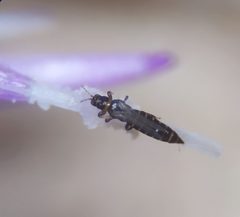
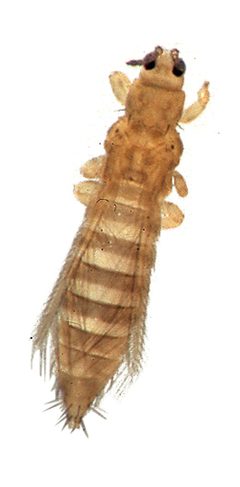
Thrips is a of minute insects in the order Thysanoptera, characterized by fringed wings and asymmetrical mouthparts. Members are typically 1 mm or less in length with slender, cigar-shaped bodies. The genus was established by Linnaeus in 1758 and is among the most economically significant thrips genera, containing that are serious agricultural pests. Species-level identification is challenging due to morphological variability and reliance on slide-mounted specimens.
Pronunciation
How to pronounce Thrips: /θrɪps/
These audio files are automatically generated. While they are not always 100% accurate, they are a good starting point.
Identification
Fringed wings with long marginal setae are diagnostic for the order Thysanoptera. Within Thripidae, Thrips are distinguished from similar by combinations of antennal segmentation, chaetotaxy (bristle arrangement), and wing venation patterns. Identification to species requires examination of slide-mounted specimens at 40-80× magnification due to small size. The genus Thrips is distinguished from Frankliniella by details of the pronotal setae and forewing microtrichia. From Aeolothrips, Thrips lacks the distinctive black-and-white banded wing pattern of predatory species.
Images
Habitat
Diverse; associated with flowers, leaves, and growing points of herbaceous plants. Many occur in agricultural settings, greenhouses, and cultivated fields. Some species inhabit leaf litter or dead wood where fungal feeding occurs.
Distribution
; occur worldwide with distribution varying by species. Some species have achieved global distribution through human-mediated transport, particularly in greenhouse and agricultural trade.
Seasonality
Activity patterns vary by and climate; in temperate regions, winged forms predominate in spring while wingless forms increase in late summer. Multiple per year possible in favorable conditions, particularly in greenhouses.
Diet
Most feed on plant tissues, extracting chloroplasts from epidermal and mesophyll using asymmetrical mouthparts. Feeding targets tender plant parts including buds, flowers, and new leaves. Some species supplement diet with pollen. A few species are predatory on small insects or mites.
Life Cycle
Hemimetabolous development with gradual . laid singly in slits cut into plant tissue by females using saw-like ovipositor. Two larval instars (wingless, feeding) followed by two non-feeding pupal stages in which wing buds and genitalia develop. Some produce silk from terminal abdominal segment to form cocoons. Development from egg to approximately 8-15 days under favorable conditions; adults live approximately 45 days. primarily parthenogenetic via (haploid males from unfertilized eggs, females from fertilized eggs); some species thelytokous.
Behavior
Weak fliers using specialized "clap and fling" mechanism to generate lift with unsteady aerodynamics. and larvae may aggregate on flowers. Wind-aided occurs over long distances; adults climb to plant tips to launch into air currents. Some exhibit maternal guarding. Males compete for access to females through abdominal flicking and foretarsal combat.
Ecological Role
Herbivores that can reduce plant photosynthetic capacity and cause direct tissue damage. Some serve as of flowers, cycads, and heathers. A few species function as of mites and other small arthropods. Many species contribute to fungal spore in leaf litter .
Human Relevance
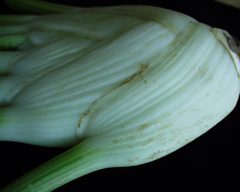
Major agricultural pests causing billions of dollars in crop damage annually. Direct feeding damage includes silvering, scarring, and deformation of leaves, flowers, and fruits. Some plant viruses, particularly tospoviruses including tomato spotted wilt virus and impatiens necrotic spot virus. Western flower thrips (Frankliniella occidentalis) and onion thrips (Thrips tabaci) are among the most economically damaging. Difficult to control due to small size, concealed feeding habits, protected placement, rapid development of resistance, and ability to reproduce parthenogenetically. Subject to phytosanitary inspection and regulations. Some species used as models for testing.
Similar Taxa
- FrankliniellaSimilar flower-dwelling thrips in Thripidae; distinguished by pronotal setae arrangement and forewing microtrichia patterns
- AeolothripsPredatory thrips with distinctive black-and-white banded wings; Thrips lack this banding pattern and are primarily phytophagous
- HeterothripsNew World Heterothripidae with different wing venation and antennal structure
More Details
Taxonomic challenges
-level identification within Thrips is notoriously difficult due to: (1) historical maintenance of as slide preparations of variable quality, (2) considerable intraspecific morphological variability, (3) convergence in external among species, and (4) limited taxonomic expertise. Molecular sequence-based identification is increasingly applied.
Wing polymorphism
Many exhibit both winged and wingless forms, with proportions varying seasonally. In Anaphothrips obscurus, winged forms constitute 90% of spring versus 2% in late summer.
Reproductive plasticity
Sex determination influenced by bacterial endosymbiont . Several normally bisexual have established in the United States composed solely of females, indicating .
Sources and further reading
- BugGuide
- Wikipedia
- GBIF taxonomy match
- iNaturalist taxon
- Catalogue of Life
- Targeting Thrips | Bug Squad
- Research Entomologist Daniel Hasegawa Targets Thrips | Bug Squad
- Thrips Expert Cheryle O'Donnell: From San Diego to Beltsville | Bug Squad
- Virus Helps Onion Thrips Live Longer, Do More Damage
- From the mailbag – white lilies feeling the blues: Could it be the banded greenhouse thrips, Hercinothrips femoralis? — Bug of the Week
- ID Challenge #6 | Beetles In The Bush
- Chilli Thrips (castor thrips, Assam thrips, yellow tea thrips, strawberry thrips), Scirtothrips dorsalis Hood, Provisional Management Guidelines
- Figures 26–34 from: Mound L, Sartiami D (2013) Identification of the terebrantian thrips (Insecta, Thysanoptera) associated with cultivated plants in Java, Indonesia. ZooKeys 306: 1-21. https://doi.org/10.3897/zookeys.306.5455