
Panchaetothripinae
Bagnall, 1912
Genus Guides
5- Caliothrips(bean thrips)
- Heliothrips
- Hercinothrips
- Parthenothrips
- Selenothrips(red-banded thrips (for S. rubrocinctus))
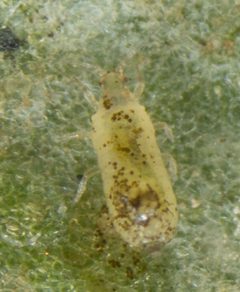
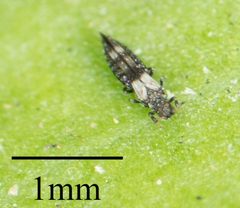
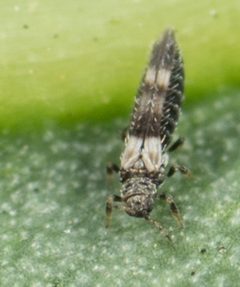
Panchaetothripinae is a of within Thripidae, first described by Bagnall in 1912. It comprises approximately 144 across 43 globally, though earlier estimates cited 11 genera and more than 50 species. Members are predominantly associated with plant leaves and include several economically significant pest species. The subfamily has been consistently recovered as monophyletic in phylogenetic analyses. Notable genera include Heliothrips, Caliothrips, Selenothrips, and Hercinothrips, with species distributed across tropical and subtropical regions worldwide.
Pronunciation
How to pronounce Panchaetothripinae: //ˌpæn.kəˌɛ.toʊˈθraɪ.pɪnaɪ//
These audio files are automatically generated. While they are not always 100% accurate, they are a good starting point.
Identification
of Panchaetothripinae can be distinguished from other Thripidae by morphological characters used in illustrated keys to and , including features of the , wings, and body setation. Second instar larvae can be identified using chaetotaxy patterns, with illustrated keys available for 17 of 25 species recorded in Brazil and Argentina. Specific diagnostic characters vary by genus; for example, Phibalothrips species are distinguished by features visible in identification keys to the genus.
Images
Habitat
Usually associated with plant leaves. In New Zealand, primarily associated with ferns, particularly Blechnaceae and Polypodiaceae . Phibalothrips occur mainly on grasses. Caliothrips species feed on a range of plants including grasses. In the Philippines, species infest crop plants, fruit trees, grasses, and ornamentals.
Distribution
Global distribution across tropical and subtropical regions. Recorded from Brazil, Argentina, Japan, the Philippines, India (Puducherry), Saudi Arabia, New Zealand, Australia, Tahiti, and northern Italy (first European field record for Selenothrips rubrocinctus). In Japan, 16 in 11 were previously recorded, with three additional species newly documented. In Brazil, 21 species from 12 genera were previously recorded, with four species newly documented. In New Zealand, four species occur, including one (Sigmothrips aotearoana) and three species.
Diet
Feeding habits vary by . Phibalothrips feed on grasses. Caliothrips species feed on a range of different plants including grasses. Several species are pests of cultivated plants.
Host Associations
- Blechnaceae (ferns) - breeding New Zealand Sigmothrips aotearoana
- Polypodiaceae (ferns) - breeding New Zealand Sigmothrips aotearoana
- grasses - Phibalothrips; also Caliothrips
- mangosteen - pest Caliothrips striatopterus, Heliothrips haemorrhoidalis, Selenothrips rubrocinctus in Philippines
- cacao - pest Selenothrips rubrocinctus
- cashew - pest Selenothrips rubrocinctus
- mango - pest Selenothrips rubrocinctus
- avocado - pest Selenothrips rubrocinctus
- guava - pest Selenothrips rubrocinctus
- Liquidambar styraciflua - Selenothrips rubrocinctus in Italy
- Carpinus betulus - Selenothrips rubrocinctus in Italy
- Piper myristicum - Copidothrips octarticulatus on Pohnpei island
- Aglaonema - Copidothrips octarticulatus, damage to leaves
- Spathoglottis - Copidothrips octarticulatus, damage to leaves
- castor (Ricinus communis) - pest Zaniothrips ricini
- navel oranges - Caliothrips fasciatus overwinters in navels, transported internationally
Life Cycle
Development includes , larval (first and second instar), propupal, pupal, and stages. For Caliothrips fasciatus, egg-to-adult development rate varies with temperature; degree day accumulation to complete development ranges 370.37–384.61. Minimum, optimal, and maximum temperature thresholds for development are approximately −4.37–6.52°C, 31.19–32.52°C, and 35.07–37.98°C respectively. Second instar larvae have been described for multiple and can be identified using chaetotaxy patterns. Males have been described for several species where previously unknown, including Phibalothrips rugosus and Copidothrips octarticulatus.
Behavior
Caliothrips fasciatus overwinter inside the navels of navel oranges, facilitating accidental transport during international fruit trade. This has been documented for over 120 years but has not led to established outside the native range (California and western Mexico), possibly due to cold storage temperatures (2.78°C) during transit causing high adult mortality.
Ecological Role
Several are significant agricultural pests causing direct damage to leaves and fruits. Selenothrips rubrocinctus causes damage known as 'ferrugem da banana' (banana rust/silvering) and 'rouille argentée des bananes'. In the Philippines, Caliothrips striatopterus, Heliothrips haemorrhoidalis, and Selenothrips rubrocinctus are pests of mangosteen and other high-value crops. The New Zealand species Sigmothrips aotearoana breeds only on plants, while species in New Zealand breed on both native and introduced plants.
Human Relevance
Several are economically important agricultural pests. Caliothrips fasciatus is a regular contaminant in navel oranges exported from California to Australia, New Zealand, and elsewhere, triggering concerns and surveys for establishment. Heliothrips haemorrhoidalis (greenhouse thrips) is a widespread pest of ornamentals and crops, though its presence in Saudi Arabia remains doubtful despite extensive surveys. Species identification is important for pest management and biosecurity, with molecular techniques recommended for confirming identity of some Helionothrips species.
Similar Taxa
- ThripinaeAnother within Thripidae; distinguished by morphological characters used in subfamily-level keys, including antennal structure and wing venation patterns
- DendrothripinaeAnother within Thripidae; Panchaetothripinae consistently recovered as distinct from other Thripidae subfamilies in phylogenetic analyses
More Details
Taxonomic stability
The number of recognized and has expanded considerably from earlier estimates (11 genera, >50 species) to approximately 43 genera and 144 species based on more recent comprehensive treatments. Parthenothrips kobusi was reclassified as Bolacothrips kobusi and is not a member of Panchaetothripinae.
Molecular identification
Molecular studies have been conducted to resolve relationships and identifications within the . Barcode sequences have been obtained for specimens from newly colonized regions (e.g., Italian Selenothrips rubrocinctus). identity confirmation using molecular techniques is recommended for some Helionothrips species.
Biogeographic patterns
plant associations show geographic variation: New Zealand are primarily fern-associated, while tropical and subtropical species show broader host ranges including many crop plants. The is predominantly tropical and subtropical in distribution, with some species expanding into temperate regions through human-mediated transport.
Sources and further reading
- BugGuide
- Wikipedia
- iNaturalist taxon
- NCBI Taxonomy
- Catalogue of Life
- New records of Panchaetothripinae from Japan (Thysanoptera, Thripidae)
- The Panchaetothripinae (Thysanoptera, Thripidae) of Brazil, with one new Caliothrips species
- Host plants of Panchaetothripinae (Thysanoptera: Terebrantia: Thripidae) in New Zealand
- Identification of second instar larvae of Panchaetothripinae (Thysanoptera, Thripidae) in Brazil and Argentina
- New Distributional Records of the Subfamily Panchaetothripinae (Insecta: Thysanoptera: Terebrantia) from Puducherry, India
- Copidothrips octarticulatus recorded from Tahiti, with first description of the male and larvae (Thysanoptera, Thripidae, Panchaetothripinae)
- First Field Record of the Tropical Red-Banded Thrips Selenothrips rubrocinctus (Thripidae: Panchaetothripinae) in Europe
- Taxonomic review and illustrated key to identify species of Thysanoptera in subfamily Panchaetothripinae (Thripidae) from the Philippines
- Bioecology ofZaniothrips ricini Bhatti (Panchaetothripinae: Terebrantia: Thysanoptera) — A new thrips pest of castor (Ricinus communis: Euphorbiaceae)
- Contribution to the subfamily Panchaetothripinae (Thysanoptera, Thripidae) from Saudi Arabia, with two new genera records and an illustrated key
- Behavioral observations of larvae and adults of Dinurothrips hookeri Hood, 1913 (Thysanoptera: Thripidae: Panchaetothripinae)
- Effects of Temperature on the Developmental and Reproductive Biology of North American Bean Thrips, Caliothrips fasciatus (Pergande) (Thysanoptera: Thripidae: Panchaetothripinae)
- Populations of North American bean thrips, Caliothrips fasciatus (Pergande) (Thysanoptera: Thripidae: Panchaetothripinae) not detected in Australia
- Molecular Studies of Relationships and Identifications Among Insects of the Subfamily Panchaetothripinae (Thysanoptera, Thripidae).