Echidnophaga
Olliff, 1886
Stick-tight Fleas
Species Guides
1- Echidnophaga gallinacea(hen flea)
Echidnophaga is a of fleas in the Pulicidae, commonly known as stick-tight fleas. in this genus are found across Africa, Asia, southern Europe, and Australia. attach firmly to skin and remain in a single location for extended periods, feeding on blood and causing localized tissue damage. The genus includes notable pests of poultry, rabbits, and other birds and mammals.
Pronunciation
How to pronounce Echidnophaga: /ˌɛ.kɪdˈnɒ.fə.ɡə/
These audio files are automatically generated. While they are not always 100% accurate, they are a good starting point.
Identification
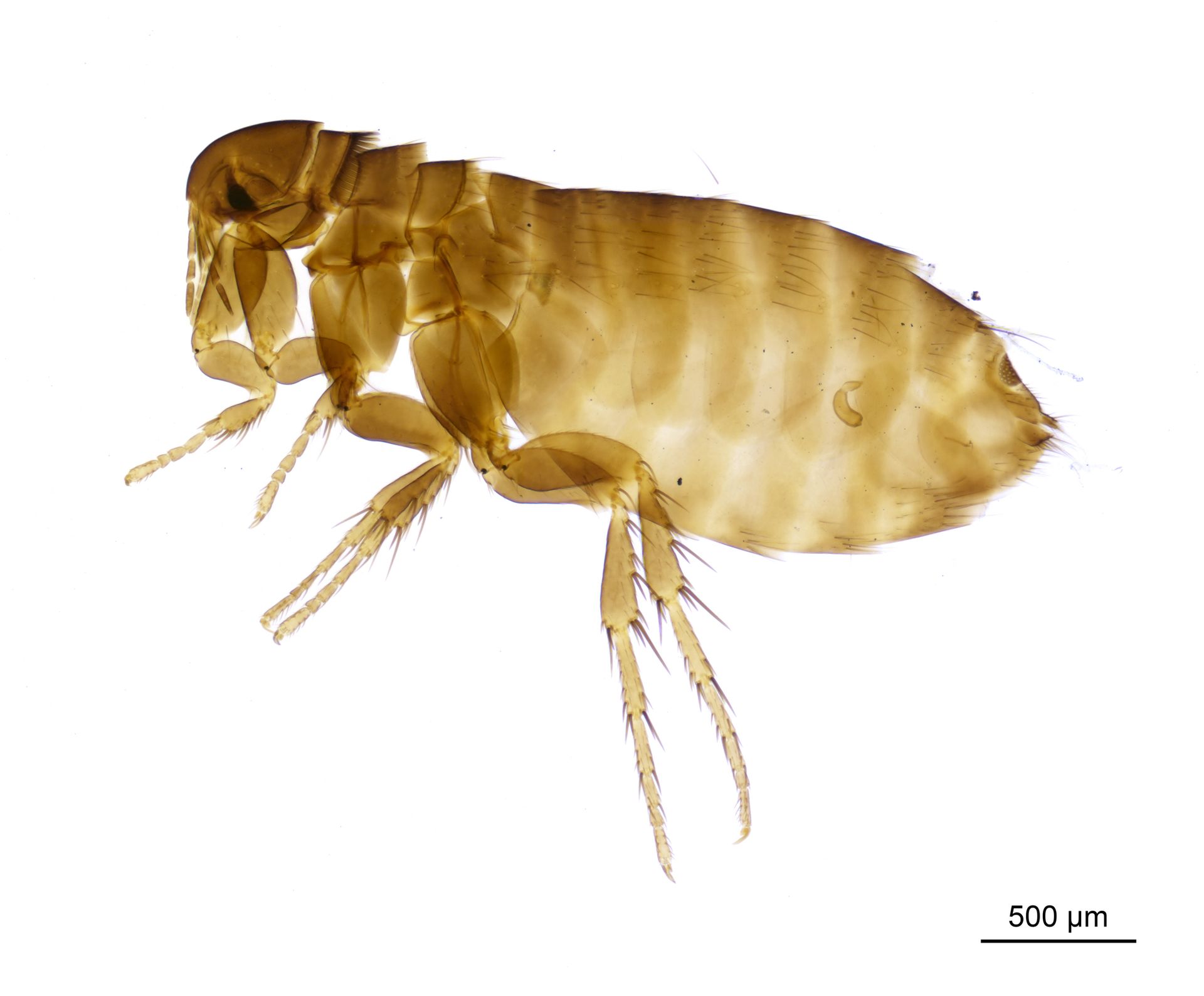
are distinguished from other fleas by their habit of remaining permanently attached to skin at a single feeding site. They possess specialized, elongated mouthparts relative to other fleas that facilitate prolonged attachment. The body is flattened and lacks the genal and pronotal combs present in many other . -level identification requires microscopic examination of morphological characters.
Images
Habitat
Found in environments where animals occur, including poultry houses, rabbit warrens, and areas frequented by wild birds and mammals. Larval development occurs in soil, litter, or organic debris associated with host nesting or resting sites.
Distribution
Africa, parts of Asia, southern Europe, and Australia. Individual have more restricted ranges; for example, E. gallinacea has been documented in Saudi Arabia, Thailand, Mexico, and the United States, while E. myrmecobii and E. perilis are recorded from Australia.
Seasonality
of E. myrmecobii and E. perilis on wild rabbits in Australia build up through summer and autumn, peaking in March. Activity patterns likely vary by and region based on availability and climate.
Diet
are obligate blood-feeders. Larvae feed on organic debris in the environment.
Host Associations
- Galliformes (poultry and game birds) - primary E. gallinacea is a major pest of domestic chickens
- Oryctolagus cuniculus (European rabbit) - E. myrmecobii and E. perilis are found on wild rabbits in Australia
- Athene cunicularia (Burrowing Owl) - Documented as novel for E. gallinacea in Mexico
- Canis lupus familiaris (domestic dog) - E. gallinacea can infest dogs
- Felis catus (domestic cat) - E. gallinacea can infest cats
- Humans - incidental Can bite people but does not establish permanent attachment
Life Cycle
Complete with , larva, pupa, and stages. Eggs drop from attached females into soil or litter. Larvae feed on organic material in the environment. occurs in the substrate. Adults emerge and seek , attaching permanently to skin to feed and mate.
Behavior
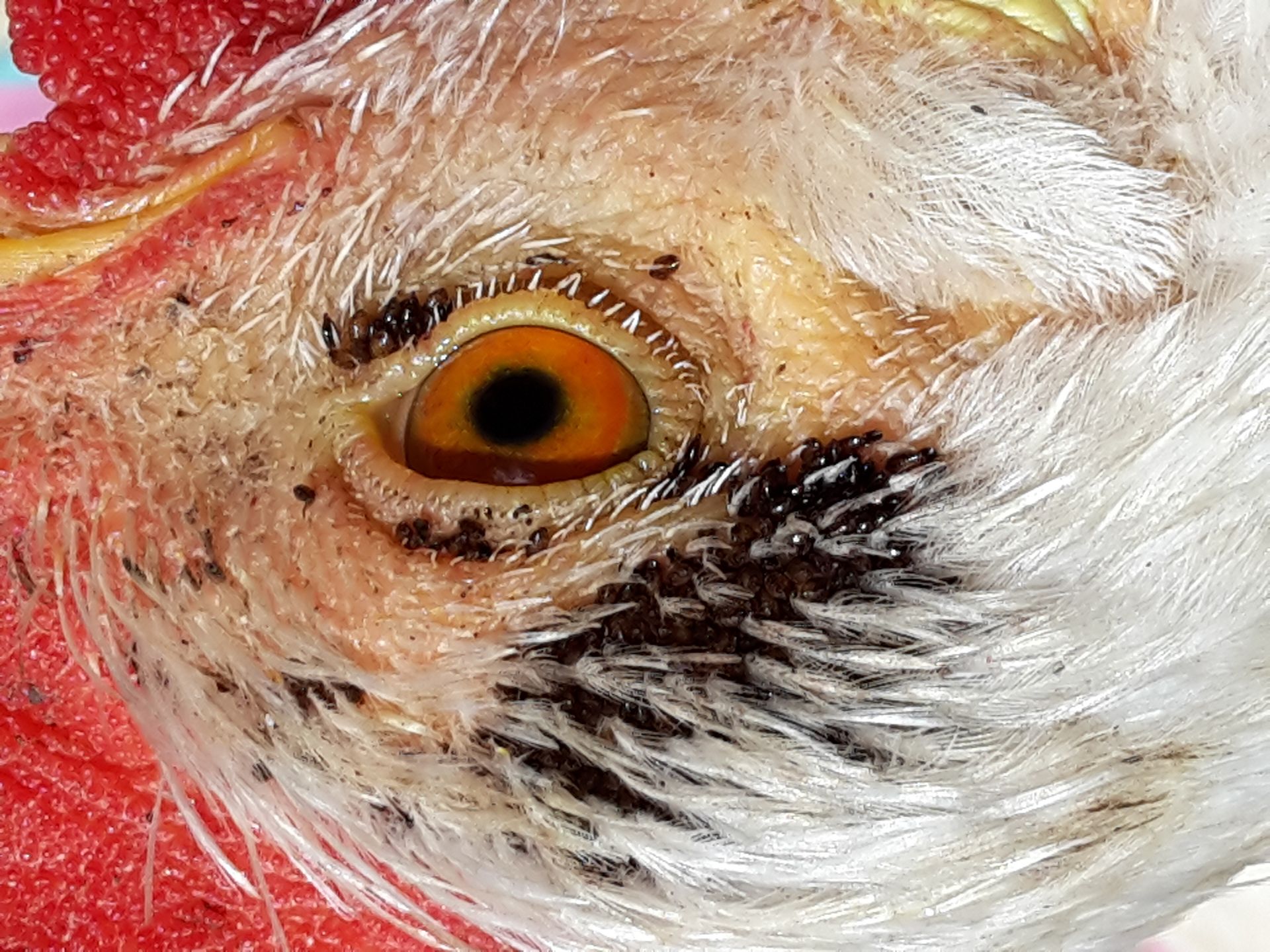
exhibit "stickfast" , burrowing into skin and remaining attached at a single location for long periods. Females are more commonly found attached to hosts than males. On rabbits, E. myrmecobii attaches primarily to and body regions, while E. perilis attaches to forepaws, hind feet, and scrotal region of breeding males.
Ecological Role
that can cause significant in , including anemia, stress, and secondary . E. gallinacea has been implicated in transmission dynamics in historical literature. in threatened bird may contribute to population declines.
Human Relevance
E. gallinacea is a significant pest of poultry, causing economic losses through reduced production, decreased weight gain, and mortality in young birds. in backyard chicken flocks are increasingly common as housing shifts to cage-free systems. Control requires including environmental , dust baths with , and direct removal of attached fleas. Can bite humans but does not remain attached.
Similar Taxa
- Ctenocephalides felis (cat flea)Both are pulicid fleas affecting domestic animals, but Ctenocephalides moves freely on the and possesses both genal and pronotal combs, while Echidnophaga attaches permanently and lacks combs.
- Pulex irritans (human flea)Similar range including humans and domestic animals, but Pulex does not exhibit permanent attachment and has different morphological characters.
Sources and further reading
- BugGuide
- Wikipedia
- GBIF taxonomy match
- iNaturalist taxon
- NCBI Taxonomy
- Catalogue of Life
- Echidnophaga-gallinacea - Entomology Today
- Echidnophaga gallinacaea Archives - Entomology Today
- Backyard Chickens May Have Mites, Lice and Fleas
- Dust Baths and Longer Beaks Can Make Cage-free Chickens into Mite-free Chickens
- Sticktight Flea, Echidnophaga gallinacea
- The Distribution of the Stickfast Fleas, Echidnophaga Myrmecobii Rothschild and E. Perilis Jordan, on the Wild Rabbit, Oryctolagus Cuniculus (L.).
- Beyond the last frontier: Echidnophaga gallinacea (Siphonaptera: Pulicidae) infestation in a Burrowing Owl, a novel southward host in Mexico
- Genetic identification of the sticktight flea Echidnophaga gallinacea (Westwood) infesting chickens in the Al-Baha region, Saudi Arabia
- NOTES ON THE LIFE HISTORY AND ARTIFICIAL BREEDING OF THE AUSTRALIAN “STICKFAST” FLEA, ECHIDNOPHAGA MYRMECOBII ROTHSCHILD