
Cerobasis guestfalica
(Kolbe, 1880)
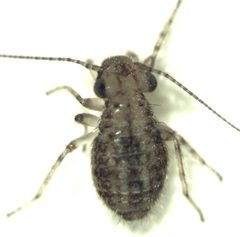
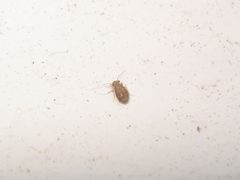
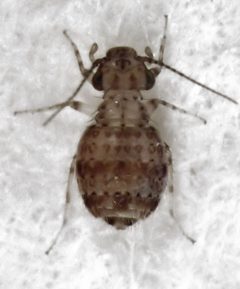
Cerobasis guestfalica is a of booklouse in the Trogiidae, first described by Kolbe in 1880. It is notable for having an exceptionally wide geographic distribution, with records spanning multiple continents including Africa and the Azores. The species belongs to the order Psocodea, a group that includes both barklice and parasitic lice. Its broad distribution suggests considerable ecological flexibility compared to many psocopteran species.
Pronunciation
How to pronounce Cerobasis guestfalica: //ˌsɛroʊˈbeɪsɪs ˌɡɛstˈfælɪkə//
These audio files are automatically generated. While they are not always 100% accurate, they are a good starting point.
Identification
Within the Cerobasis, C. guestfalica can be distinguished by its distribution pattern, which contrasts with the more restricted ranges of . Members of Trogiidae are generally recognized by their reduced or absent wings and relatively soft bodies compared to other Psocodea . Specific diagnostic characters for C. guestfalica require examination of genitalic structures and chaetotaxy patterns, which separate it from other Cerobasis .
Images
Distribution
Recorded from São Miguel and Santa Maria islands in the Azores; present in Africa; described as widespread globally based on collection records. The distribution pattern indicates successful of both oceanic islands and continental landmasses.
Similar Taxa
- Other Cerobasis speciesMost have more restricted geographic ranges; C. guestfalica is distinguished by its distribution pattern and specific morphological details of genitalia.
- Trogiidae family membersTrogiidae generally share reduced or absent wings and soft bodies; C. guestfalica is distinguished at the level by genitalic and geographic distribution.
More Details
Taxonomic history
Originally described as Hyperetes guestfalicus by Kolbe in 1880, later transferred to the Cerobasis. The basionym reflects early classification within a different genus now considered synonymous or closely related.
Distribution significance
The combination of island (Azores) and continental (Africa) records, along with its characterization as 'worldwide' in distribution, is unusual for a psocopteran of this and may indicate human-mediated or exceptional ability.