
Myopsocidae
Pearman, 1936
mouse-like barklice
Genus Guides
2- Lichenomima(mouse-like barklice)
- Myopsocus
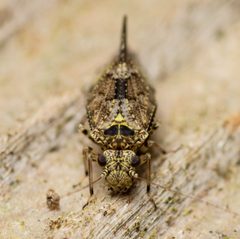
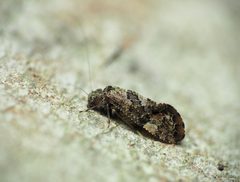
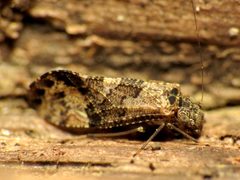
Myopsocidae is a of mouse-like barklice in the infraorder Psocetae, order Psocodea. The family contains approximately 8 and at least 180 described . Members are closely related to Psocidae and share similar wing venation patterns. They are distinguished from Psocidae by having three-segmented . The family was established by Pearman in 1936.
Pronunciation
How to pronounce Myopsocidae: /maɪˌɒpsoʊˈsaɪdiː/
These audio files are automatically generated. While they are not always 100% accurate, they are a good starting point.
Identification
Distinguished from the closely related Psocidae by the three-segmented (Psocidae have two-segmented tarsi). Wing venation is similar between the two families and not useful for separation. The broad shape contributes to the 'mouse-like' appearance referenced in .
Images
Appearance
Small, soft-bodied insects with broad . Wing venation similar to that of Psocidae. composed of three segments (diagnostic feature distinguishing from Psocidae, which have two-segmented tarsi). Body form described as 'mouse-like' in overall appearance.
Distribution
Global distribution with records across multiple continents based on GBIF occurrence data. Specific range boundaries not well documented in available sources.
Similar Taxa
- PsocidaeClosely related with similar wing venation; distinguished by having two-segmented versus three-segmented tarsi in Myopsocidae
More Details
Genera
The includes eight recognized : Gyromyus, Lichenomima, Lophopterygella, Mouldsia, Myopsocus, Nimbopsocus, Smithersia, and Thorntonodes