
Ectopsocus briggsi
McLachlan, 1899
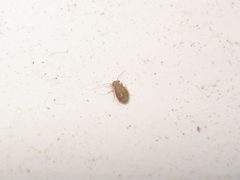
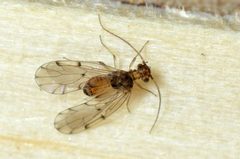
Ectopsocus briggsi is a psocopteran insect in the Ectopsocidae, first described by McLachlan in 1899. It is characterized by brownish-orange coloration and is associated with diverse woody vegetation across its known range. The occupies arboreal as well as detrital environments including haystacks and leaf litter.

Pronunciation
How to pronounce Ectopsocus briggsi: /ɛkˈtɒpsəkəs ˈbrɪɡsi/
These audio files are automatically generated. While they are not always 100% accurate, they are a good starting point.
Identification
Distinguished from other Ectopsocus by a combination of coloration and presumably genitalic and wing venation characters typical of the , though specific diagnostic features are not detailed in accessible literature. Accurate identification likely requires microscopic examination of wing venation patterns and male or female genitalia.
Images
Appearance
Brownish-orange coloration. As a member of Psocodea, it possesses the general body plan with soft, elongate body form and long , though specific morphological details distinguishing it from are not documented in available sources.
Habitat
Arboreal on a broad range of trees and shrubs including alder, apple, ash, beech, birch, blackthorn, bramble, clematis, horse chestnut, lime, mistletoe, oak, plum, poplar, sycamore, sea-buckthorn, sweet chestnut, and willow. Also occurs in non-arboreal detrital habitats including haystacks and leaf litter.
Distribution
Documented from Great Britain and Ireland. GBIF distribution records additionally indicate presence on the Azores islands: Corvo, Faial, Flores, Graciosa, and Pico.
Ecological Role
As a , likely contributes to nutrient cycling through consumption of detritus, lichens, , and fungal spores in arboreal and ground-level . Specific ecological functions have not been documented for this .
Similar Taxa
- Other Ectopsocus speciesCongeneric share similar body plans and coloration; precise identification requires examination of minute morphological characters including wing venation and genitalia.
- Other Ectopsocidae members occupy similar on vegetation and detritus; family-level identification requires specialized knowledge of .
More Details
Taxonomic History
Described by Robert McLachlan in 1899, a prominent 19th-century entomologist specializing in Neuroptera and related orders.
Habitat Breadth
The extensive plant list and occurrence in both arboreal and ground-level detrital suggests considerable ecological flexibility, though whether this reflects genuine polyphagy or underreporting of habitat specificity is unclear.