
Archipsocus
Hagen, 1882
bark lice
Species Guides
3- Archipsocus floridanus(ancient barklouse)
- Archipsocus nomas(webbing barklouse)
- Archipsocus sp-one-florida
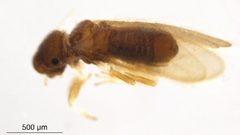
Archipsocus is a of bark lice (Psocodea: Archipsocidae) established by Hagen in 1882. The genus comprises approximately 25 described distributed primarily in tropical and subtropical regions worldwide. Species within this genus are distinguished by subtle morphological differences, particularly in antennal segment proportions and phallic frame structure. Archipsocus nomas was the first North American record, reported from New Orleans in 1934.
Pronunciation
How to pronounce Archipsocus: /ɑːrˈkaɪpsəs/
These audio files are automatically generated. While they are not always 100% accurate, they are a good starting point.
Identification
-level identification within Archipsocus requires examination of minute morphological details; no single diagnostic feature applies to all species. Useful characteristics include relative lengths of antennal segments and the shape of the phallic frame. Separation from the related Archipsocopsis (which includes parthenogenetic species producing live young) is based on reproductive mode and associated morphological traits.
Images
Distribution
Tropical and subtropical regions globally. Documented occurrences include Queensland (Australia), Mexico, Nicaragua, Panama, Brazil, Nigeria, Sudan, India, Indonesia, and Malaysia. North American records began in 1934 with Archipsocus nomas near New Orleans; subsequent records from Florida.
Similar Taxa
- ArchipsocopsisFormerly included in Archipsocus; distinguished by parthenogenetic with live birth rather than oviparity
- Other Archipsocidae generaDistinguished by subtle combinations of antennal proportions and male genitalic structures requiring examination