
Archipsocidae
Pearman, 1936
Ancient Barklice
Genus Guides
1- Archipsocus(bark lice)
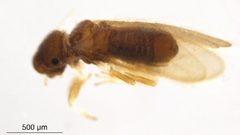
is a of barklice in the order Psocodea, containing approximately 80 across five . Members are distinguished by reduced wing venation and small body size (1.2–1.8 mm). The family exhibits alary , where individuals within a may have different wing morphologies. Some species are known to be , an uncommon reproductive mode among barklice.
Pronunciation
How to pronounce Archipsocidae: /ɑːr.kɪpˈsɒsɪdiː/
These audio files are automatically generated. While they are not always 100% accurate, they are a good starting point.
Identification
Reduced wing venation is the primary diagnostic feature distinguishing from other psocopteran . The two-segmented and small body size (under 2 mm) provide additional distinguishing characteristics. Alary within can complicate identification, as winged, brachypterous, and individuals may occur together.
Images
Appearance
Small barklice measuring 1.2–1.8 mm in length. Wings, when present, display reduced venation compared to other psocopteran . are two-segmented. Body form typical of barklice with broad and soft body.
Distribution
Records exist from Queensland, Australia. Distribution details for most remain poorly documented.
Behavior
Exhibits alary , with winged, reduced-wing, and wingless individuals coexisting within .
Similar Taxa
- Other Psocomorpha familiesDistinguished by reduced wing venation and two-segmented ; most other barklice have more complex wing venation patterns.