
Graphopsocus
Kolbe, 1880
Species Guides
1- Graphopsocus cruciatus(F-winged Barklouse)
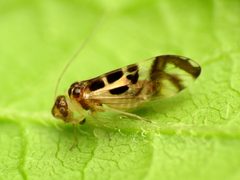
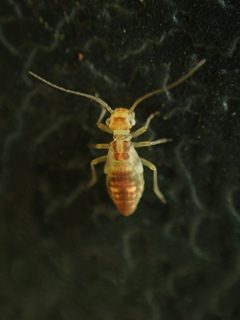
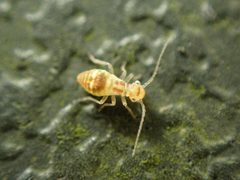
Graphopsocus is a of barklice in the Stenopsocidae, order Psocodea. These small insects are characterized by their flattened bodies and broad, rounded wings that are held roof-like over the body when at rest. The genus includes both native and introduced , with at least one species, Graphopsocus cruciatus, having established outside its native European range. Barklice in this genus feed on microflora such as , lichens, and fungi growing on plant surfaces.
Pronunciation
How to pronounce Graphopsocus: //ˈɡræfoʊˌsoʊkəs//
These audio files are automatically generated. While they are not always 100% accurate, they are a good starting point.
Identification
Graphopsocus can be distinguished from other barklice by their broad, rounded wing shape and specific wing venation patterns. The forewings typically show a distinct pterostigma and characteristic branching of . Species-level identification requires examination of wing details and genitalia. Graphopsocus cruciatus, the most commonly encountered species in some regions, has a distinctive wing pattern with a dark crossband that gives it the "F-winged Barklouse."
Images
Habitat
Found on vegetation including tree bark, leaves, and woody stems where microflora grow. Often observed on the exterior surfaces of buildings, fences, and other structures. Most abundant in late autumn.
Distribution
Native to Europe; introduced established in North America. Records from Vietnam, Denmark, Norway, Sweden, and the United States (including Vermont).
Seasonality
Most abundant and diverse in late autumn; may be found in winter months during warm periods.
Diet
Graze on microflora including , lichens, and fungi on plant surfaces.
Behavior
Gregarious; often found in on suitable substrates. are active walkers and may disperse to new locations by .
Ecological Role
Contribute to nutrient cycling by consuming and breaking down microflora on plant surfaces; serve as prey for various small .
Human Relevance
Generally harmless; do not damage living plants or stored products. One introduced , Graphopsocus cruciatus, has become familiar to naturalists in North America.
Similar Taxa
- IndiopsocusAnother of Stenopsocidae barklice with similar habits, but differs in wing shape and venation details.
- Trichadenotecnum Stenopsocidae; in this have more elongate wings and different patterning.
- Psocoptera (other families)Other barklice such as Psocidae and Caeciliusidae differ in wing venation, body proportions, and antennal characteristics.
More Details
Introduced Species
Graphopsocus cruciatus is native to Europe but has been introduced to North America, where it is now regularly encountered by entomologists and naturalists.