
Valenzuela
Navas, 1924
lizard barklice
Species Guides
19- Valenzuela boreus(lizard barklouse)
- Valenzuela burmeisteri
- Valenzuela confluens(lizard barklouse)
- Valenzuela croesus(lizard barklouse)
- Valenzuela distinctus
- Valenzuela flavidus(yellow barklouse)
- Valenzuela gonostigma(lizard barklouse)
- Valenzuela hyperboreus(lizard barklouse)
- Valenzuela indicator(lizard barklouse)
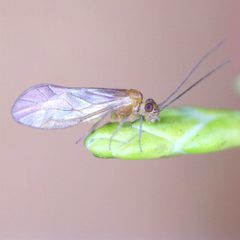
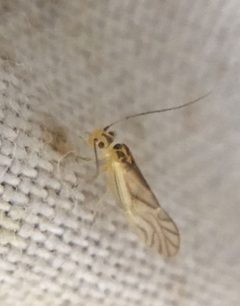
Valenzuela is a large of barklice in the Caeciliusidae, commonly known as lizard barklice. The genus contains at least 300 described , making it one of the most diverse genera within Psocodea. Some species are known from Eocene fossils in Poland and Russia, indicating a long evolutionary history. Members of this genus are small, winged or wingless insects that inhabit bark and leaf litter environments.
Pronunciation
How to pronounce Valenzuela: /vælənˈzweɪlə/
These audio files are automatically generated. While they are not always 100% accurate, they are a good starting point.
Identification
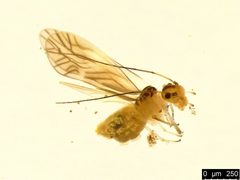
Valenzuela are distinguished from other Caeciliusidae by characters of the wing venation, male genitalia, and phallosome structure. The is separated from closely related genera such as Caecilius by differences in the arrangement of areola postica and nodus in the forewing, as well as specific features of the hypandrium and paraprocts. Species-level identification requires examination of genitalic structures under magnification.
Images
Appearance
Small soft-bodied insects with broad and chewing mouthparts. Most possess two pairs of membranous wings with reduced venation, though some species are brachypterous or . The body is typically flattened dorsoventrally. are long and . Coloration varies by species, generally cryptic in shades of brown, gray, or pale yellow to match bark and leaf litter substrates.
Habitat
Primarily arboreal and corticolous, inhabiting bark surfaces of living and dead trees, as well as leaf litter and woody debris. Some occupy moss and lichen on tree trunks. Fossil species indicate historical occupation of similar during the Eocene.
Distribution
distribution with records from North America (including Vermont, USA), Europe (Denmark, Norway, Sweden), and other temperate regions. The full geographic range extends across multiple continents, though individual may have more restricted distributions.
Diet
Feeds on microflora including lichens, , fungal spores, and organic detritus found on bark surfaces and in leaf litter. Specific feeding habits have been observed but detailed dietary studies for most are lacking.
Life Cycle
with , nymph, and stages. Nymphs resemble smaller, wingless adults and develop through multiple instars. Adults may be present year-round in suitable , with peaks varying by latitude and local climate.
Behavior
Gregarious, often found in on bark surfaces. are weak fliers or non- in wingless forms. When disturbed, individuals may move quickly to the opposite side of bark crevices or drop from the substrate. activity patterns have been observed in some .
Ecological Role
Human Relevance
Generally harmless to humans and human structures. Occasionally found in stored products or greenhouses but not considered significant pests. Some may be used as bioindicators of forest quality and environmental stability.
Similar Taxa
- CaeciliusSimilar barklice in the same , distinguished by differences in forewing venation patterns, particularly the shape and position of the areola postica, and details of male genitalia structure.
- CoryphacaRelated in tribe Coryphacini, separated by wing venation details and genitalic , particularly the structure of the phallosome and paraprocts.
More Details
Fossil Record
Some Valenzuela are extinct and known from Eocene deposits in Poland and Russia, providing evidence for the antiquity of this barklice lineage and historical distribution patterns.
Taxonomic History
The was established by Navas in 1924 and has undergone significant expansion, now containing at least 300 described . The large number of species suggests ongoing cryptic diversity and the need for continued taxonomic revision.