
Philopteridae
Nitzsch, 1818
feather lice, bird lice
Genus Guides
4- Brueelia
- Chelopistes(turkey lice)
- Craspedorrhynchus
- Degeeriella
is a of chewing lice (parvorder Ischnocera) comprising over 2,700 described —approximately 30% of order Psocodea and half of all described . Members are obligate of birds, with one documented exception (Trichophilopterus babakotophilus on lemurs). They feed primarily on downy feathers, exhibiting convergent morphological adaptations corresponding to microhabitat specialization on bodies. The family originated approximately 49 million years ago, likely from a of water birds, with subsequent diversification tracking host adaptive radiation.
Pronunciation
How to pronounce Philopteridae: /fɪˌlɒptəˈraɪdiː/
These audio files are automatically generated. While they are not always 100% accurate, they are a good starting point.
Identification
Distinguished from other Ischnocera by horizontal mandibular movement and exposed . Separated from suborder by absence of maxillary palps and more concealed antennae in the latter; Amblycera also consume skin debris and secretions in addition to feathers, whereas feed almost exclusively on downy feathers. Convergent among complicates identification—species occupying similar microhabitats may resemble each other closely regardless of phylogenetic relationship. Species-level identification requires examination of genitalia, setal counts, and host association.
Images
Appearance
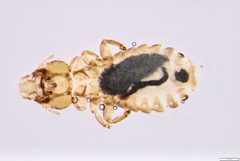
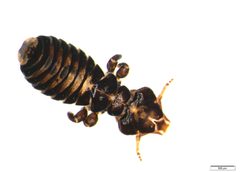
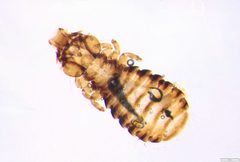
Wingless insects with dorsoventrally flattened bodies and shortened forelegs. move in the horizontal plane. exposed, not concealed in grooves. Body form varies by microhabitat: wing form (elongate, slender, for hiding between wing feathers); head louse form (triangular grooved for attachment to head feathers); body louse form (plump with rounded head margin for concealment in downy plumage).
Habitat
Strictly parasitic; found on avian in terrestrial, freshwater, and marine environments. Microhabitat specialization occurs within host plumage: wing feathers, feathers, or body down. Transfers between hosts require direct physical contact; rarely abandon deceased hosts.
Distribution
distribution spanning all major biogeographic regions: Europe, Africa, Asia-Temperate, Asia-Tropical, Australasia, and the Americas. Absent from hummingbirds (Trochilidae). Documented on most extant bird groups.
Seasonality
Activity patterns tied to presence and breeding cycles. hatch in 5–7 days; each of three nymphal instars lasts 6–14 days in studied . influenced by host molting and preening .
Diet
Exclusively downy feathers; mandibular adapted for chewing feather material. Does not consume skin debris, blood, or secretions.
Host Associations
- Aves - primary obligate of birds; most extant bird groups infested except Trochilidae
- Trichophilopterus babakotophilus - exceptional only known parasitizing mammals (lemurs)
Life Cycle
Hemimetabolous development with three nymphal instars. hatch in 5–7 days; each instar requires 6–14 days based on limited -level studies. Most individuals complete entire on single . Host transfer rare, requiring close contact between hosts.
Behavior
Sedentary lifestyle; individuals remain immobile for extended periods, concealed within plumage. Less likely than other bird lice to abandon host upon host death. Convergent morphological adaptations reduce detectability during host preening.
Ecological Role
contributing to feather degradation and nutrient cycling through feather consumption. Heavy may cause restlessness, debility, and occasionally chick mortality. influenced by host and social structure.
Human Relevance
Economic impact on poultry industry; heavy of Lipeurus on chickens cause intense scratching, skin breakage, and bleeding. Veterinary significance in aviculture and wildlife management. Some threatened by conservation status (e.g., Guimaraesiella spp. on vulnerable Tristan da Cunha finches).
Similar Taxa
- AmblyceraBoth are avian chewing lice (), but possess maxillary palps, have concealed in grooves, and consume skin debris and secretions in addition to feathers, whereas have exposed antennae, horizontal , and feed exclusively on downy feathers.
- Anoplura (sucking lice)Both are , but are blood-feeding with piercing mouthparts and are primarily mammal ; are feather-feeding chewing lice with mouthparts and are primarily avian parasites.
More Details
Systematic Complexity
driven by preening pressure has produced repeated morphological forms across unrelated lineages, frustrating subfamilial classification. No recognized or tribal subdivisions currently established.
Evolutionary History
Molecular dating estimates origin at approximately 49 million years ago, coinciding with adaptive radiation of water bird . Mitochondrial organization shows drastic variation even between congeneric .
Diversity
With >2,700 described , constitutes the majority of parvorder Ischnocera and approximately half of all described species globally.
Sources and further reading
- BugGuide
- Wikipedia
- GBIF taxonomy match
- iNaturalist taxon
- NCBI Taxonomy
- Catalogue of Life
- Two new species of Mulcticola (Philopteridae: Mallophaga).
- A revision of the genus Naubates (Insecta: Phthiraptera: Philopteridae)*
- A revision of Strigiphilus (Insecta: Phthiraptera: Philopteridae) from Japan
- A new genus and species of Philopteridae (Mallophaga)
- Anaticola crassicornis (Phthiraptera: Ischnocera: Philopteridae) on wild geese from Pakistan
- Confirmation of the identity of the type host of the louse Halipeurus fallacis (Phthiraptera: Philopteridae)
- Tyranniphilopterus polioptilus new species (Phthiraptera: Ischnocera: Philopteridae) parasitic on the Masked Gnatcatcher, Polioptila dumicola (Passeriformes, Polioptilidae) in Argentina
- Description of the male of Mayriphilopterus nystalicus Mey, 2004 (Phthiraptera, Ischnocera, Philopteridae)
- Two new species of Guimaraesiella Eichler, 1949 (Phthiraptera: Ischnocera: Philopteridae) from Tristan da Cunha finches
- New taxa, new synonymies and new host records in the louse genus Halipeurus (Insecta: Phthiraptera: Philopteridae) parasitic on petrels (Aves: Procellariiformes)
- Neopsittaconirmus vendulae, a new species of louse (Phthiraptera: Philopteridae) from the Cockatiel Nymphicus hollandicus (Psittaciformes: Cacatuidae)
- The genus Austrophilopterus Ewing (Phthiraptera: Philopteridae) from toucans, toucanets, and araçaris (Piciformes: Ramphastidae)
- New species of Philopterus Nitzsch, 1818 (Ischnocera: Philopteridae), with notes on Cypseloecus Conci, 1941
- The identity of Neopsittaconirmus palaeornis (Eichler) (Phthiraptera: Philopteridae) from Psittacula derbiana (Psittaciformes: Psittacidae), with a new synonymy
- A new genus and two new species of feather lice (Phthiraptera: Ischnocera: Philopteridae) from New Zealand endemic passerines (Aves: Passeriformes)
- First record of Lipeurus caponis (Psocodea: Ischnocera: Philopteridae) parasitizing domestic chickens (Gallus gallus domesticus) in Brazilian Amazon.
- Drastic variation in mitochondrial genome organization between two congeneric species of bird lice (Philopteridae: Ibidoecus).