
Perlinella drymo
(Newman, 1839)
Striped Stone
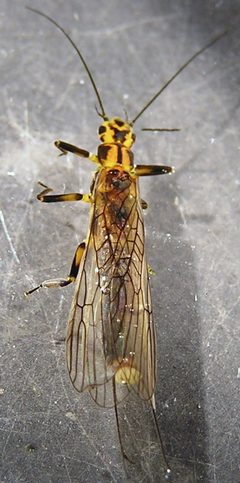
Perlinella drymo, commonly known as the striped stone, is a in the Perlidae. It was first described by Newman in 1839 under the basionym Isogenus drymo. The species is distributed across eastern North America, with records from Alabama, Arkansas, Connecticut, Florida, Georgia, and other states. As a member of Perlidae, it belongs to a family of predatory stoneflies commonly referred to as common stoneflies.
Pronunciation
How to pronounce Perlinella drymo: /pɛr.lɪˈnɛl.lə ˈdrɪ.moʊ/
These audio files are automatically generated. While they are not always 100% accurate, they are a good starting point.
Identification
As a Perlinella , it can be distinguished from other Perlidae by features of the male genitalia, including the structure of the and paraprocts. The "striped stone" suggests longitudinal striping on the body or wings, though specific diagnostic features for this species versus require examination of specimens. Identification to species level typically requires microscopic examination of genitalic structures.
Images
Habitat
Stoneflies in the Perlidae are generally associated with clean, cool, well-oxygenated running water. Larvae inhabit streams and rivers where they are typically found on rocky substrates. Specific microhabitat preferences for P. drymo are not well documented.
Distribution
Recorded from eastern North America. Distribution records include Alabama, Arkansas, Connecticut, Florida, Georgia, and additional states. The appears to have a broad range across the southeastern and eastern United States.
Ecological Role
As a perlid , larvae are likely predatory or , contributing to nutrient cycling in freshwater . Stoneflies serve as important bioindicators of water quality due to their sensitivity to pollution and degradation.
Human Relevance
Stoneflies, including Perlidae, are used as bioindicators in water quality monitoring programs. The presence of Perlinella generally indicates good water quality. No specific economic or medical importance has been documented for this species.
Similar Taxa
- Perlinella ephyre in the same , distinguished by male genitalia including differences in and paraproct structure
- Other Perlidae genera (Acroneuria, Eccoptura, Neoperla)Similar size and general appearance; distinguished by genitalic characters and wing venation patterns
More Details
Taxonomic History
Originally described as Isogenus drymo Newman, 1839 before transfer to Perlinella
Observation Data
As of source date, 22 observations recorded on iNaturalist, indicating it is infrequently encountered or underreported